
Audience friends, hello and welcome to “Century Truth.”
In China, there is a company that seems like any other big corporation – building houses, running theaters, and holding auctions. But beneath the surface lies a web of secret missile trades, arms smuggling to the underworld, and exchanging drugs for firearms…
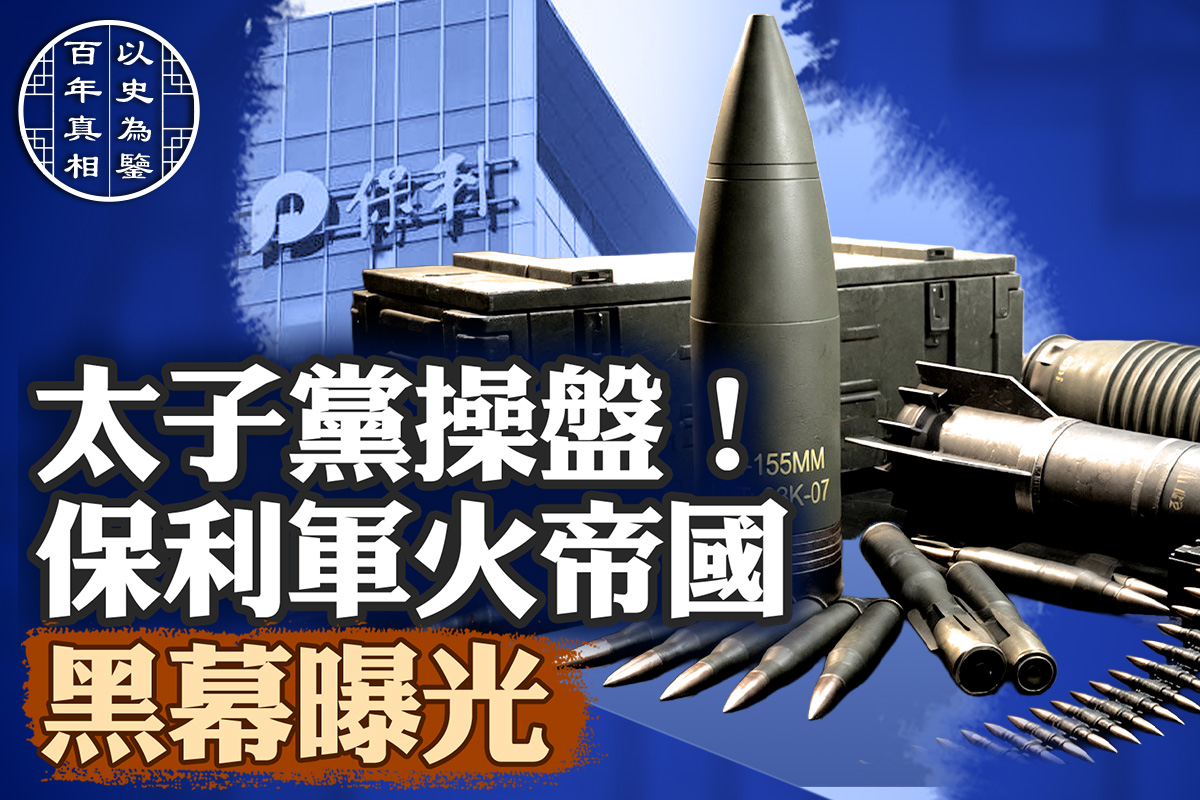
This company is called Poly Group. Its founder has a unique identity and background, allowing the company to operate recklessly for forty years.
Who are these people? How did they profit from arms dealings?
Today, let’s explore together.
Let’s rewind to 1984.
That year, the General Staff Department of the People’s Liberation Army and China International Trust Investment Corporation jointly established a foreign trade company called “Poly Technologies.” The name, chosen by Xuzhaolong, the then general manager of China International Trust, means “defend victory” in English, with the logo “P” hinting at Poly, PLA (People’s Liberation Army abbreviation in English), and Power.
Initially, Poly Technologies engaged in the import and export business of general goods and specialized equipment and technology. By 1993, approved by the State Council and the Central Military Commission of the Communist Party of China, Poly Technologies expanded into “China Poly Group Corporation” with a registered capital of 1.5 billion yuan, focusing on international trade of military and civilian products, real estate development, cultural and artistic operations, mineral resource investment, and explosive technology.
According to information on the Poly Group’s official website, by 2024, the company’s assets had exceeded 1.79 trillion yuan, with ownership in five domestically and internationally listed companies.
Digging into the leadership of Poly, it’s evident that it has a significant number of descendants from the Communist Party of China’s “red families.”
Take for example, He Pengfei, one of Poly’s founding elders, was the son of Marshal He Long.
When Poly was established in 1984, He Pengfei was already the Deputy Minister and the next year promoted to Minister of the General Staff Department, also serving as Poly’s general manager.
How much power did He Pengfei possess? According to the book “The Princelings of the Communist Party” by He Pin and Gao Xin, He Pengfei’s General Staff Equipment Department was the highest executive body in charge of weapon planning in the Chinese military. He was responsible not only for the distribution of weapons across the military but also engaged in secretive collaborations and transactions with military departments and international arms dealers.
Subsequently, He Pengfei’s career soared. In 1988, at 44, he became a Major General, one of the youngest generals in the military at that time. He served as Deputy Commander of the Navy in 1992 and was promoted to Lieutenant General in 1994. However, six years later, he suddenly fell ill and passed away in a Beijing hospital at the age of 56.
Now, let’s delve into another key figure – Wang Jun.
Wang Jun, the former chairman of Poly Group, was the son of the Communist Party elder WangZhen and also the former president of China International Trust. Notably, China International Trust was founded in 1979 with the support of Deng Xiaoping by the red capitalist and former Deputy Chairman of the Communist Party, Rong Yiren, covering finance and industry.
In 1979, Wang Jun joined China International Trust and by 1995 became its chairman, deeply involved in Poly as well. Simply put, his role was transforming profits from arms deals into a business empire. According to a previous Bloomberg report, Wang Jun was considered the “earliest richest among the princelings,” with a wealth known by many in Beijing but unreported by any newspaper.
Lastly, we have He Ping.
He Ping, another founder of Poly, was the son of former Deputy Minister of the General Logistics Department of the People’s Liberation Army, He Biao, and also had another identity as the husband of Deng Xiaoping’s third daughter, Deng Rong. He served as chairman and general manager of China Poly Group Corporation, a Poly Group Corporation’s Major General of the General Armament Department. He stepped down from the chairman and director positions of Poly Group on April 29, 2010, currently serving as the honorary chairman.
In addition to these three key figures, Poly also attracted a large number of princelings: the son of former Vice Premier Ji Pengfei, Ji Jun served as deputy chairman; Wang Xiaochao, son-in-law of YangShangkun, served as director and deputy general manager of Poly Group Corporation; Ye Xuanlian, son of the Communist Party elder Ye Jianying, was one of the responsible persons in Poly Company; ChenHongsheng, the youngest son of former Jiangxi Provincial Party Secretary Chen Zhengren, served as director and executive deputy general manager of Poly Group.
To sum up, from the beginning, Poly was not just an ordinary enterprise but a platform controlled tightly by the privileged families.
Luoruiqing’s son, Luo Yu, wrote in his memoir “Farewell to the General Staff Department”: “The profits from arms deals exceed that of printing money and drug trafficking. A billion-dollar arms trade without supervision- all for the princelings.”
However, in addition to these public figures, Poly also had direct connections to the core power circle of the Communist Party of China.
And this connection traces back to WangZhen.
In 1993, Deng Rong, Deng Xiaoping’s third daughter, published a memorial article in the official CCP newspaper “People’s Daily,” titled “Remembering Uncle Mustache,” mourning the recently deceased WangZhen. In the article, she openly claimed to be WangZhen’s “goddaughter,” praising WangZhen’s three sons as having astuteness and courage. It was known that Deng Rong and the Wang family had an unbreakable bond, supporting each other in difficult times.
Rumors circulated privately at the time suggesting that this article served as a path for the living WangZhen’s children rather than a eulogy for the deceased WangZhen.
The article also revealed that when Deng Xiaoping was twice overthrown, WangZhen sent his three sons to deliver messages to Deng. Wang Jun jokingly told Deng Rong, “We risked our necks to pass messages to your dad. When daddy comes out, we should get a decent government position too.” Deng Xiaoping replied with a smile: “Sure, sure, anything is possible now.”
In 1978, after Deng Xiaoping assumed actual power, he appointed WangZhen to the Political Bureau. By 1985, although WangZhen stepped down from the Political Bureau, he was reassigned as the Deputy Director of the Central Advisory Commission. In 1988, WangZhen reached out to Deng Xiaoping asking for the respectable position of Vice-President, which he held until his death.
Why did Deng Rong openly support the Wang family? Besides the family ties, as mentioned earlier, her husband He Ping, being the general manager of Poly Group, sailed in the same boat as Wang Jun. Deng Rong’s marital bond with He Ping secured the political halo of the Deng family over Poly.
Not only did Wang Jun have a solid relationship with the Deng Xiaoping family, but he also had good connections with politicians like Jiang Zemin and Li Peng. After the events following the Tiananmen Square protests in 1989, Jiang Zemin’s ascendancy to power was partially credited to WangZhen’s support of using force to suppress the students.
In 1994, Jiang Zemin personally inscribed a message on the occasion of Poly’s tenth anniversary. In 2002, he even made a special visit to the Shanghai Ocean Aquarium, co-hosted with the then Shanghai Municipal Party Secretary HuangJu and Mayor Chen Liangyu.
After Deng Xiaoping’s passing, the Jiang Zemin group gradually took over and controlled Poly. Among them, ChenHongsheng, son of Jiangxi’s former Provincial Party Secretary Chen Zhengren, worked in key positions at Poly Group from 1998 to 2013, holding executive deputy general manager and general manager roles and eventually becoming chairman.
At this point, you might be curious: with this background, how exactly did Poly make its money and how much did they earn?
Let’s explore their core business – the arms trade.
Poly once boasted on its group website about having the qualification for missile import and export.
According to reports by VoA, this company introduced Boeing aircraft, Canadian Challenger government aircraft, U.S. Black Hawk helicopters, French helicopters, specialized equipment from Russia, Ukraine, Belarus, and Swiss anti-aircraft systems for customers.
As early as the 1990s, data from a U.S. Senate staffer mentioned that Poly Technologies’ $100 million profit from arms deals, of which 95% went to the Chinese military, and the remaining 0.5% was deposited by individuals in Swiss banks. This 0.5% amounted to $5 million. They made a $15 billion profit by reselling a batch of 2 billion dollar CSS-2 missiles to Saudi Arabia, initially costing $500 million.
But that was only the surface; the shadowy operations were still lurking behind.
United Daily News reported that in 1996, Poly’s U.S. subsidiary was shut down by the U.S. government for allegedly selling AK-47 rifles to the American underworld.
In February 2013, the U.S. State Department officially sanctioned Poly Group, under the “Preventing the Spread of Weapons of Mass Destruction Law,” accusing Poly of transporting equipment and technology to Iran, North Korea, and Syria possibly for manufacturing WMDs and ballistic missiles.
As Xi Jinping launched large-scale reforms in the military, Poly faced a series of troubles.
First, the top management fell from grace. According to the Central Discipline Inspection Commission website in July, on July 12, 2024, Jiang Yingchun, the former Party Secretary and General Manager of Poly Culture Group, was placed under investigation. Jiang entered Poly at the end of 2001 and was even hailed as a “model state-owned enterprise” by the CCP in 2019, overseeing Poly Theatre, Poly International Auction, and Poly Film which he took charge of.
Subsequently, Poly consecutively divested financial equity. In July and August 2024, Poly’s two financial institutions had their equities listed for transfer, involving a bank and small loan company, with a total starting price of nearly 300 million yuan. This massive clearing action was seen by outsiders as not a typical commercial adjustment but rather a hasty attempt to unload.
Poly’s real estate sector also faced issues. Poly Real Estate’s first-quarter revenue in 2024 plummeted by over 70% year-on-year, resulting in a net loss of 208 million yuan, marking the first quarterly loss in four years. The net profit of Poly Development Holdings saw a steep decline, with stock prices dropping nearly half since their peak in 2023.
What stood out was the emergence of the fake “Poly” company. In August 2024, Poly Group issued a statement saying that someone forged their seal, registering a counterfeit company in Hong Kong and operating branches in Shanghai, Jiangxi, and other places under the Poly name.
Poly Group stated that these companies’ subsidiaries, offices, etc., were not affiliated with Poly Group and its affiliated companies. They had no subordinate or equity relationship, investment, cooperation, or business relations.
Current affairs commentator Li Yanming, speaking to Dajiyuan, mentioned that in China, who would dare forge Poly’s seal? Behind this incident, it is likely that only insiders or “insiders” would dare to do so. Particularly noteworthy are Hong Kong, Shanghai, and Jiangxi, which have long been regarded as important strongholds or bases for the Jiang Zemin and Zeng Qinghong groups.
There have been long-standing rumors that Xi Jinping wants to move against Poly Group. Li Yanming stated that Poly’s arms business is closely linked to the corruption cases in the Chinese military. Since 2023, the Rocket Force and General Armament Department have undergone massive reform, and Poly’s recurring issues may have been affected.
Ultimately, Poly’s story is about the privileged families of the CCP profiteering. From its establishment in 1984 to the present day, under the guise of “defending victory,” they have amassed massive private wealth through missiles, firearms, and more. He Pengfei, Wang Jun, He Ping – behind these names lie the power protection network intertwined by the families of He Long, WangZhen, and Deng Xiaoping, enabling the company to operate without challenge for forty years.
Today’s program concludes here. Thank you for watching. If you enjoyed our program, don’t forget to like, subscribe, and share. See you in the next episode.