
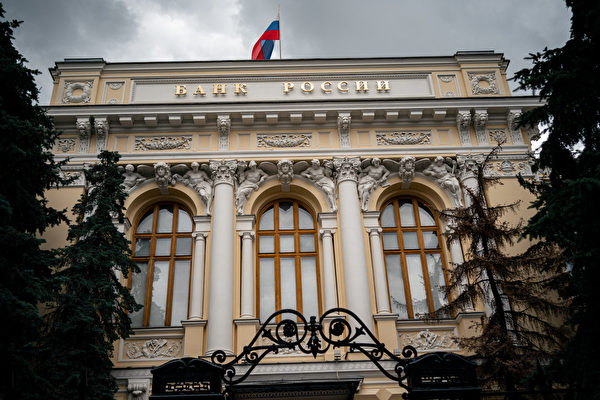
Russia is further strengthening its domestic air defense measures as the drone attacks in Ukraine escalate. A new law revealed by the Russian State Duma on Tuesday allows Russian central bank and other financial institutions to deploy defense systems and arm employees to counter drone attacks without the need for special forces intervention.
The new law applies to entities such as the Russian Central Bank, Russia’s largest bank Sberbank, and the Russian Cash Collection Association. In the future, specialized drone defense systems can be deployed around these facilities, and security personnel can be legally armed.
Since Russia’s full-scale invasion of Ukraine in February 2022, Ukraine has been using long-range drones to target Russian assets within its borders. In recent years, there has been an increased focus on attacking energy infrastructure, including refineries, oil depots, ports, and fertilizer plants, in an attempt to weaken Russia’s energy revenue and logistical support capabilities.
Since 2026, drone attacks targeting Russia’s industrial sector have significantly increased. The Russian government had previously approved private security companies responsible for protecting industrial facilities to use 7.62mm automatic rifles including AK-47s. It also allowed reserve personnel to join local defense forces to participate in securing critical infrastructure.
The Chairman of the Russian Union of Industrialists and Entrepreneurs, Alexander Shokhin, expressed during a meeting with Russian President Vladimir Putin at the Kremlin on the previous day, that the business community is willing to invest in purchasing heavier weapons and electronic warfare equipment to enhance the defense capabilities of industrial facilities.
According to the statement released on the Kremlin’s official website, Shokhin emphasized the need for not only light firearms but also electronic warfare systems, laser devices, and larger caliber weapons to address the increasing drone threats.
Furthermore, he proposed the establishment of special funds or other financing mechanisms to ensure that businesses can clearly obtain the financial support needed for weapon procurement and defense upgrades. Shokhin also requested the government to postpone the collection of taxes and other financial penalties for attacked enterprises so that they can prioritize repairing damaged facilities.
He criticized the fact that despite the government’s approval to mobilize reserve personnel to protect industrial facilities, the frequent redeployment of some defense forces has compromised the actual defense effectiveness.