
Hello, dear audience! Welcome to watch “Century Truth”.
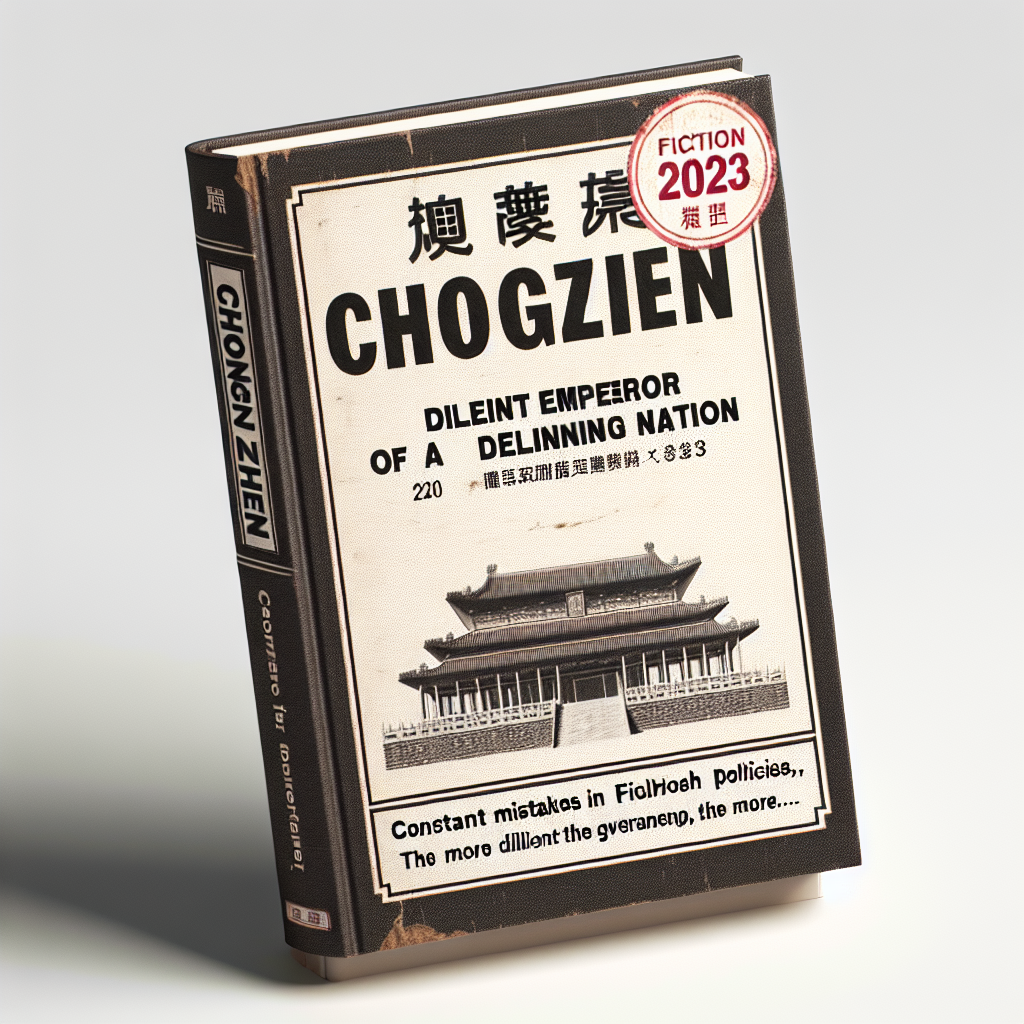
In 2023, a historical book “Chongzhen: Diligent Emperor of a Declining Nation” was taken down by the Chinese authorities. The cover of the book bears the phrase “Constant mistakes in foolish policies, the more diligent the governance, the more the nation declines”, which was labeled as “high-level criticism” towards the Chinese leaders.
Whether it is “high-level criticism” or not, the audience has their own opinions. However, it is clear to discerning eyes that in recent years, a series of major decisions in domestic and foreign affairs by the Chinese government can indeed be described as “constant mistakes in foolish policies”.
In November 2025, the Chinese government made another significant diplomatic decision – to once again stoke anti-Japanese sentiments. So, is this decision a clever move or a blunder?
Today’s program is based on public reports from both domestic and international sources, and we will discuss this topic together.
On November 7, 2025, during a parliamentary questioning session, Japanese Prime Minister Sanae Takamichi mentioned that in the event of a conflict in the Taiwan Strait, considering the “worst-case scenario”, such as Japan’s maritime energy supply line being cut off, it could endanger Japan’s survival. According to the “New Japanese Security Law”, when Japan is in a “state of existential crisis”, it can exercise collective self-defense.
As most of Japan’s oil and natural gas come from the Middle East, these energy sources need to pass through the South China Sea and the Taiwan Strait before reaching Japan. Based on this, the Chinese government interpreted Takamichi’s remarks as implying that when China unifies Taiwan by force, Japan may militarily intervene. Thus, China decided to “stir up another round of anti-Japanese sentiment”.
How is this anti-Japanese sentiment manifested? It is carried out comprehensively and in multiple dimensions.
First, launching anti-Japanese propaganda. The most influential Chinese state media outlets continuously published strongly worded anti-Japanese articles. One of the fiercest pieces was an article in the People’s Daily that listed Japanese Prime Minister Takamichi’s “nine sins”, attempting to tarnish Takamichi’s reputation.
Furthermore, there was Wolf Warrior diplomacy, with Chinese Foreign Minister, Ministry of Foreign Affairs spokesperson, officials at the Chinese Embassy in Japan, and the Permanent Representative to the United Nations all “criticizing” Japan; during the G20 Summit held in South Africa, Chinese Premier Li Keqiang avoided meeting with Japanese Prime Minister Takamichi; ministerial meetings between China, Japan, and South Korea were canceled, among other moves.
Simultaneously, economic threats were also employed, such as a complete suspension of importing Japanese seafood products, halting negotiations on “resuming Japanese beef exports to China”, warning Chinese citizens not to travel to Japan, etc.
Moreover, cultural exchanges between China and Japan were disrupted, including suspending the screening of Japanese films, canceling concerts by Japanese musicians in China, issuing warnings against studying in Japan, and more.
In addition, military threats were mobilized, including live ammunition drills in parts of the central Yellow Sea from November 17-19, live ammunition drills in the southern and central Yellow Sea from November 18-25, and on December 9, Russia dispatched bombers capable of carrying nuclear weapons to conduct joint patrols around Japan with Chinese bombers.
Just on November 5, 2025, China had just resumed the export of Japanese marine products to China, after a two-year hiatus. Why did it suddenly stir up anti-Japanese sentiments again?
Superficially, the reason is that Takamichi crossed China’s red line on the issue of Taiwan, so China needs to raise the banner of “patriotism” and “resolutely defend national sovereignty, territorial integrity, and security”.
However, it is China that is the world’s largest party that sells out its own country. We have touched on this in several episodes before, and friends interested can find and review them. What China cares about most is power. Throughout the history of the Communist Party of China, whenever its regime faces a crisis, it plays the “patriotism” card, inciting patriotic sentiments to divert internal conflicts.
So, what is the biggest power crisis facing China in the second half of 2025? It is the systemic corruption of senior military leaders.
On October 17, 2025, on the eve of the Fourth Plenary Session of the Communist Party of China, the authorities announced that nine senior generals, including He Weidong, a member of the Politburo and Vice Chairman of the Central Military Commission, were expelled from the party and the military and sent to the military procuratorate for investigation and prosecution.
The nine generals were simultaneously “doubly opened,” labeled as “criminal suspects,” and were to be tried in court, a situation that had never happened during the times of Mao Zedong, Deng Xiaoping, or when Jiang Zemin was in power or acted as a “retired emperor”.
During the Fourth Plenary Session from October 20-23, 2025, 22 central committee members who were senior generals were absent, including eight of the nine generals who were central committee members, along with 14 other senior generals.
So, what was the issue with these nine generals? According to an editorial in the People’s Liberation Army Daily, they were accused of being “treacherous,” “seriously undermining the party’s absolute leadership over the military and the system of Chairman responsibility within the Central Military Commission”. For the top echelon of the Chinese Communist Party, this meant that these generals, who wielded weapons, were conspiring to “rebel”, which was a significant political problem.
However, these generals were just a fraction of those purged from the Chinese military. Scholars have tallied that during Xi Jinping’s 13 years in power, 79 senior generals were promoted, among whom 36 were investigated or involved in scandals. It should be noted that when a senior general falls, it often involves a group of major and lieutenant generals. With 36 senior generals implicated, it could affect dozens, even hundreds, of major and lieutenant generals.
As of the airing of this program, out of the Central Military Commission formed at the 20th National Congress of the Communist Party, seven members are missing, out of which three are generals; several departments heads within the 15 departments of the Military Commission, including the commanders and political commissars of the Navy, Army, Rocket Force, Eastern Theater Command, Western Theater Command, Southern Theater Command, Northern Theater Command, Central Theater Command, and the Armed Police Forces are all incomplete.
On November 25, 2025, the full video of the trial of Xu Qinxian, the commander of the 38th Group Army who had refused to follow orders during the June 4th massacre, was publicly released overseas by the Chinese military court. This video was a top-secret document of the Chinese government. After being concealed for over 30 years, its sudden leak suggests the dissatisfaction of individuals within the Chinese military towards the authorities. If such highly confidential information has been exposed, the likelihood of other military secrets being leaked is high.
Therefore, the top leadership of the Chinese Communist Party is already sitting atop a volcano ready to erupt from a “power crisis”, and they are most worried about possible mutinies, coups, or uprisings.
To divert the high level of public attention in China towards the regime’s power crisis, the Chinese authorities decided to make the significant decision of “stirring up another round of anti-Japanese sentiments”.
So, is this significant decision by the Chinese Communist Party a clever move or a blunder? From the Chinese perspective, it is undoubtedly a clever move as they are fervently anti-Japanese. However, the truth is that this is another major blunder in Chinese diplomacy, which is likely to lead to five counterproductive effects:
In this wave of anti-Japanese sentiment, China’s aggressive rhetoric against Japan, from calling for the ousting of the Japanese Prime Minister to turning all of Japan into a battlefield, and declaring that Japan will be irreparably damaged, is causing everyone in Japan to tangibly feel the threat posed by China.
Takamichi already had plans to enhance Japan’s defense capabilities, including increasing defense budgets, revising the non-nuclear principles, and amending the Japanese constitution. However, turning these plans into national policy and then into reality would take time and face significant challenges and obstacles.
Now, with China issuing military threats to Japan, it is bound to accelerate Japan’s considerable improvement in defense capabilities.
On November 20, 2025, Japan’s ruling party, the Liberal Democratic Party, initiated the revision of the “Three Security Documents”, including the “National Security Strategy”, “National Defense Strategy”, and “Defense Capability Enhancement Plan”.
Moreover, the target for Japan to achieve its defense budget goals by 2027 has been requested by Takamichi to be reached ahead of schedule by March 2026.
Before this, Japan adhered to the “three non-nuclear principles” regarding nuclear weapons, under the perspective of “not possessing, not producing, and not introducing” nuclear weapons. Concerning the “not introducing” of nuclear weapons, Takamichi has not clearly expressed that she will continue to adhere to this principle. On the contrary, during the modification of the “Three Security Documents” by the Liberal Democratic Party, the clause prohibiting the introduction of nuclear weapons could potentially be removed, allowing for American nuclear-powered submarines to dock in Japan.
Furthermore, there is a possibility that Japan will amend its constitution to upgrade the Japanese Self-Defense Forces into a regular “National Defense Army”.
On November 23, Defense Minister of Japan, Taro Kono, stated that Japan plans to deploy medium-range surface-to-air missiles approximately 110 kilometers east of Taiwan on the Yonaguni Island.
Regarding the anti-Japanese remarks made by Chinese Ambassador to Japan, Wu Jianghao, and consul-general in Osaka, Xue Jian, on November 15, US Ambassador to Japan, Rahm Glass, commented on the social media platform X, saying, “It seems like Christmas has come early. Thank you, Ambassador Wu Jianghao and Consul-General Xue Jian, for helping to further strengthen the deep ties between the United States and Japan.”
On November 20, after meeting with Japanese Foreign Minister Toshimitsu Motegi, US Ambassador to Japan Rahm Glass said, “On behalf of President Trump, myself, and the US Embassy in Japan, we express support for Prime Minister Takamichi.”
On November 25, US President Trump actively called Prime Minister Takamichi. After the phone conversation, Takamichi told reporters, “President Trump mentioned that we are very good friends and told me to call him anytime.”
The US-Japan alliance is the cornerstone of Japan’s foreign policy. When Japan faces an issue, it is an issue for the United States. Any military strikes by China against Japan will be considered as military strikes against the US. The escalation of China’s military threats against Japan will only strengthen the US-Japan military alliance.
In particular, Japan is a strategic ally on the first island chain for countering the expansion of communism by the United States.
Based on the core “US-Japan alliance”, the US has also built special relationships with “US-Korea-Japan”, “US-Japan-Philippines”, “US-Japan-India-Australia”, and the “G7” group consisting of the US, Japan, UK, France, Germany, Italy, and Canada. The US leads NATO with 32 member countries, and NATO has also established a special relationship with Japan.
To sum it up, China’s Wolf Warrior diplomacy, economic coercion, global infiltration, international oppressions, military expansions, the spread of the “Chinese Virus”, and the continuous escalation of military threats in the Taiwan Strait, have all caused the Japanese people to hold a growing resentment towards China.
According to the Genron NPO Japan-China Joint Public Opinion Survey (2025 edition), the proportion of Japanese people with a “disapproval/poor impression” of China is at 78.3%, an increase of 6.3 percentage points from the previous year, indicating that the general impression of the Japanese people towards China is negative.
According to a July 2025 survey by the Pew Research Center in the US, only 8% of Japanese people have confidence in Chinese leaders.
According to a survey by the American magazine “Diplomat” in August 2025, 84.7% of Japanese people have no “affection” towards China, indicating extremely negative emotional sentiments towards China.
Overall, the “negative impression” of Japanese people towards China exceeds 75-80%.
During this wave of anti-Japanese sentiment, Prime Minister Takamichi has not been swayed by China, refusing to retract her statements and showing no intention to apologize to China.
By standing firm, Takamichi’s approval rating has not only remained stable but even increased. A pre-existing survey showed her support was at 65%. After the recent events on November 24, the latest poll published by Japan’s leading newspaper, Yomiuri Shimbun, indicated a rating of 72%.
This signals that Takamichi enjoys the support of the majority of Japanese citizens. The harsher the condemnation from China against Takamichi, the louder the calls for confrontation, the fiercer the battles, the more Japanese citizens might rally behind Takamichi.
In fact, the key to managing Sino-Japanese relations lies in winning over the hearts of the Japanese people, yet the Chinese Communist Party is doing the opposite.
During the period of the Covid-19 pandemic from 2020-2022, China engaged in three years of extreme “zero-Covid” measures, turning the entire nation into a large prison and virtually squandering the foundation built over more than forty years of reform and opening up. This has caused great suffering for millions of Chinese people.
From 2023 to 2025, China’s economy has continuously been in a state of “deflation” for three years, with no end in sight.
Today, China is burdened by high debt, capital outflows, severe unemployment, frequent real estate crises, financial dangers, cliff-like declining population, difficulties in marriage, childbearing, healthcare, education, employment, housing, retirement, and a tough livelihood for many ordinary citizens.
The everyday struggles of the Chinese people, who are worried about making a living, are about improving the economy, enhancing their livelihoods, and leading better lives. Establishing good relations with Japan, one of the most developed countries in East Asia, would be the right path to rescue the economy and ensure a better life for the people.
Nevertheless, the Chinese authorities are taking the opposite route – creating chaos. Such actions will only lead to China losing more public support.
Amidst stirring up another wave of anti-Japanese sentiment, on November 12, the “Inter-Parliamentary Alliance on China Policy” (IPAC) summit issued a statement condemning China’s heinous act of organ harvesting from living individuals. They have proposed six legislative recommendations to prevent individuals, organizations, or governments from assisting China in live organ harvesting.
IPAC is an international organization composed of over 290 parliamentarians from 43 countries and the European Union.
On November 21, a total of 15 countries, including Albania, Australia, Czech Republic, Estonia, Israel, Japan, Latvia, Lithuania, North Macedonia, Palau, Paraguay, San Marino, Ukraine, the United States, and the United Kingdom, jointly made a statement at the United Nations General Assembly’s Third Committee, expressing concerns over China’s suppression of human rights and basic freedoms domestically and abroad.
Some observers believe that China’s resurgence of anti-Japanese sentiment is the most serious diplomatic row between China and Japan since the “Senkaku Islands incident” in 2012.
However, due to the flawed foundation of China’s anti-Japanese stance, which is wrapped in “patriotism” and using Japan as a “punching bag” to divert China’s internal governance crisis, the stronger China presses against Japan, the more counterproductive outcomes it will face.
Ultimately, the result could be akin to lifting a stone, only to drop it on one’s own foot – intensifying the regime crisis within China.
That concludes today’s program. Thank you for tuning in, and we will see you in the next episode.
Production Team of “Century Truth”