
Japan’s automobile manufacturer, Nissan Motor, along with its parts suppliers, has developed a new electric car motor technology that significantly reduces the use of rare earth elements in the new Nissan Leaf electric vehicle. This reduction aims to lessen the dependency on rare earth minerals from China.
The breakthrough in the electric car motor technology was not disclosed by Nissan when the new Nissan Leaf electric car was launched in Japan in January this year. According to a report from Nikkei on April 18, the new electric car motor in the Nissan Leaf uses over 90% less rare earth compared to the first-generation Leaf introduced in 2010, particularly in reducing the use of heavy rare earth elements such as dysprosium (Dy) and terbium (Tb) to enhance heat resistance.
Rare earth elements are widely utilized in electric vehicles, energy-efficient appliances, and components of smartphones. By developing technology that reduces the heat generation in electric car motors, Nissan aims to further diminish the demand for heavy rare earth elements. The company plans to accelerate technological innovation to consistently lower the rare earth usage.
Last July, due to restrictions on rare earth exports by the Chinese government causing parts shortages, Nissan scaled back production plans for the new Nissan Leaf electric car. Although specific production targets for the new Nissan Leaf were not officially announced at that time, the model was previously planned as a cornerstone for Nissan’s electric vehicle business expansion in several key global markets.
China’s export controls on rare earth elements as an economic pressure tactic have disrupted supply chains of multiple car manufacturers. Companies like Suzuki Motor also halted production of their Swift compact cars due to similar supply interruptions.
Japanese smartphone companies are also striving to reduce rare earth usage. For instance, MinebeaMitsumi has eliminated the need for heavy rare earth elements through more precise engineering designs. Since last fall, the company has transitioned all actuators for smartphones to designs that do not include heavy rare earth elements and plans to invest billions of yen to establish production lines in the Philippines to meet increased order demands.
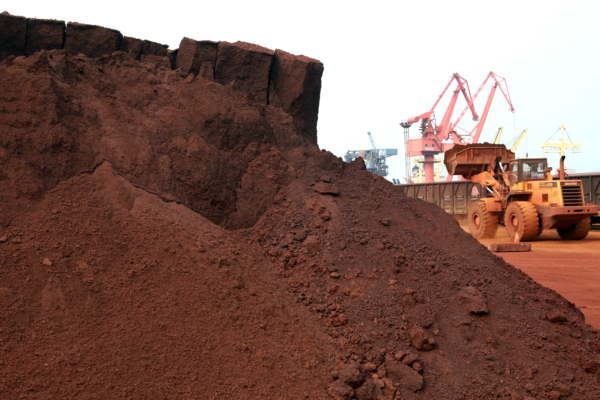
China holds approximately 44 million tons of rare earth resources, which is about half of the global total (90 million tons); the annual global extraction amount is around 390,000 tons, with China contributing roughly 270,000 tons, representing about 69%. More crucial than mining is the processing and manufacturing of rare earth materials, with China dominating global monopolies in separation refinement and magnet manufacturing.
The Group of Seven (G7) finance ministers reached a consensus on April 17 (Friday) to strengthen cooperation with resource-rich countries and multilateral development banks to break China’s control over key minerals and reduce countries’ reliance on Chinese rare earth. Japanese Finance Minister Satsuki Katayama stated during the meeting, “Regardless, considering China’s weaponization poses a threat to everyone, we must take action.”