
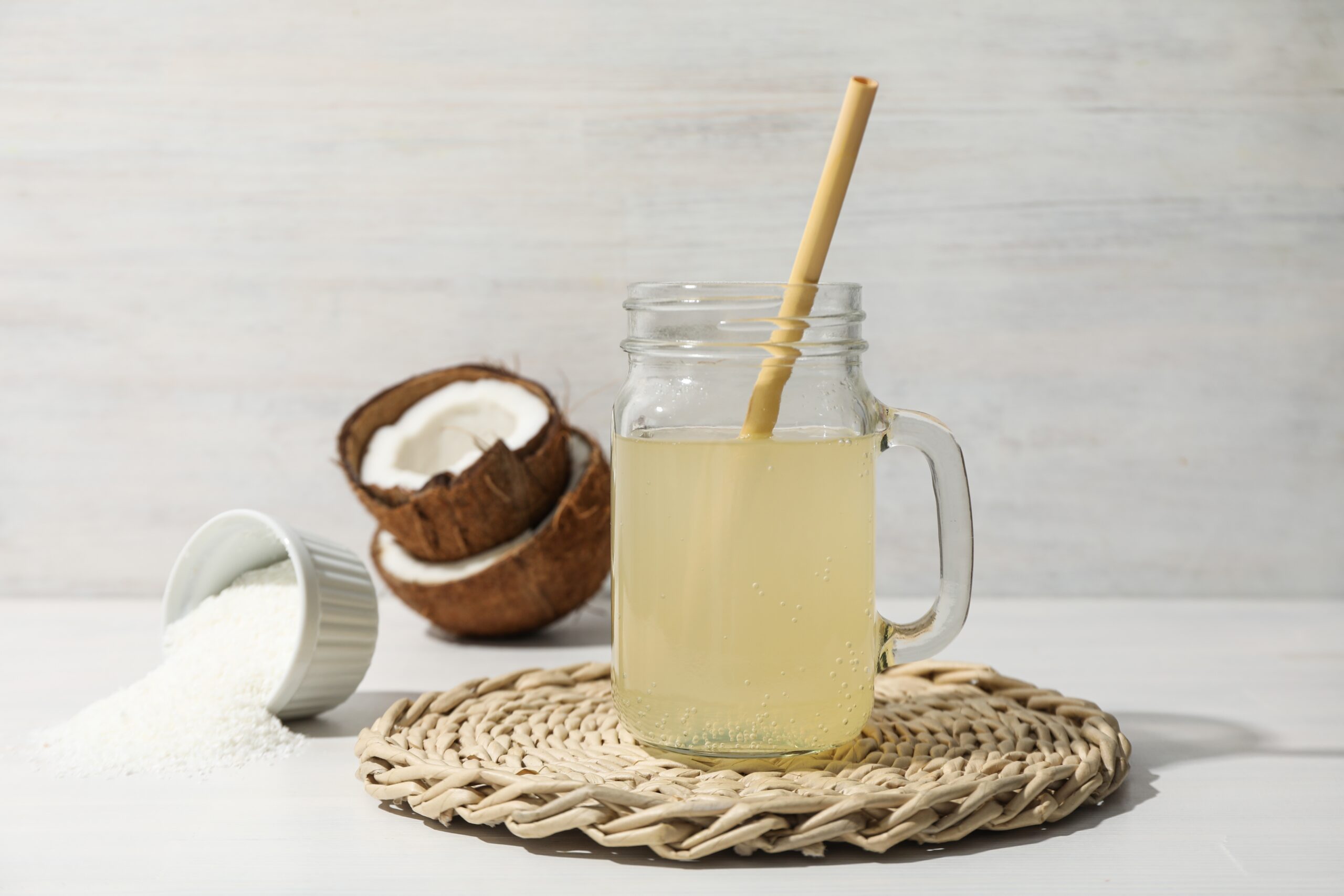
On August 2, 2026, the once popular internet sensation product, IF Coconut Water, the mother company of Thailand’s IFBH Limited (IFBH), is expected to report a 65% to 75% decrease in net profit and a 40% to 50% decline in revenue for the first half of 2026 compared to the same period last year. Additionally, its market value has plummeted from 12.6 billion Hong Kong dollars to 1.6 billion. The news made headlines on August 2. IF Coconut Water is dubbed as the “number one coconut water” in China.
According to various mainland Chinese media outlets including the Beijing Business Daily, on July 31, IFBH announced a profit warning, forecasting a significant drop in net profit for the first half of 2026 compared to the previous year. The Hong Kong-listed company debuted on the Hong Kong Stock Exchange on June 30, 2025, at an IPO price of 27.8 Hong Kong dollars per share. Its market value once soared to 126.8 billion Hong Kong dollars. However, just one year later, the IFBH stock price fluctuates between 5.67 and 6.5 Hong Kong dollars per share, with the latest closing price at 6.16 Hong Kong dollars, resulting in a market value of 16 billion Hong Kong dollars, over 110 billion Hong Kong dollars lower than its peak.
IFBH attributed the decline in performance to several factors, including intensified geopolitical tensions leading to global supply chain disruptions causing shortages in packaging materials and coconut water raw materials, resulting in increased procurement costs that directly affected the company’s gross profit margin. Additionally, the overall consumer sentiment towards coconut water products was weak, further dragging down sales performance.
Chinese media analysis suggests that the substantial decline in IFBH’s net profit indicates the convergence of three major crises for the company. Firstly, its overreliance on a single product category, as coconut water accounts for over 97% of the company’s revenue, lacking a second growth curve, leaving the main product category vulnerable to shocks with minimal room for buffering. Secondly, a high concentration of customers, with the top five customers contributing over 97% of sales, where the largest customer alone represents over 50%, posing a direct threat to performance if major customers adjust their purchasing strategies. Lastly, intensified industry competition, with over 50 brands entering the coconut water market and low-priced competitors continuously capturing market share.
Retail monitoring agency Ma Win Data reported that IF Coconut Water’s market share in China’s offline retail channels has plummeted from 62.07% in the fourth quarter of 2023 to 30.3% in the third quarter of 2025, nearly halving its share.
Some viewpoints suggest that IF Coconut Water’s sharp drop in profitability may be related to a trust crisis that emerged in March this year.
In early 2026, a consumer research study by the New Jingbao Consumer Research Institute sent four mainstream products claiming “100% coconut water” – IF Coconut Water, Hema’s self-operated coconut water, Light Up coconut water, and Jiaguoyuan coconut water – to a testing facility in Europe. The results revealed that all four products contained added external water or sugar.
On March 4, IF Coconut Water issued a statement on its official Weibo denying the addition of any external sugar, water, or artificial flavors in its 100% coconut water product, asserting that the sugar content is derived solely from natural coconuts.
In response, Red Star News noted on August 2 that the controversy surrounding the detection of added external water or sugar in “100% coconut water” exposed a common issue in the entire outsourcing model: brands outsource the production process while heavily investing resources in marketing, but the responsibility for product quality and supply chain control does not shift just because of outsourcing. When product quality is questioned, brands are often the first to suffer. Despite IF Coconut Water’s previous dominance in the Chinese coconut water market for multiple years, its market advantage was built on brand recognition formed by being an early entrant, making this brand vulnerability particularly pronounced in price wars, trust crises, and competitive erosion.
As a social media-driven product, becoming a sensation is easy, but staying popular is difficult. When a brand’s competitive advantage is built on marketing buzz and early entry rather than control over the supply chain and product barriers, the business is vulnerable to fluctuations when external environments become turbulent.
Public records show that IF Coconut Water is a natural beverage brand launched by Thailand’s IFBH Limited in 2013, headquartered in Thailand, with its China headquarters located in Shanghai’s Qingpu Xihongqiao Business District. Its product line includes family packs, sports-specific versions, and children’s series.
In the Chinese market, IFBH outsources production, logistics, and distribution to professional partners: production is commissioned to Thai General Beverage and other contract manufacturers, logistics are outsourced to third-party cold chain service providers, online channels are managed by Hangzhou Dahuo E-commerce Co., Ltd., and offline channels are handled by Guangdong Hengyu Food.