
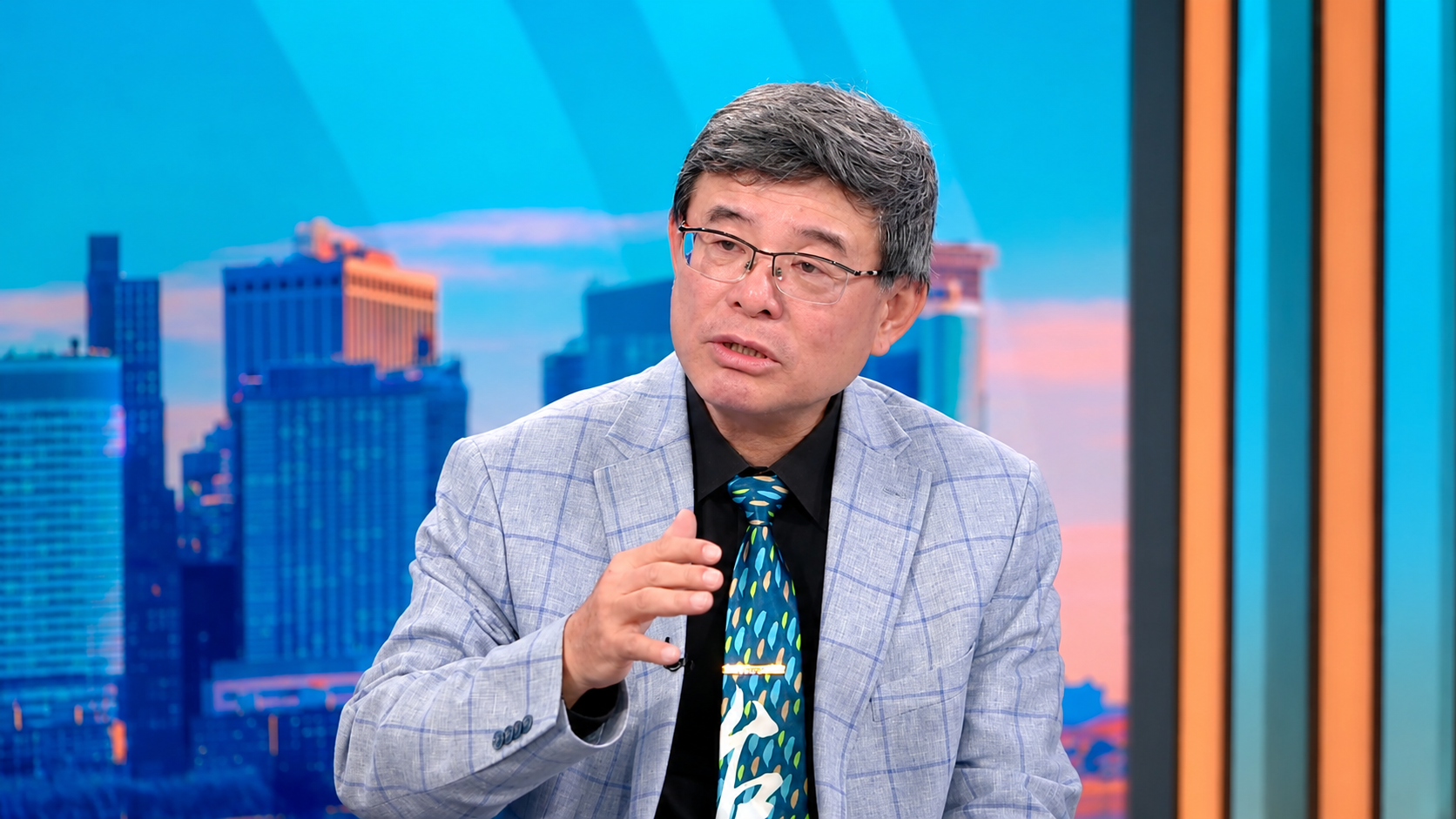
Renowned Taiwanese economist Henry Wu was interviewed at the Epoch Times headquarters in New York on July 27, delving into the underlying logic of regime sustainability to analyze the causes and future trajectory of China’s economic predicament.
Wu, in a previous interview, explored why Xi Jinping decided to “bring an end” to the era of reform and opening up. He then shifted focus back to the economy itself, discussing the century-old challenge between capitalism and socialism, ultimately leading to his concern about the “multi-organ failure” of the Chinese economy.
Since the Industrial Revolution, capitalism has consistently led to social divisions, with widening wealth gaps paving the way for socialist tendencies among the lower classes and labor force, according to Wu. He emphasized the importance of controlling this divide to maintain balanced growth and prevent societal fragmentation, a concept rooted in Sun Yat-sen’s “minsheng ideology” aimed at averting polarization within capitalist development.
Wu highlighted the challenge posed by globalization and the AI trend, underscoring how certain sectors, such as multinational corporations and skilled professionals benefiting from global optimization, leave stagnant labor classes at a disadvantage by being unable to migrate to cheaper labor markets, perpetuating the age-old issue of uneven distribution in capitalism.
Contrary to its socialist facade, Wu criticized the Chinese Communist Party for exacerbating wealth inequality through market-oriented development, likening the Party’s unchecked power to a cycle of exploitation and consolidation, leading to what is termed as “crony capitalism.”
He further discussed the limitations of authoritarian systems on innovation, noting that genuine innovation often requires rebellion against established structures and necessitates protection through patents, rule of law, and human rights – mechanisms impeded by authoritarian regimes like the CCP.
Addressing the concept of “provinces protecting themselves,” Wu highlighted fiscal transfer payments and the burden of maintaining stability as indicators of increasing strain on China’s central and local governments. He cautioned that financial support gaps and the escalating cost of stability maintenance could lead regions to assert autonomy, potentially endangering national unity.
Wu warned that if China reaches a financial deadlock, rampant currency printing could spark hyperinflation reminiscent of the Nationalist government’s post-Civil War inflation crisis, urging a cautious approach to prevent such a scenario.
Moreover, Wu stressed the looming threat of deflation in China, explaining the psychological effect where deflation expectations lead to deferred consumption behavior, causing a demand slump that triggers a downward economic spiral – a self-fulfilling prophecy with lasting repercussions.
Describing a scenario of “multi-organ failure” in the Chinese economy, Wu highlighted the interconnected crises of real estate, unemployment, debt, fiscal challenges, and financial system risks, emphasizing the potential domino effect where a breakdown in one sector could cascade into a systemic crisis.
In conclusion, Wu painted a pessimistic picture of China’s short-term economic prospects, attributing structural issues and policy shifts to the growing risk of simultaneous crises erupting, with Beijing facing the daunting task of balancing regime security and market-driven prosperity. The crucial factor, he argued, lies in the regime’s willingness to break away from a dependency culture and empower the people, a fundamental shift that he deemed challenging for the Chinese leadership to undertake.