
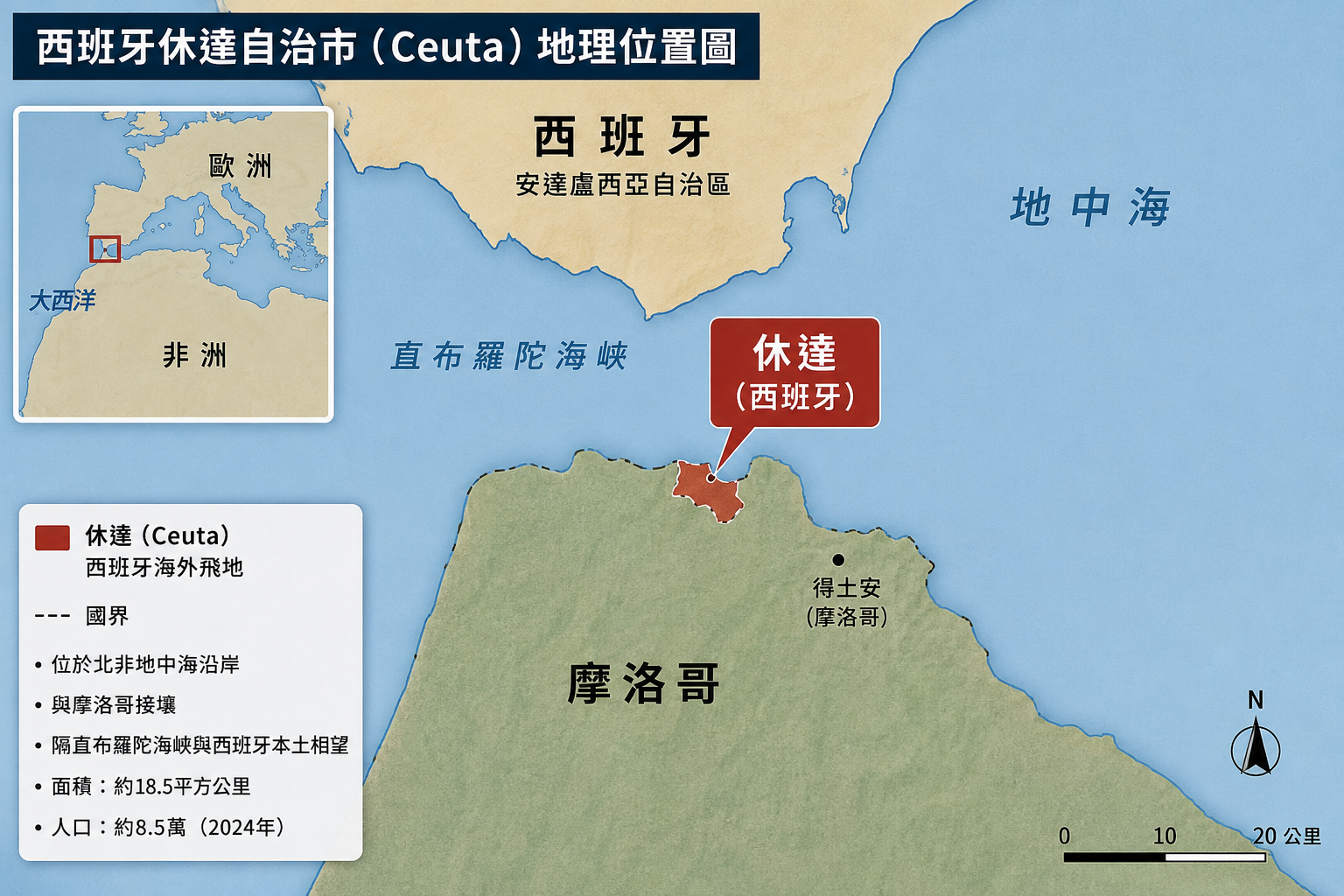
Tens of thousands of illegal immigrants recently crossed the border from Morocco into the Spanish enclave of Ceuta in North Africa, resulting in at least 18 deaths during the border crossing. The Spanish government has deployed military forces to assist the police in maintaining border security.
According to reports from the Global Post, the border crisis erupted on Thursday (July 30) and continued into Friday, with clashes between security forces and illegal immigrants on the Moroccan side of the border. The Mayor of Ceuta stated that approximately 60,000 people entered Ceuta from Morocco in the past 24 hours, representing 70% of the city’s permanent population.
At least 18 people lost their lives while attempting to reach the enclave, with officials citing drownings and trampling as the causes of death. This incident has led to criticism from France and Italy towards Spain.
Many individuals managed to breach the border fence, with some swimming from the Moroccan side to “land” on Spanish territory. Videos released on Thursday showed crowds bypassing the jetty near Tarajal Beach in Morocco and entering the roads of Ceuta.
The majority of those crossing were young men, but women, children, and entire families were also among them. Some individuals arriving in Ceuta shouted “Long live Spain”. Simultaneously, others moved back towards Morocco in hopes of returning.
The sudden influx of such a large group of people into Ceuta within a short period has left authorities puzzled. The Moroccan government has yet to provide an explanation for the events.
Facing the escalating crowd, Spain has dispatched more troops to Ceuta, with local officials describing the situation as a “serious humanitarian crisis”.
According to reports from the Associated Press, Spanish Prime Minister Pedro Sánchez and Interior Minister Fernando Grande-Marlaska visited Ceuta on Friday morning to assess the situation.
Rachid Sbihi, head of the local workers’ association representing the National Guard officers, stated that the number of arrivals in Ceuta is still increasing, putting immense pressure on the reception and accommodation capacities.
“People are still pouring in. The reinforcement troops that have arrived can only help the wounded and others in need of humanitarian assistance,” he remarked.
Due to the lack of adequate housing, thousands of illegal immigrants have been forced to sleep in parks and on sidewalks, including unaccompanied minors. Some individuals wander the streets of Ceuta, disrupting local order. Sbihi described the scene as “chaotic”.
Ceuta, along with another Spanish enclave in Africa, Melilla, has long been an important gateway for African migrants attempting to enter Spain and the European Union.
Prior to this wave of migration, the Spanish Supreme Court issued a ruling earlier this month regarding deportation procedures for illegal immigrants, prohibiting authorities from immediately deporting those who arrive by boat without due process. This ruling does not apply to illegal immigrants entering through land routes, including those crossing border fences. Some officials in Ceuta believe that this ruling may have affected some individuals’ willingness to go to Spain.
However, some immigrant rights activists in Morocco have doubts, suggesting that many intending to cross may not fully understand Spain’s complex legal procedures, making it difficult to determine if the court ruling directly triggered the large-scale migration crisis.
Spain serves as an important gateway for illegal entry into Europe from Africa and other regions. Some individuals seek job opportunities and better income in Europe, while others undertake the journey to escape conflict, political unrest, or other security threats.
To reach Ceuta on the North African coast, illegal immigrants typically swim approximately 5 kilometers from the town of Fnideq in Morocco into Spanish territory. Others attempt to cross from the nearby town of Belyounech, where the distance is shorter.
Despite not sharing a border with Spain, the chaos has also impacted Italy. Italy is another major destination for illegal immigrants. Italian Prime Minister Giorgia Meloni has warned of suspending the Schengen open border agreement between Italy and Spain to “defend our borders and ensure the safety of our citizens”.