
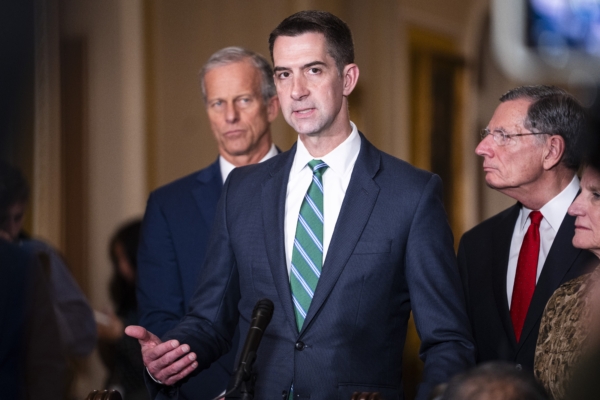
U.S. Senator Tom Cotton sent a letter to Treasury Secretary Janet Yellen on Wednesday (June 17), requesting the Committee on Foreign Investment in the United States (CFIUS) to conduct a national security investigation into the Chinese Communist Party’s investment in Airwallex.
In the letter, Cotton mentioned that he had requested an investigation by the Department of Justice last December. Airwallex is a cross-border payment platform that handles highly sensitive data for large U.S. companies. Airwallex processes social security numbers, birth dates, wage records, and travel information for leading AI labs and defense contractors in the United States. Operating behind the scenes of the payment systems used daily by Americans.
Cotton also stated in the letter that despite Airwallex claiming to be an Australian company, its ties to the Chinese Communist Party are very strong. Tencent and HongShan collectively hold over 20% of the company’s shares. Tencent is still included in the list of Chinese military companies recently published by the U.S. Department of Defense. Around 40% of Airwallex employees work in China. According to the Chinese Communist Party’s National Intelligence Law, these employees are legally required to assist Chinese intelligence agencies in secret.
The senior senator warned that without scrutiny, Airwallex’s expansion momentum will continue to grow. Currently, Airwallex holds approximately 90 financial licenses in 50 markets. Since September 2025, Airwallex has acquired three companies, including a financial data platform acquired this month. Cotton emphasized that each acquisition will bring more American data within reach of the Chinese government. CFIUS has jurisdiction over foreign investments involving U.S. companies, especially when these companies hold sensitive personal data of Americans.
Cotton urged CFIUS to review Chinese-related investments in Airwallex through its non-notified transaction procedures and conduct a comprehensive review of any transactions that may expand its business influence, including bank acquisitions, company acquisitions, or any data-intensive investments.
“If the review confirms risks, CFIUS should seek the divestment of Chinese capital from Airwallex, as it has done in previous cases like StayNTouch and PatientsLikeMe. At a minimum, CFIUS should impose legally binding conditions to cut off Chinese access to American data internally and require independent audits,” Cotton said.