
Last spring, Keshia Smith was deeply shaken by a family tragedy and felt suffocated by the weight of it all. She realized she desperately needed some positive turns in her life.
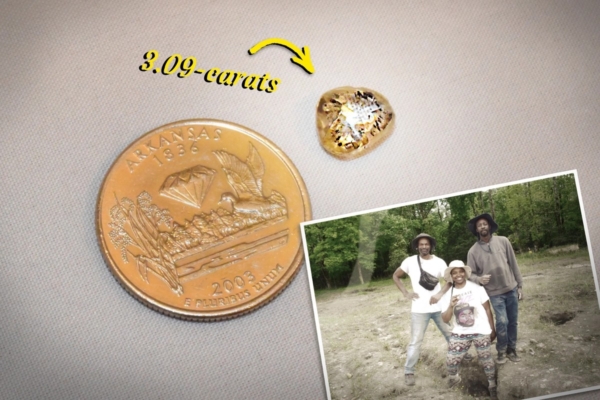
On April 22, 2026, her prayers were answered when the 47-year-old Smith and her family drove to the Arkansas state park for a getaway and stumbled upon an uncut 3.09-carat white diamond in the dirt.
Shortly after finding the diamond, Smith expressed to the park staff at the visitor center, “I really needed this. I prayed for this earnestly, and I can hardly believe it actually happened. I’ve been under immense pressure for the past six months. I lost my son last October, and we just buried my father a week ago. It’s been a really tough time.”
Smith specifically noted the shape of the diamond, saying, “To me, it looks like a heart. That’s the first thing I noticed when I found it.”
Just days after her father’s passing, Smith embarked on a planned road trip with her brother Kirim and boyfriend Joey from their home in Harrisburg, Pennsylvania to the Crater of Diamonds State Park in Arkansas, one of the few remaining operational diamond mines where the public can keep what they find.
Located in a dormant volcanic crater near Murfreesboro, the park has yielded over 75,000 natural diamonds since local farmer John Huddleston first discovered one in 1906. This history includes the largest diamond ever found in the United States in 1924, a massive 40.23-carat white stone named Uncle Sam. The park was designated a state park in 1972.
Smith, her boyfriend, and brother arrived on April 21 and spent the first day mingling with fellow diamond hunters and surveying the diamond digging site where soil is turned regularly to bring gems to the surface. On the second day, Smith began digging earnestly for diamonds and noticed a spot where the soil turned darker, leading her to a glimmer at the tip of her shovel.
Placing the stone in her bag, she continued to dig, uncertain of its value. However, when she rinsed off the dirt from the stone at the park’s washing station on the south side, her doubts vanished. Showing the uncut crystal to the surrounding treasure seekers drew attention from a nearby visitor.
The visitor urged her, “You have to get this stone appraised.” Realizing the value in her hand, Smith was moved to tears and embraced strangers at the washing station.
Later that afternoon, Smith brought the diamond to the park’s Diamond Discovery Center for official evaluation, confirming it as a 3.09-carat white diamond. Park officials described the gem as pearl-sized, flat, colorless, and with unique natural patterns along the edges. It was recorded as the second-largest diamond found in the park this year.
Following the park’s tradition, Smith formally named the diamond the Zanovia Freedom Diamond, adding a personal touch. The name integrates her two grandsons’ names and pays homage to the country using “Freedom” to commemorate America’s upcoming 250th anniversary.
For Smith, this discovery is both a redemption and carries significant economic potential. Since the unprocessed stone cannot be officially appraised, she plans to have a gemologist evaluate it. Experts noted that uncut diamonds typically lose about half their weight during cutting and polishing, meaning her 3.09-carat rough stone may yield a finished gem of around 1.5 carats.
Throughout history, top-quality diamonds from the park have commanded high prices. In 1998, Arkansas paid $34,700 for a 1.09-carat polished Strawn-Wagner diamond found in the park. Based on the clarity and color grade of Smith’s heart-shaped crystal, gemologists predict its retail value could range from $5,000 to $11,000.
Perhaps this is the turnaround Smith has long prayed for to mend her losses.
Even in the peak season at the diamond crater, Smith’s find stands out. As of 2026, the park has registered 214 diamonds found by visitors. The impact of the Zanovia Freedom Diamond on the staff responsible for registration is evident.
Sarah Bivens, the park interpreter who appraised the diamond, shared, “Mrs. Smith has radiated joy from the moment she stepped through the gates. It’s not uncommon for such large diamonds to be found within the first hour of digging by the discoverer. Sometimes, I feel like such diamond discoveries may be destined.”
– End of Article –