
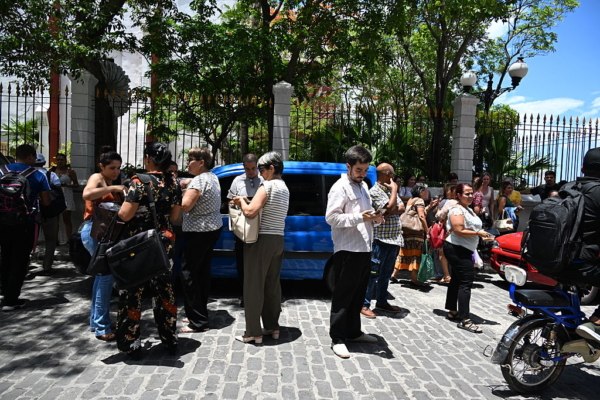
On Monday, June 8th, a 6.1 magnitude earthquake struck the northwestern coast of Cuba, marking the strongest earthquake the region has experienced in nearly 150 years. The tremors were felt in areas of Cuba, Mexico, and the state of Florida in the United States, regions not typically prone to earthquakes.
According to the United States Geological Survey (USGS), the earthquake was recorded as a 6.1 magnitude with a depth of 26 kilometers (approximately 16 miles). The epicenter was located approximately 104 kilometers (about 65 miles) northwest of Mantua, Cuba, a two to four hours’ drive from the capital city of Havana.
The National Tsunami Center of the National Weather Service in the United States stated on social media platform X that there was no risk of a tsunami being triggered by this earthquake.
Many areas in Florida reported feeling the earthquake, an unusual occurrence as stated by the USGS. Videos shared on social media showed household items gently swaying in the tremors.
Parts of Mexico also felt the earthquake, including popular tourist cities like Cancún, Playa del Carmen, and Tulum located on the Yucatán Peninsula.
Seismologist Paul Earle from the USGS mentioned that this earthquake was uncommon for this area in the Caribbean Sea. He explained that earthquakes occurring within a tectonic plate, like this one, tend to be more scattered and have lower frequencies compared to those along plate boundaries.
Earle highlighted that within a 200-mile radius of where this earthquake occurred on Monday, there has not been a seismic event of this intensity since a 6.0 magnitude earthquake near San Cristobal, Cuba, back in 1880.
While Cuban authorities have not reported any significant property damage or casualties resulting from the earthquake, it has raised concerns among the Cuban population. Additionally, with decades of economic crisis leading to severe deterioration of infrastructure in Cuba, coupled with ongoing widespread power outages and communication difficulties in the region, the situation remains challenging.
(Reference from Reuters)