
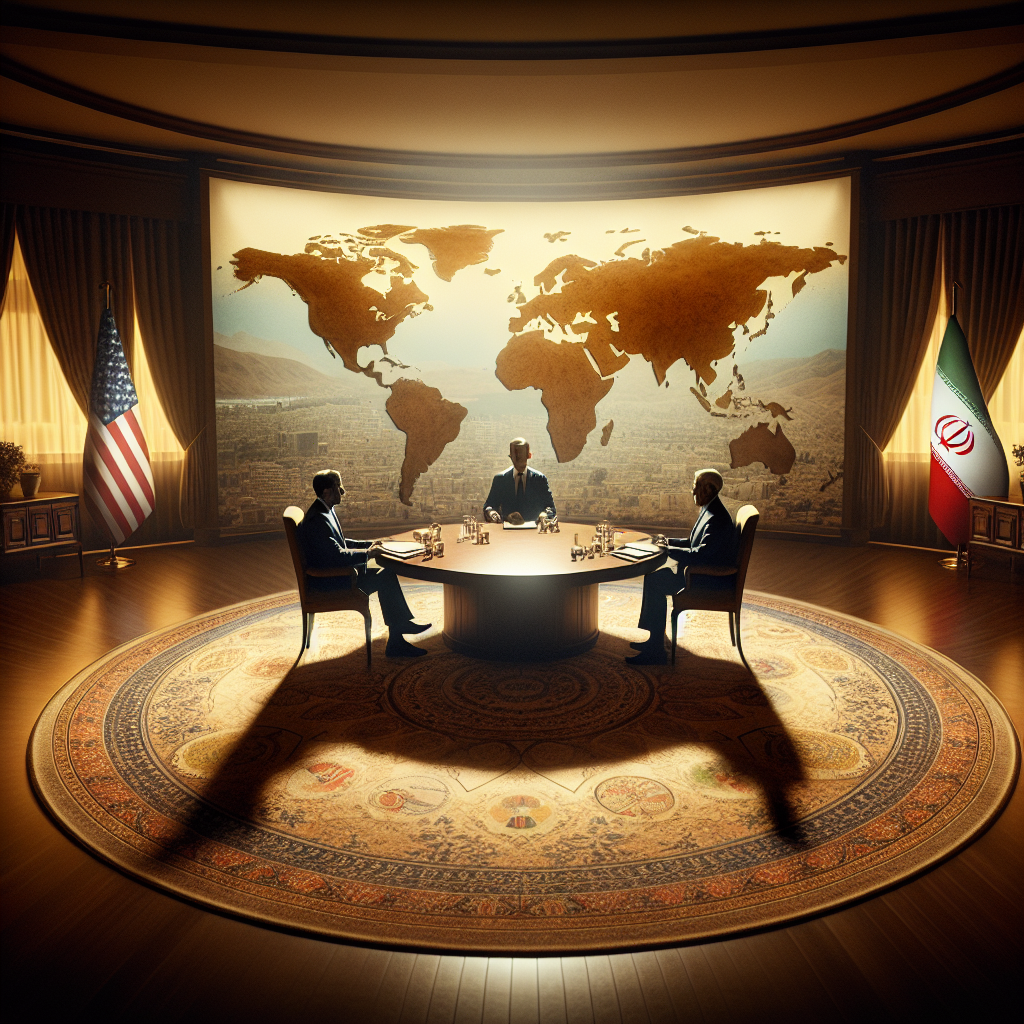
The White House officials stated that the United States, Iran, and Pakistan held trilateral face-to-face talks in Islamabad on Saturday (April 11), with Pakistan mediating. The outcome of these negotiations, and whether they could ultimately lead to a peace agreement, has drawn global attention.
A senior White House official disclosed the above information in a statement released to the accompanying US delegation journalists on Saturday.
According to the list provided by the White House, the US delegation includes Vice President Vance, US Special Envoy Steve Witkoff, and President Trump’s son-in-law Jared Kushner, along with two senior advisors to Vice President Vance, namely National Security Advisor Andrew Baker and Asia Affairs Special Advisor Michael Vance.
The White House officials mentioned that the US also sent “some American experts in relevant fields” to Islamabad, with “other experts from Washington” providing support for the negotiations.
As reported by the Iranian media outlet Tasnim News Agency, the Iranian delegation consisted of 71 members, including negotiators, experts, media representatives, and security personnel. The delegation was led by the Speaker of the Iranian Parliament, Mahammad Bagher Qalibaf, with Foreign Minister Abbas Araghchi also participating in the talks.
According to Reuters, a Pakistani source revealed that after two hours of negotiations, the delegations from both sides took a break. The Chief of the Pakistani Army also attended the meeting.
The issue of free passage through the Hormuz Strait will be one of the crucial topics discussed during the talks.
US President Trump posted on his social media platform “Truth Social,” stating, “The Hormuz Strait is about to open, with empty ships heading towards the US to ‘load goods’.”
Trump further mentioned, “We are now starting to clear the Hormuz Strait, aiming to assist various countries including China, Japan, South Korea, France, Germany, and others around the world.”
This negotiation led by Vance and Qalibaf signifies rare high-level engagement between the US leadership and the Iranian government.
Since the Islamic Revolution in 1979, direct high-level contacts between the two countries can be dated back to September 2013, when then-Democratic US President Obama phoned the newly elected Iranian President Hassan Rouhani to discuss the Iranian nuclear program.
As per the semi-official Fars News Agency, citing its correspondent in Pakistan, members of the Iranian delegation’s expert committee have arrived at the negotiation venue, indicating that the talks have progressed to the expert level.
Before the face-to-face talks between the US and Iran, Pakistani Prime Minister Shehbaz Sharif separately met with both delegations. The Prime Minister’s office stated that he welcomes the commitment of the US and Iranian delegations to constructive dialogue, hoping that “this negotiation could be a cornerstone for lasting peace in the Middle East.”
According to the US Vice President’s office, Vice President Vance briefly visited the US Embassy in Pakistan before arriving at the Serena Hotel in Islamabad.