
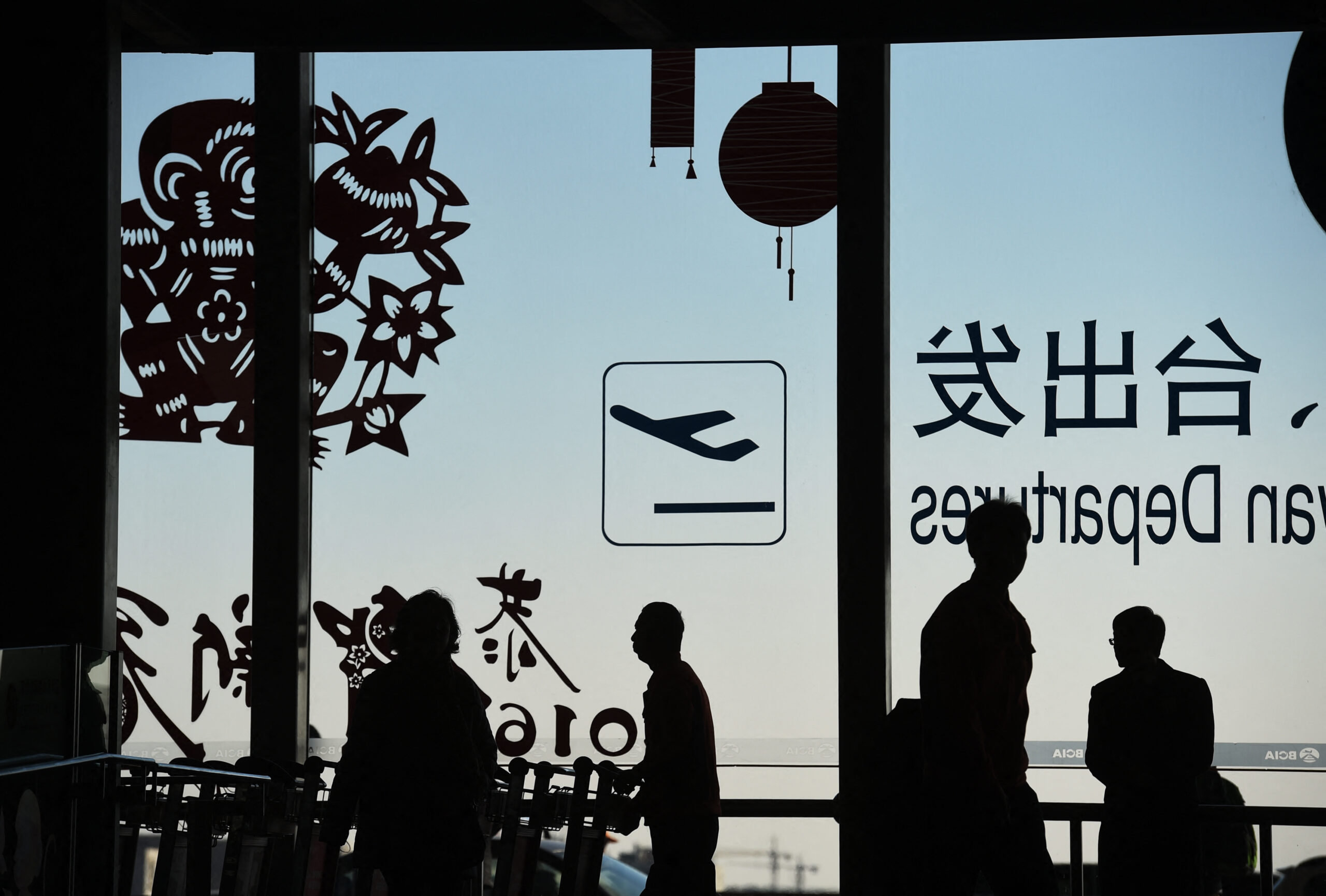
The Chinese Communist Party (CCP) officially announced new immigration and emigration regulations yesterday (July 31), focusing on the prohibition of individuals deemed to pose a threat to technology security from leaving the country. However, overseas analysts believe that this may be the strictest and most opaque border control regulation in history, with wide-ranging and profound implications. The new regulations represent the most severe violation of citizens’ freedom of movement, leading many to believe that China’s doors are slowly closing.
According to a report by the CCP’s Xinhua News Agency, the “Regulations on Immigration and Emigration Management” signed by Premier Li Keqiang will come into effect on September 15, 2026.
The regulations consist of a total of 19 articles, focusing on the prevention of outbound security risks, verification of the authenticity of application reasons, enhancement of exit and entry restriction measures, and regulation of intermediary services.
It is stipulated that Chinese citizens who violate export controls, technology import and export management regulations, and pose a threat to national industrial or technological security may be prohibited from leaving the country by relevant government departments.
Furthermore, if a Chinese citizen engages in illegal activities abroad that harm national security or interests, they may be prohibited from leaving the country for a period ranging from six months to three years upon their return.
In addition, foreigners applying for Chinese visas abroad or applying for entry at the border, if they submit false materials or make false statements, may be prohibited from entering China for a period of one to five years.
The CCP had previously passed the “Immigration and Emigration Control Law” in 2012, which came into effect in July 2013, accompanied by the “Regulations on the Entry and Exit of Foreigners.”
The UK’s Financial Times previously reported that in March of this year, Beijing reviewed Meta’s $2 billion acquisition of the AI startup Manus to determine if it violated investment regulations and subsequently banned two of Manus’s co-founders from leaving the country. By the end of April, China further ordered Meta to retract the acquisition, sparking widespread controversy.
Many observers believe that analyzing this new regulation from the CCP reveals more details.
On the YouTube channel “China-US Comparison,” the host Yaoyao explained that the new official regulations on immigration and emigration management are not aimed at making it easier for individuals to leave the country, but rather at preventing them from doing so. Border inspections not only involve checking passports but also scrutinizing the purpose of travel, requiring individuals to provide documentation and electronic data. The decision-making power has been decentralized from central departments to provincial governments and more administrative agencies, and in matters related to national security, individuals may not even be notified.
She noted that this could be the strictest and most opaque set of border control regulations in history. For some individuals, the next few days may be the last window of opportunity to flee China.
Analysis suggests that the previous laws were like a general map, merely stating under what circumstances individuals could be prohibited from leaving the country; the new rules establish a set of operational rules for determining who decides, how to notify, and how to hand over to border control authorities. The real cause for concern is not the addition of nineteen articles on paper, but the consolidation of border control rights previously scattered across different laws, now connected into a single network.
Analysis indicates that the old law already stipulated six categories of Chinese citizens who are not allowed to leave the country. The new regulations empower immigration management agencies to decide to prohibit an individual from leaving the country for a period ranging from six months to three years; foreign missions can verify what activities you have engaged in abroad; provincial governments at your place of residence can determine if you can leave the country upon returning; and relevant authorities such as the Ministry of Commerce can detain individuals citing industrial or technological security concerns. Ultimately, all decisions are integrated into the immigration management system and implemented by border inspection at ports. Hence, it is referred to as the strictest new border control regulations.
Yaoyao further explained that the second article of the new regulations may appear gentle on the surface but has effectively expanded border control from merely identifying risks to preventing departures. When immigration agencies issue passports and conduct border inspections, Chinese citizens intending to travel to high-risk areas or regions with serious threats to personal safety may be “advised against” if necessary. If you still decide to proceed, the national government can then “protect you” by preventing you from leaving the country. Decisions on where to go and what risks to take, which should ideally be based on individual judgment, are now subject to the clearance judgment of administrative authorities.
Furthermore, while the old law required Chinese citizens to hold valid passports, obtain visas for their destination countries, and undergo border inspections, the new regulations extend scrutiny from “do you have legal documents” to “why are you leaving”— questioning whether a trip is genuine tourism, who you are visiting for family reasons, which company’s business activities are involved, and the source of funds for studying abroad, all of which may transition from personal arrangements to reasons requiring verification by administrative authorities.
Yaoyao noted that compared to the United States, American citizens do not face Chinese-style exit border inspections when leaving the country. There are no lines of border inspection counters or gates requiring every American to present a passport, explain their reasons for leaving the country, or wait for a departure seal. Airlines verify documents, passengers pass through security checks, and once the plane takes off, it leaves the US. From the moment Chinese individuals receive their first passport, they are trained to consider “permission to leave” as a natural procedure.
She concluded that the most significant regression in the new regulations is the shift from verifying documents to examining motives— the state aims to understand why individuals are leaving the country. The real decision-maker of who is prevented from leaving is outlined in the fourth article. The first category includes individuals subject to administrative detention for falsifying exit and entry documents and illegally entering or exiting the country; immigration management agencies can decide to prohibit them from leaving the country for a period ranging from six months to three years based on the severity of the offense and the need to prevent further criminal activities.
Yaoyao believes that in recent years, China has continuously expanded the concept of national security, covering various fields such as politics, economics, finance, networks, data, technology, and culture. A student participating in overseas protests, a self-media reporter interviewing sensitive individuals, a corporate employee providing data to foreign organizations, or an overseas Chinese participating in activities disliked by the Chinese government may all fall into a vast net. Additionally, overseas speech and activities are collected by Chinese missions abroad, punished by local authorities in China, and ultimately enforced by the national border inspection system, effectively setting a trap for some Chinese individuals residing overseas to return to the country.
She explained that while the old law used the term “decided by relevant competent departments of the State Council,” the new rules not only grant decision-making authority to departments under the State Council but also to industry regulatory bodies, overseas missions participating in verification, and provincial governments where individuals are domiciled. With the decentralization of border control authority, assessments of individuals’ actions overseas and whether they pose a risk to national interests may no longer be solely determined by Beijing but also by the individual’s registered province. This exception power for national security is now being routinely utilized through localized channels.
Yaoyao analyzed that the tenth article is particularly explicit: public officials and military personnel who entrust intermediaries to handle foreign nationality, permanent residence, overseas residence permits, or other exit procedures in violation of regulations must not only refrain from doing so, but the intermediaries must report to supervisory agencies in a timely manner. As a result, border control no longer starts at airport inspection counters but has been moved to the offices of visa companies, study abroad institutions, and immigration intermediaries. Punishments have been further devolved to provincial governments, industry regulatory bodies, foreign missions, and the immigration management system, all of which operate on the same chain.
She stated that from passport approvals to unit custody, from restricting specific individuals applying for documents to now incorporating motives for departure, electronic data, local stability, and secret border control into the same administrative regulation, this marks the most severe violation of citizens’ freedom of movement in China over the past few decades.
Internationally, the new Chinese regulations have stirred criticism and concerns on X platform.
Li Chengpeng stated: The new “Regulations on Immigration and Emigration Management” represent an expansion, legitimization, and regularization of border control. Individuals can be detained at customs without being informed of the reason. It is possible to prevent you from leaving the country, citing that you pose a threat to national security. And it is now framed that preventing you from processing departure documents can even be justified with absurd reasons like “fraudulent acquisition of a passport.” The ability to leave the country freely is being increasingly curtailed. Whether it be money or people, once stuck inside the country, all you can hear is a resounding command echoing through the air: “Surrender the gun, do not kill.”
Independent commentator Cai Shunkun remarked that many people have offered analyses and comments on the new regulations from various perspectives, and the general consensus is that China’s gateway to openness is slowly closing. Whether it will revert entirely to the era of Mao Zedong remains uncertain.
James Jiangnan Xiaodu added: “Looking at it from another angle: China’s policy of restricting citizens’ freedom to emigrate directly contradicts the premise and commitments that led to the country receiving most-favored-nation treatment from the United States. According to the Jackson-Vanik Amendment, the US President cannot grant most-favored-nation status or sign bilateral trade agreements with countries that restrict citizens’ freedom to emigrate. By employing “reminders and dissuasion” to circumvent travel bans, China is trying to have it both ways.”
Finding stated: “China’s doors are slowly closing, whether it be physically, financially, or informationally!”