
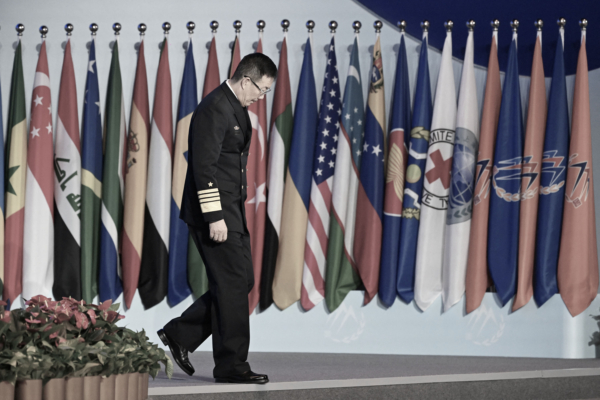
【Epoch Times – June 12, 2026】 Despite his absence from the Shangri-La Dialogue held in Singapore last month, Chinese Defense Minister Dong Jun made high-profile visits to North Korea with the Chinese Communist Party leader Xi Jinping on June 8th and 9th. Prior to this, on June 1st, Dong also visited South Africa. Earlier this year, in March and April, he visited Vietnam, Russia, Kyrgyzstan, and attended the Defense Ministers’ meeting of the Shanghai Cooperation Organization.
Dong Jun was appointed as the new Defense Minister in December 2023 following the fall of former Defense Minister Li Shangfu. However, he has not been promoted to a member of the Central Military Commission or State Council, making him the lowest-ranking Defense Minister since the establishment of the Communist Party. Despite this, he is one of the few survivors in the recent military purge.
Some speculate that Dong’s appointment and retention are attributed to the influence of the “military wives’ clique.” However, experts on NTDTV’s “Current Affairs Debate” unanimously believe that Dong’s ability to stay in his position is not due to this clique but rather because of his perceived lack of power and influence. His retention does not necessarily equate to trust.
In May 2024, social media in mainland China exposed a photo of China’s First Lady Peng Liyuan wearing military attire while inspecting a military academy, indicating her involvement in military personnel assessment. The Central Military Commission Cadre Assessment Committee, established in 2016, is responsible for evaluating and promoting high-level military officers.
Dong’s promotion has been linked to Peng Liyuan, as both are natives of Shandong. Therefore, some analysts suggest that Dong’s recent high-profile appearances might indicate Peng Liyuan’s resurgence in influencing military personnel appointments following Zhang Yuxia’s downfall.
The host of “Horizon Observation,” Heng He, disagrees with this assertion. He emphasizes that loyalty in the military is not based solely on titles but is rooted in long-standing relationships, camaraderie forged in battle, and mutual trust built over time. He questions Peng’s actual influence, pointing out that even Xi Jinping lacks a distinct power structure within the military.
Comparisons have been drawn between Peng Liyuan and Jiang Qing, the former First Lady who once meddled in military affairs. Heng He notes that Jiang Qing had no impact on the military and was widely disliked by many. In contrast, Peng, who has never been involved in politics or played any substantial role in the military, lacks the foundational experience that Jiang had.
In 2024, the Financial Times reported that Dong Jun was under investigation. Subsequently, Miao Hua, the former Director of the Central Military Commission’s Political Work Department, two Vice Chairmen of the Military Commission, and numerous senior military officials were purged. Rumors suggest that Dong’s rise from Navy Commander to Defense Minister was recommended by Miao Hua to Xi Jinping, though Dong continues to hold his position.
According to Professor Chen Wenjia, Vice President of Taiwan’s Kainan University, Dong’s primary dilemma lies in his high position but low authority. Typically, Defense Ministers hold concurrent positions as members of the Central Military Commission or State Council, a distinction that Dong lacks. This indicates Xi Jinping’s willingness to use him without necessarily trusting him.
Chen points out that Dong’s retention likely stems from his functional value. As a product of the Navy system and his purported ties to Miao Hua, Dong’s frequent diplomatic visits to Russia, Vietnam, South Africa, North Korea, among others, suggest that the Chinese Communist Party views him as a representative for military diplomacy. In the CCP system, positions of prominence do not always signify power stability but rather present a utilitarian value.
Considering Dong’s lack of a position on the Central Military Commission and his limited influence within the military ranks, Heng He believes he can be utilized without posing a threat. Chen Wenjia notes that Dong currently holds a peculiar position, being on stage but excluded from the core. His situation reflects the ongoing power reorganization within the Chinese military.
As the dynamics in China’s military continue to shift, Dong Jun’s ambiguous standing exemplifies the unconventional power restructuring underway within the Chinese leadership.