
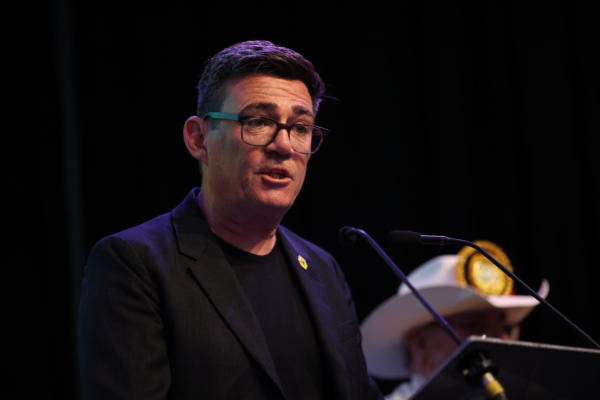
British Mayor of Greater Manchester, Andy Burnham, secured a landslide victory in a by-election held in the Makerfield constituency on Friday, June 19, officially returning to the Parliament.
This victory is seen as a significant turning point in the UK political landscape, not only solidifying Burnham’s position as the “successor of the Labour Party” but also clearing the final obstacle for him to challenge the current UK Prime Minister, Keir Starmer, for leadership.
In this by-election, Burnham received about 54.8% of the votes, defeating Reform UK candidate Rob Kenyon by over 9,000 votes.
In his victory speech, Burnham firmly stated, “Everyone knows that politics has failed now, everyone can feel that this country is not where it should be. Possibly tonight could be a turning point.”
He further urged the Labour Party to seize this “last opportunity for change” and indicated a shift towards a new politics based on unity and hope, steering away from the path that leads to division and dark politics.
Burnham, known as the “King of the North” in the media, has been the Mayor of Greater Manchester, advocating for resources for the North of England from the central government during the pandemic and promoting local empowerment and the revival of the North. In contrast to Burnham’s popularity, Prime Minister Starmer is facing his biggest crisis in his two years in office.
Due to weak economic growth, deteriorating public services, and a crisis in the cost of living, Starmer’s approval ratings have plummeted to historic lows.
Presently, about a quarter of Labour Members of Parliament have publicly called for his resignation, with several cabinet ministers like former Health Minister Wes Streeting resigning, criticizing the current government for having “a void where foresight is needed.”
Streeting has indicated his intention to run if there is a leadership election.
Despite mounting pressure, Starmer has expressed his determination to continue fighting. He congratulated Burnham on his victory on social media, stating, “The voters chose a Labour campaign full of hope and optimism, not division and hatred.”
During the G7 summit, Starmer reiterated, “If faced with a challenge, I will fight with all I’ve got.”
He stated, “We achieved a significant victory in the 2024 election, receiving the mandate for change. I will not back down.”
With Burnham set to be sworn into office next Monday, there is anticipation on how he will launch his challenge.
According to Labour Party rules, with the support of 20% of Parliament members (81 in total), a leadership challenge can be triggered. Currently, Burnham’s allies are trying to persuade Starmer to undergo an “orderly and controlled transfer of power” to avoid months of internal strife.
Political analysts view Burnham’s strong performance in defeating the Reform Party in the northern constituencies as his most powerful political asset.
Rob Ford, a professor at Manchester University, pointed out, “The narrative he brings is: ‘No one could win that seat, but I did. I can bring a unique appeal to the Labour Party.'”
If Starmer refuses to set a resignation timetable, Burnham may officially launch his challenge before Parliament’s recess on July 16.
If Burnham eventually enters Downing Street, the UK will witness its seventh Prime Minister in over a decade, making it the period with the most frequent changes in Prime Ministers in nearly two centuries.
Burnham supports nationalizing key public services, but during the campaign, he was compelled to reassure nervous investors, affirming a commitment to strict financial regulations.