
In recent days, former Chinese Communist Party official Du Wen revealed that he had received an internal economic research report on China from the Communist Party Central Office, summarized and signed by Politburo Standing Committee member Cai Qi before being submitted to Xi Jinping. Du believes that the report reflects that the three major pillars of the Chinese economy have all stalled, leading to an overall economic state akin to a “late-stage cancer.” Experts suggest that the most frightening aspect for the CCP is the evolution of the economic crisis into a governance crisis and a crisis of political power.
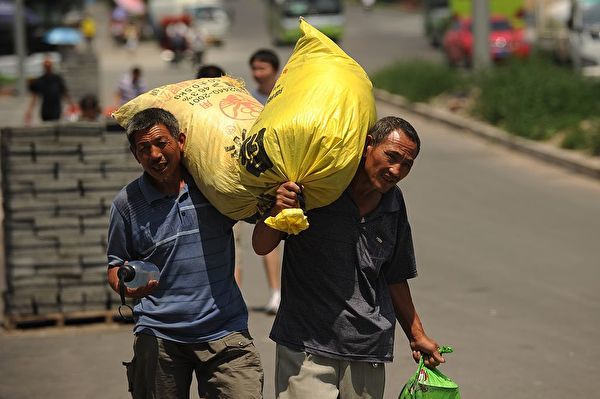
The internal report by Cai Qi focuses on the three key drivers of the Chinese economy: investment, exports, and domestic demand. In terms of investment, fixed asset investment is lower than expected, with private investment remaining sluggish. Regarding exports, many businesses have relocated abroad, transferring advanced production capacities to countries like Vietnam, Mexico, and India. On the domestic front, consumption is weak, with youth employment being a crucial issue. The mass return of migrant workers has triggered a chain reaction of increased poverty rates, more petitioning activities, and greater pressure on grassroots governance.
Renowned economist Chen Wenjia from Taiwan’s Kainan University expressed on NTD Television’s “News Analysis” program that while the authenticity of the internal report cannot be fully confirmed, it does closely mirror the current situation in mainland China.
Public data shows a 0.6% decrease in retail sales in China in May, a 4.1% decline in fixed asset investment in the first five months, and a significant 16.2% drop in the real estate sector. Chen emphasized that this indicates significant pressures on consumption, investment, and real estate, with the Chinese economy facing challenges on multiple fronts such as sluggish investment, export pressures, and lackluster domestic demand, all exacerbated by the critical issue of employment.
Analyzing the situation further, Chen pointed out the challenges in investment whereby China previously relied on infrastructure projects, real estate, and local government debt to stimulate the economy. However, post the 2008 financial crisis, massive stimulus packages led to a surge in local government debt, ghost towns, and overcapacity issues. Presently, even if local governments issue bonds, much of the funds go towards debt repayment rather than new projects, constraining the potential for sustainable growth.
In terms of exports, Chen noted that Chinese factories are not incapable but are facing declining profits and heightened risks. Many enterprises are shifting their production lines to countries like Vietnam, Mexico, and India to avoid US tariffs and geopolitical risks, consequently impacting domestic demand negatively.
Discussing domestic demand, Chen mentioned that the reluctance of ordinary citizens to spend is not due to lack of willingness but stems from falling house prices, job instability, and hefty burdens of healthcare and elderly care. With young people struggling to find decent jobs, they are delaying decisions like purchasing homes, getting married, or having children. Moreover, if a large number of migrant workers return to rural areas, it will not only strain local security and increase petitioning pressure but also exacerbate grassroots governance challenges.
Regarding the comparison of China’s current economic status to that of 1997 or 1999, Chen argued that while China’s industrial scale today is much larger than back then, societal confidence may be weaker now. The previous periods saw China’s accession to the WTO and the growth momentum of urbanization and real estate. In contrast, the current economic scenario is marked by real estate market decline, aging population, foreign investment hesitancy, insufficient domestic demand confidence, and pressures from non-Chinese supply chains, painting a bleak picture. However, Chen stressed that while the Chinese economy is not on the verge of an immediate collapse, it has entered a new normal characterized by low confidence, consumption, high debt, and stringent controls.
Addressing the issue of mass return of migrant workers mentioned in the report, veteran journalist Li Su noted that many workers go back to their hometowns not out of prosperity but due to poverty and job scarcity. However, returning to rural areas does not offer employment opportunities, with job prospects concentrated in urban centers, leading to heightened discontent and social unrest, thereby elevating the challenges of grassroots governance.
Li suggested that the best solution to this problem would involve creating more job opportunities in rural areas. However, given the economic slowdown and the difficulty of ensuring equitable distribution of resources, the government may need to allocate significant funds to provide basic living conditions for returning migrant workers and offer them retraining to adapt to new industrial demands and secure reemployment opportunities. Yet, under the current allocation mechanisms, the likelihood of the CCP government allocating funds to support the rural population remains slim, given historical tendencies to exploit rather than uplift rural workers.
Li further commented that with the worsening economic conditions leading to a rise in the number of returning rural migrants facing livelihood difficulties, the possibility of increased social upheaval, particularly in rural areas, is imminent. This, indeed, is the CCP’s primary concern as the potential consequences go beyond mere economic ramifications to impact governance stability and political control.
Chen Wenjia, deputy dean of Kainan University in Taiwan, echoed similar sentiments, emphasizing that while the economy is vital for the CCP, its foremost concerns lie in the repercussions of economic hardships on society such as escalating dissent, protests, increased petitioning activities, ultimately jeopardizing the stability of grassroots governance and political power.
Chen highlighted that the CCP’s governance logic revolves around instilling confidence among the populace in improving living standards and maintaining stability to prevent organized dissent. However, as the economy falters, the foundation for this governance approach weakens, leading to heightened pressures on stability maintenance efforts.
Using the real estate sector as an example, where households traditionally viewed properties as assets while local governments relied on land sales for revenue, the challenges surfaced when leading real estate developers like Evergrande encountered issues, leaving several unfinished constructions. Consequently, disgruntled homeowners ceased mortgage payments, staged protests, and petitioned authorities, portraying a more concerning scenario for the CCP than a mere downturn in property prices.
Chen emphasized that the CCP’s primary apprehensions revolve around the political implications of economic challenges, specifically a rise in poverty rates, increased petitioning activities, and greater governance pressures at the grassroots level, ultimately transforming an economic crisis into a governance crisis – the scenario the CCP fears the most.
Cai Qi’s internal report bypasses the official statistical system and establishes an independent data collection system. Seasoned political and economic commentator Wu Jialong expressed on NTD Television’s “Investigative Reports” program that this indicates a lack of trust within the CCP leadership in the official statistical data.
Wu asserted that the CCP internally acknowledges the high degree of falsification in the data, rendering it unreliable for reference. It is estimated that when assessing China’s economic output, one must discount the official figures significantly, indicating a lack of comprehensive, trustworthy data. Previously, the assessment of China’s macroeconomic performance during former Premier Li Keqiang’s tenure did not rely on layered official data with inflated statistics but employed the “Li Keqiang Index,” comprising three key indicators cross-verified with other data sets to provide a more accurate assessment.
The Li Keqiang Index included three core indicators: industrial electricity consumption reflecting the actual scale of manufacturing and factory operations, long-term bank loans indicating enterprise investment intent and market liquidity, and railway freight volume mirroring the flow of resources and industrial production activities.
Wu opined that the current methodology may no longer suffice, necessitating the creation of a new data system to obtain more accurate data in the CCP’s perspective. However, data collection requires stringent protocols and standards – complexities that were recognized by Nobel laureates in Economics who contributed to designing statistical systems for Western countries.
For instance, calculating the unemployment rate requires a clear definition of unemployment. Wu pointed out that as per China’s current criteria, a person must demonstrate willingness to work and be actively seeking employment to be considered unemployed, excluding those who have withdrawn from seeking work or are not registered as job seekers. Consequently, if a significant number of individuals exit the job market due to prolonged unemployment, the unemployment figures artificially improve. This renders the unemployment data unreliable for gauging actual labor market conditions and formulating effective employment policies.
In summary, Wu emphasized that due to the distorted nature of China’s economic data, assessments of the macroeconomic situation have deviated significantly from reality. Consequently, with uncertainties surrounding whether to tighten or loosen economic policies — compounded by the lack of accurate data guiding decision-making — the economic situation has deteriorated continuously, potentially leading down a path of collapse, analogous to a state of “late-stage cancer.”