
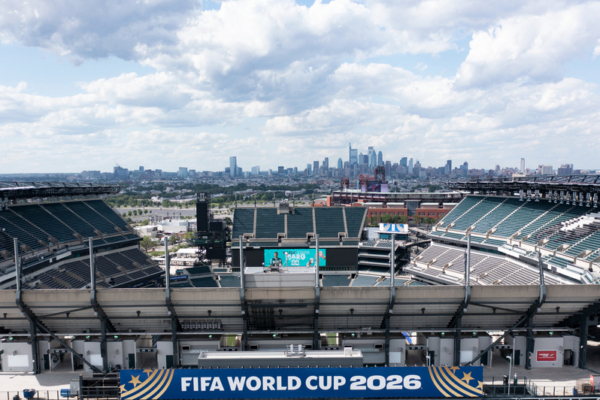
The 2026 FIFA World Cup in the United States, Canada, and Mexico is about to kick off, with a significant decrease in sponsorship from Chinese enterprises. Mainland Chinese media reported that the total sponsorship amount from Chinese companies for this edition exceeds $500 million, a decrease of over 60% compared to the previous tournament. According to Hong Kong media estimates based on actual sponsors, the sponsorship amount is around $350 million, a decline of about 70%.
Mainland Chinese media outlet “New Yellow River” reported on June 10 that the China Council for the Promotion of International Trade (CCPIT) recently stated that out of the 16 global sponsors for this World Cup, Chinese companies account for four spots, namely Lenovo, Hisense, Mengniu, and Wanda. These four companies have collectively invested over $500 million, representing nearly one-fifth of the $2.7 billion in sponsorship revenue confirmed by FIFA.
During the 2022 World Cup in Qatar, Chinese companies contributed a total sponsorship amount of $1.395 billion. Calculated based on the sponsorship exceeding $500 million for this edition, the sponsorship has decreased by over 60% compared to the previous tournament.
In a report by Hong Kong newspaper “Sing Tao Daily” on June 11, the actual number of Chinese sponsors for this World Cup is only three, including Lenovo, Hisense, and Mengniu, with a combined investment of around $350 million, marking a decrease of about 70% compared to the previous Qatar World Cup.
The report mentions that originally, Lenovo, Hisense, Mengniu, and Wanda were planned to invest over $500 million. However, due to Wanda’s failure to pay sponsorship fees on time and subsequent suspension of related rights by FIFA, the company eventually withdrew from the list of sponsors. The actual sponsorship amount from the remaining three companies is approximately $350 million.
Chinese enterprises have previously made significant investments in World Cup sponsorships. During the 2018 World Cup in Russia, China had seven sponsors with a total sponsorship of approximately $835 million; by the 2022 Qatar World Cup, Chinese sponsorship increased to $1.395 billion. Data indicated that Chinese companies’ total sponsorship at that time exceeded that of American companies. Previous sponsors included Wanda, Hisense, Mengniu, Vivo, Yadi, and BOSS Zhipin.
Reports suggest that the decrease in Chinese corporate sponsorships for this World Cup is linked to factors such as operational pressures and uncertainty in sponsorship returns.
Analyses from the mainland financial platform “Juchao WAVE” indicate that solar energy company Yingli had sponsored two World Cups but was unable to continue due to performance issues, while Wanda faced financial pressure amid a real estate crisis, leading to its exit from the top sponsorship tier. Additionally, Vivo, despite sponsoring the 2018 and 2022 World Cups consecutively, did not appear on the sponsorship list for this edition.
The time difference between matches also impacts the commercial value of the World Cup in the Chinese market. With most games taking place late at night to early morning Beijing time, reports suggest that viewer willingness to stay up late to watch matches may be affected, especially with the Chinese team not participating. As a result, the effectiveness of advertising for companies during the tournament may diminish.
Rising sponsorship costs and subsequent marketing expenses are among the reasons for the reduced investment from Chinese enterprises. Reports indicate that participating in World Cup sponsorships involves not only paying sponsorship fees but also additional expenses for advertising, offline activities, channel promotion, and brand communication. It is reported that the post-sponsorship “activation costs” for the World Cup may be several times higher than the sponsorship fees. With overall costs escalating, some companies are beginning to reassess the return on investment in tournament sponsorships.