
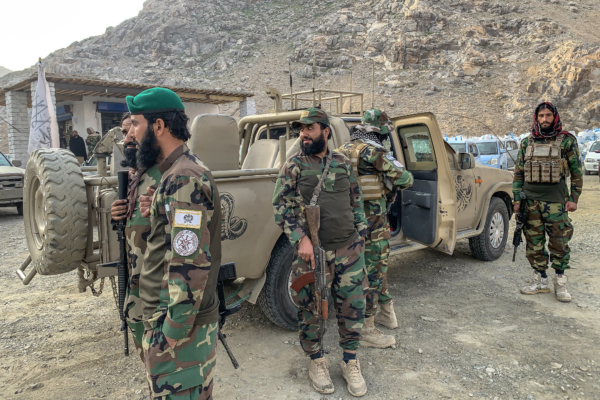
On Wednesday (June 10), the Taliban government in Afghanistan stated that the Pakistani military conducted airstrikes in three provinces within Afghanistan, resulting in at least 13 deaths, including 11 children.
This operation occurred the day after an armed attack on a border post, marking a serious escalation in the already fragile ceasefire agreement between the two sides.
Taliban spokesperson Zabihullah Mujahid mentioned that the Pakistani airstrikes violated Afghan airspace and targeted residential homes in Kunar, Khost, and Paktika provinces.
In addition to the 11 children, the victims included a woman and an elderly person. Mujahid stated that at least 14 others were wounded.
Although the Pakistani government and military have not issued an official statement on this, a Pakistani security official confirmed to Reuters that Islamabad did indeed carry out the airstrikes.
The official stated that the targets were “hiding places and other facilities used by Pakistani armed groups to attack Pakistan.”
The catalyst for these airstrikes occurred on Tuesday when armed individuals suspected to be members of the Pakistani Taliban attacked a security post in the northwest border of Pakistan, resulting in a fierce gun battle that claimed the lives of 6 Federal Constabulary members and left several others injured.
Local authorities on Tuesday reported that security forces killed 8 assailants and thwarted their attempt to capture the post.
Following the incident, Pakistani Interior Minister Mohsin Naqvi emphasized during the mourning of the fallen officials that Pakistan remains united in combating extremism, and actions against organizations threatening peace and security will be intensified.
This violent clash threatens the brief peace maintained between the two countries since the ceasefire in March. At that time, with mediation in Beijing, Pakistan and Afghanistan reached an agreement in Urumqi to avoid escalation of conflicts and seek solutions.
However, Pakistan has long accused Afghanistan of harboring TTP members, allowing them to launch cross-border attacks; in response, the Afghan government denied this and accused armed activities of being an internal issue of Pakistan.
Since February this year, tensions along the Pakistan-Afghanistan border have continued to worsen. Pakistan announced a “state of open war” with Afghanistan in February, while Afghanistan accused Pakistan of hitting a drug rehabilitation center in Kabul in March, causing over 400 deaths, though this figure has not been independently confirmed, and Pakistan refuted the claim by stating that it hit an ammunition depot.
The airstrike incident on Wednesday undoubtedly adds another layer of complexity to this conflict-ridden region.