
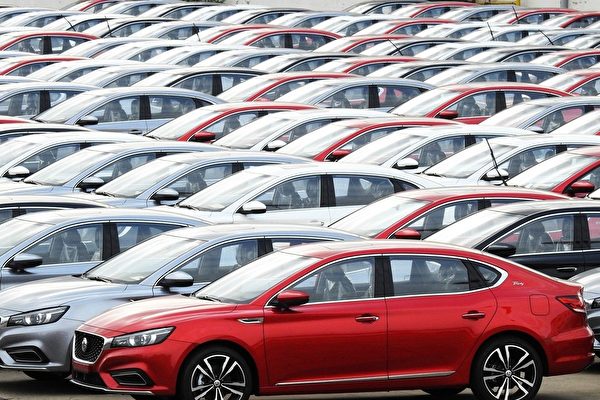
In May this year, all the top ten best-selling cars in the Chinese automotive market were electric cars (new energy vehicles), pushing fuel cars out of the top ten. However, overall, the sales of electric cars still decreased by 7% compared to the same period last year.
According to a report by “First Financial” on June 9, the list of retail sales of passenger cars in May released by the Mainland China car information platform, “Dunduche”, showed that the micro electric car Xingyuan topped the list with monthly sales of 38,751 vehicles, followed by Tesla Model Y with 28,911 vehicles in second place. Xiaomi SU7 ranked third, followed by Leapmotor A10 in fourth place, and the fifth spot was taken by the Ideal i6, with the sixth to tenth spots also held by electric cars.
In April, one fuel car, Geely Bin Yue, was among the top ten; in March, there were five fuel cars in the top ten; and in January, there were seven fuel cars in the top ten. The data indicates a significant decline in market share for fuel cars in just five months.
Cui Dongshu, Secretary-General of the China Passenger Car Association, revealed that in May, the retail penetration rate of electric cars in China reached 62.9%, hitting a historic high.
Despite the record-high retail penetration rate for electric cars, overall sales are still on a downward trend. According to the “National Passenger Car Market Analysis Report for May 2026” released by the China Passenger Car Association on June 8, retail sales of electric cars dropped by 7% year-on-year in May.
Not only electric cars but the entire Chinese automotive market is experiencing a double-digit decline in sales. The report for May 2026 indicates that retail sales of passenger cars in China were 1.51 million units, down 22.1% year-on-year; the cumulative retail sales since the beginning of the year were 7.099 million units, down 19.5% year-on-year. Among these, retail sales of fuel cars dropped by 39% year-on-year.
The increase in market share for electric cars is mainly attributed to the impact of rising oil prices. Analysis by Gaishiqiche.com, a Chinese automotive industry information service platform, indicates that in May, the core feature of the automotive market was the collapse of domestic sales of fuel cars, driven by the significant shrinking of fuel car sales under the impact of high oil prices. In May, fuel cars accounted for only 37.1% of total vehicle sales, but accounted for 82% of the total reduction in retail passenger cars year-over-year.
In recent years, electric cars have become popular among the public due to the savings on fuel costs. However, some people believe that electric car batteries are not environmentally friendly, and once the battery’s lifespan ends, replacing it incurs a significant cost. Particularly in China, concerns about the quality of domestically produced electric cars have been raised, with incidents of battery fires reported.