
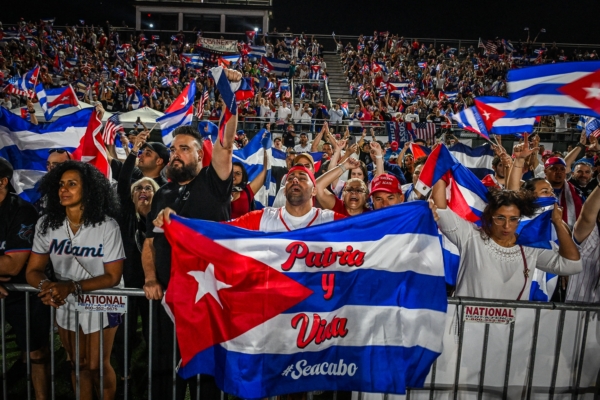
Amid the economic downturn and increasing food crisis concerns in China, the Beijing authorities recently announced a large-scale food aid to Cuba. This aid, dubbed by officials as the “largest scale in recent years,” has sparked high scrutiny from the international community regarding the Chinese authorities’ prioritization of political interests over domestic welfare.
Cuban President Miguel Díaz-Canel confirmed through the social platform X on May 24 that Cuba has received the first batch of 15,000 tons of rice aid from China. This shipment is part of Beijing’s promised total of 60,000 tons of food aid, with Chinese officials stating that the remaining supplies will be delivered gradually.
Chinese Ambassador to Cuba Hua Xin emphasized during the welcome ceremony that the 60,000 tons of rice is the “largest scale food aid” Beijing has provided Havana in recent years.
Since facing the U.S. embargo since 1962, Cuba is currently in the midst of a severe economic crisis, with frequent shortages of food, medicine, and power outages.
The comprehensive oil blockade imposed by the U.S. since January has further worsened the situation locally. Following the U.S. announcement of indicting former Cuban leader Raul Castro on May 21, China immediately declared its support for Cuba and initiated food assistance.
Senior commentator Tang Jingyuan analyzed for Epoch Times that this is part of the “new U.S.-China cold war,” with the primary intention being to create resistance through diplomacy and public opinion to prevent the U.S. from applying “maximum pressure” on Cuba or potential military actions.
Tang Jingyuan emphasized that China’s second intention is to “help the Cuban authorities maintain stability.” He bluntly stated that China’s consistent logic is “as long as the hostages are not hungry, they will not revolt.” This shipment of rice appears as humanitarian aid on the surface, but it actually ensures that the Cuban communist regime does not collapse due to a breakdown in livelihood.
Chinese-Canadian writer and democracy activist Sheng Xue criticized from a historical perspective. She pointed out to Epoch Times that this policy brings to mind the man-made Great Famine in China between 1959 and 1962, where tens of millions of Chinese starved to death, yet the Chinese government provided 100,000 tons of food aid to Albania in 1960 and 10,000 tons of rice to Guinea in 1961.
Sheng Xue believes that with China’s sharp economic decline, serious youth unemployment, recent floods, leading to decreased food production, China’s high-profile foreign aid continues to reveal that “in the power balance of the Chinese Communist Party, politics always take precedence, and the Party’s interests are above all else.”
The Ministry of Water Resources of China predicted earlier that extreme heavy rainfall events would be more frequent from June to August this year, with high disaster risks. According to a report cited by AFP, “record-breaking heavy rain” has recently occurred in several regions like Hubei, Hunan, Guizhou, Guangxi, and Hainan, leading to school closures, halting of business operations, and continuous disasters.
From an international strategic perspective, Cuba is viewed by China as one of the most important strategic outposts in America’s backyard.
Tang Jingyuan pointed out that with Venezuela’s weakening strength, Cuba has become one of the few countries in South America that still maintains a tough anti-American stance. China spares no effort to maintain the Cuban regime for geopolitical considerations, using it as a strategic base planted within the sphere of U.S. influence.
In addition, mainland Chinese scholar Mr. Chen mentioned to Epoch Times that China’s aid to Cuba also holds the intention of replacing Russia’s role to some extent. Due to Russia’s involvement in the Russia-Ukraine war, it is preoccupied and unable to focus on distant strategic interests.
Mr. Chen further analyzed that China is trying to demonstrate to the world that its leadership in the communist camp has not bowed to the U.S., thereby boosting morale and confidence in the international leftist movement and authoritarian system.
However, behind this massive foreign aid, the food security situation in China appears ambiguous. Mr. Chen observed that the current administration of Xi Jinping has recently ordered the removal of fruit trees and economic crops that have entered the production period to grow food crops in preparation for “military food.” This indicates an imminent food crisis domestically.
He criticized the Chinese authorities for “disregarding the lives of the people” and viewing the Chinese people as “human resources and leeks to be continually harvested.”
Mr. Chen further questioned the economic shady dealings behind China’s foreign aid projects. He doubted that many foreign aid initiatives serve as tools for asset transfer among interest groups. Through initiatives like the Belt and Road or various international aids, real money flows into the pockets controlled by interest groups, turning into offshore assets overseas.
He directly stated that this explains why China, knowing the risks of investing could be futile, still insists on doing so, as the losses are “the hard-earned money of the common people,” while the profits benefit the ruling group within the Chinese Communist Party.
China’s aid pattern significantly differs from democratic nations. According to a report by academic publisher Springer in 2023, countries involved in Chinese investment or aid often witness a regression in democratic freedom, worsened human rights conditions, and even mimic the Chinese governance style, ultimately damaging the rule of law and anti-corruption mechanisms.
A report by the Rule of Law Collaboration Center at the University of South Carolina in March also pointed out that Beijing tends toward a “personalized diplomatic model,” building close personal connections with ruling elites of the recipient countries, tying political and economic interests closely, especially with leaders leaning towards dictatorship, to replace formal intergovernmental exchanges.
Beijing white-collar worker Mr. Wang lamented during an interview with Epoch Times that China’s diplomacy is actually “party-to-party,” aimed at maintaining the necessary reciprocal exchanges for ruling. He pointed out that China exploits its “low human rights advantage” to counterbalance Europe and the U.S., disregarding domestic public opinion in the process.
Beijing lawyer Li Ming criticized that China’s rescue of Cuba is to add another “little follower” to “prolong its life,” subverting the existing international rule of law and democratic order.
Meanwhile, U.S. Secretary of State Marco Rubio proposed a $100 million aid plan including food and medicine, but required that the aid be distributed transparently through charities like the Catholic Church to ensure the supplies reach the people directly, without being exploited by corrupt systems.
This sharply contrasts with China’s tendency to distribute resources through close ties to the ruling elites of the recipient country.
Despite the dilemma of food shortages and economic decline in China, the decision to proceed with massive food aid to Cuba intertwines the calculations of geopolitical maneuvering and regime stability, as most interviewees agreed. This “food diplomacy” once again highlights the governing logic of the Chinese Communist Party, which prioritizes the Party’s interests over the livelihood of its citizens.