
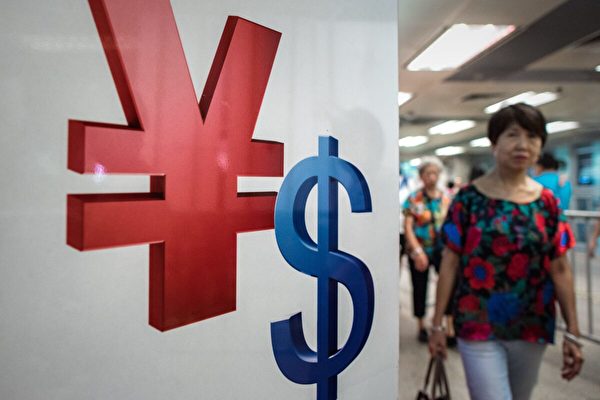
The 2026 Lujiazui Forum opened yesterday (June 17), with the Chinese Communist Party taking new measures to promote the internationalization of the Renminbi (RMB). However, observers note that the authoritarian system of the CCP contradicts the conditions needed for the internationalization of the RMB. Faced with both internal and external pressures, Beijing is essentially creating a shadow financial system to facilitate settlements within the non-US Dollar camp.
The Lujiazui Forum took place on the 17th and 18th in Pudong, Shanghai. People’s Bank of China (PBOC) Governor Pan Gongsheng announced six financial policy measures during the event. These include improving short-term interest rate control mechanisms, introducing offshore central bank repurchase tools, initiating offshore RMB foreign exchange trading trials in the Shanghai Free Trade Zone, authorizing six banks to conduct such transactions, establishing specific scenario non-bank liquidity support macro-prudential tools, providing emergency liquidity to non-bank institutions in times of systemic stress in bond markets, releasing an action plan for the development of offshore finance in the Shanghai International Financial Center, and officially launching the interbank market data reporting repository.
The Shanghai Digital RMB International Operations Center, established last year, is now fully operational, and the Digital RMB Cross-Border Settlement Integrated Service Platform (CBETS) has been officially launched.
On June 16, China’s economic indicators showed a weakening performance. The National Bureau of Statistics of China released economic data for May, revealing the first year-on-year decline in total retail sales of consumer goods in three years and a further decline in investment expenditure.
American economist David Huang told Epoch Times that the PBOC’s new policies are defensive financial measures in response to domestic consumer deflation, economic downturn, and the spillover effects of the Russia-Ukraine conflict. With secondary sanctions and financial blockades from the US and Europe increasing, Beijing is eager to establish a liquidity safety net in the Shanghai Free Trade Zone and offshore markets beyond the control of the Federal Reserve and SWIFT.
Huang analyzed that decoupling and de-dollarization are just surface reasons, as Beijing does not want foreign central banks to sell Chinese government bonds to obtain US dollars when in urgent need of cash, fearing instability in domestic financial markets. Therefore, the PBOC actively arranges hedges, allowing institutions holding Chinese government bonds to use them as collateral to acquire RMB cash.
Sun Guoxiang, a professor of International Affairs and Business at Nanhua University in Taiwan, also expressed that the introduction of offshore central bank repurchase tools, offshore RMB foreign exchange trading in the Shanghai Free Trade Zone, and the Digital RMB Cross-Border Settlement Platform are essentially establishing a backup channel for the RMB outside the dollar system.
Sun explained that China’s domestic financial structure is undergoing changes. While the economy used to heavily rely on bank loans, real estate, and local investments, there is now a slowdown in loan growth, an increase in the importance of bond and equity financing, and financial risks are more easily transmitted among banks, non-bank institutions, and cross-border markets. Beijing aims to capitalize on the interest of some central banks and sovereign wealth funds in developing countries for reserve diversification, transitioning the RMB from a settlement currency to an official reserve asset that is investable, collateralizable, and financible.
On January 31, 2024, Chinese President Xi Jinping commented in the party media, “China needs to establish a strong currency” that can be widely used in international trade, investment, and foreign exchange markets and achieve a reserve currency status. These remarks originated from a speech Xi made to senior officials in 2024 and the official measures now align with his statements.
Huang believes that allowing foreign central banks to pledge bonds for borrowing RMB from China is akin to creating a RMB version of the dollar liquidity network (Repo) and is essentially emulating the practices of the Federal Reserve.
Sun pointed out that Beijing’s approach seems to be establishing an official, limited, regional RMB safety net, which is still far from replacing the dollar.
He said, “Behind the dollar liquidity network are the depth of the US bond market, free capital movement, a global banking system with US dollar liabilities, private financial markets, and legal trust. The RMB is still subject to restrictions such as capital account controls, exchange rate management, financial transparency, and political risks.”
Eswar Prasad, former Chief Economist of the International Monetary Fund, stated in an Epoch Times interview that for the RMB to become an international reserve currency, it must be freely tradable, without any capital controls that hinder currency transactions. However, the authoritarian system of the CCP contradicts the incubation conditions needed for the internationalization of the RMB.
Eswar Prasad, Director of Financial Research in the IMF’s Research Department, wrote, “Without profound reform of its system and political structure, the RMB cannot achieve the status of a ‘safe haven currency’.”
David Huang told Epoch Times that the CCP’s intention is to gradually establish its own shadow financial system. This could find a market among countries like Russia, North Korea, and Iran facing US sanctions, leading to the RMB serving as a financial instrument for settlement and connectivity between a few countries within the non-dollar camp.
It is worth noting that the CCP, Russia, North Korea, and Iran have been dubbed the “Axis of Evil” by the West, and many other developing countries in close relations with Beijing are also characterized by authoritarian or dictatorial regimes.