
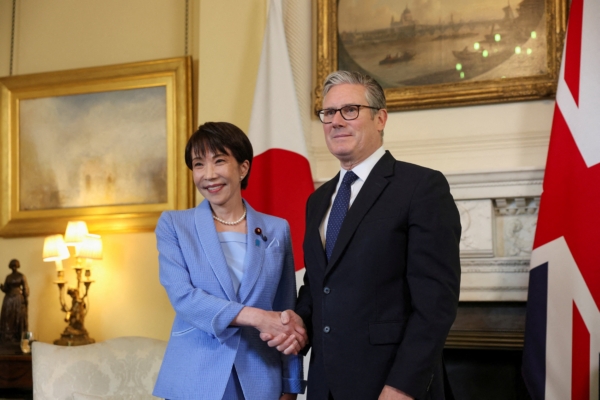
At the G7 summit, which took place in the French town of Evian-les-Bains, the issue of how to reduce reliance on China’s supply chain for critical minerals has been a key focus. Japanese Prime Minister proposed a new cooperation framework aimed at coordinating reserve of critical minerals among G7 and like-minded countries to counter China’s control over the supply chain of critical minerals.
During the summit, Japanese Prime Minister Koichi Sanae arrived in France and emphasized the need to “accelerate source diversification” while introducing a new cooperation framework. This framework may involve participating countries holding reserves of critical minerals equivalent to at least 90 days of consumption and coordinating with the International Energy Agency to jointly provide minerals in the event of supply disruptions.
Currently, China controls 70% of global rare earth mining and 90% of rare earth processing. Since last November, when Prime Minister Sanae warned that a Taiwan crisis could pose a survival threat to Japan, Beijing has been attempting to leverage restrictions on critical mineral supply to pressure Japan.
Ursula von der Leyen, President of the European Commission, highlighted the importance of protecting markets from unfair competition in a statement made on the eve of the G7 summit. She emphasized the need for unity and coordination among G7 countries on critical minerals to ensure an adequate supply and address challenges such as trade deficits with China.
Reflecting on the year 2025, von der Leyen acknowledged the historic trade deficit the EU faced as a result of trade imbalances with China, emphasizing the need to mitigate risks rather than disconnect from the global market.
During a press conference at the G7 summit, von der Leyen discussed the proposed US initiative for establishing a joint market mechanism for critical minerals. She stressed the EU’s experience with China’s restrictions on critical mineral exports and the necessity for diversified supply sources to avoid prolonged reliance on a single supplier.
In addition to negotiating with China to change its practices, von der Leyen called for strengthening EU internal capabilities and collaborating with reliable partners around the world that possess critical mineral resources to sign agreements and ensure a stable supply chain.
The US publicly proposed the establishment of a joint market mechanism for critical minerals in February, with Vice President Watts participating in a conference in Washington, D.C., to promote critical mineral resources. The proposed system sets a price floor for global critical mineral resources, with measures including subsidy coordination, guaranteed procurement, standardized market practices, joint investments in mining and processing, as well as adjusting tariffs.
The G7 summit is an annual gathering of leaders from the United States, United Kingdom, France, Germany, Italy, Japan, and Canada, focusing on global economic, security, energy, and geopolitical issues. This year’s summit in Evian-les-Bains, France, served as a platform for leaders to discuss strategies for reducing reliance on foreign sources and achieving diversified supply chains, particularly for critical minerals and rare earths.
During the summit, French President Macron emphasized the importance of reaching agreements on critical minerals and rare earths to reduce foreign dependency and enhance supply diversity. The discussions held during the G7 summit underscored the critical role of international cooperation in addressing supply chain vulnerabilities and ensuring global economic stability.