
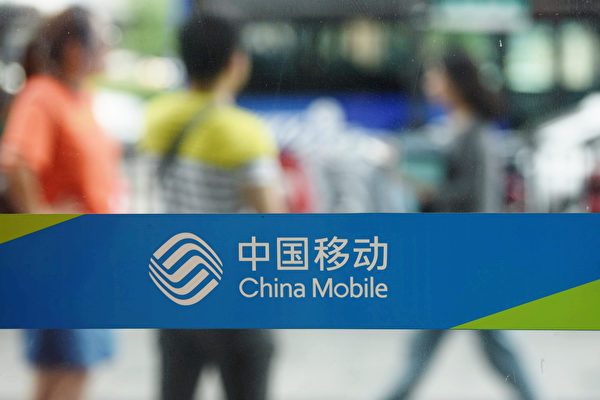
China Mobile Hong Kong’s official website announced that starting from June 17th, all recharge cards will no longer support activation in mainland China. According to interviewees, Hong Kong SIM cards were previously used by some mainland Chinese people as a gateway to accessing foreign websites, receiving overseas text messages, and registering for overseas accounts. The limited activation locations indicate that China’s internet censorship is expanding from websites and VPNs to communication channels.
On the product page of China Mobile Hong Kong’s “5G 12GB Greater China 365-Day Data Card” and other products, it is stated that from June 17th, all recharge card products will no longer support activation operations in mainland China. Customers can activate them in Hong Kong or designated roaming locations, but not in mainland China. Hong Kong tech media reported that this restriction includes all recharge card products, such as “Quack Chat Plus.” Users are required to insert the card in Hong Kong, dial the relevant short code to activate it, and then use it in mainland China, or else they won’t be able to complete the activation in mainland China.
Miss Zeng, who frequently travels between Hong Kong and the mainland for business, explained that outsiders often misunderstand “China Mobile” as a mainland operator, but this time it involves the China Mobile card in Hong Kong. She said, “In the past, people who frequently traveled between the two places would use China Mobile in Hong Kong. When we conduct business in the mainland, we can also access the internet, browse foreign websites, such as Google, Facebook, or watch videos on YouTube without any issues. Sometimes, we also help mainland friends purchase Hong Kong cards so they can access the internet, but now restricting the activation in mainland China means preventing mainland friends from accessing the internet.”
Miss Zeng added that if activation in mainland China were possible, users with a Hong Kong China Mobile recharge card could register for overseas social media platforms like Facebook, effectively creating a “Hong Kong communication gateway” within mainland China.
Public records indicate that this restriction targets the “activation location” and does not outright prohibit the use of related cards for roaming in mainland China. Users who have completed the initial activation in Hong Kong or designated overseas roaming locations can still use them in mainland China. However, for users in mainland China who cannot go to Hong Kong or overseas, the previous method of “buying a card and using it immediately in the mainland” will be affected.
Mr. Liang, a telecom industry insider in Hong Kong, analyzed that this restriction likely targets mainland users obtaining overseas communication access through Hong Kong recharge cards, a grey area. Previously, Hong Kong residents or purchasers could take unactivated Hong Kong SIM cards to the mainland, allowing mainland users to access foreign websites through the Hong Kong card. The new rule objectively closes off the path of “obtaining and activating a Hong Kong card in the mainland,” increasing the cost for mainland users to bypass China’s internet blockade.
Mr. Liang stated that China’s internet blockade has primarily focused on website blocking, app removal, VPN suppression, and real-name registration management in the past, but now it is gradually tightening control over overseas phone numbers, overseas data cards, and account verification channels. He said, “It’s not about completely shutting everything down at once but narrowing every gap. Previously, if you had a VPN, a Hong Kong card, and an overseas email, you had an additional channel. Now, each of these channels is being controlled, like boiling a frog in warm water.”
Recharge cards such as “Quack Chat Plus” under China Mobile Hong Kong were more commonly used among users in Hong Kong and for cross-border purposes. Some mainland Chinese users also purchased them through e-commerce or intermediary channels to receive overseas text messages, access overseas internet services, or use them during short trips to Hong Kong or overseas. After the implementation of this policy, buyers will need to complete the initial activation in Hong Kong or designated overseas locations before using them in mainland China.
Mr. Feng, a Guangzhou-based representative of China Mobile focusing on internet censorship, expressed to reporters that the cancellation of the activation of Hong Kong recharge cards in mainland China by China Mobile Hong Kong will affect the convenience for mainland users to access overseas communication services. He said, “I believe this decision is not made by China Mobile alone but likely a requirement from the Cyberspace Administration of China. Next, China Unicom and Hong Kong telecom companies will likely follow suit. The Cyberspace Administration of China aims to completely cut off mainland users’ access to the external internet.”
As of now, explicit announcements similar to “all recharge cards no longer support activation in mainland China” can mostly be seen on China Mobile Hong Kong’s and its products such as “Quack Chat Plus.” Reporters have not yet seen similar announcements from other mainstream telecom operators in Hong Kong, including Hong Kong Telecom and csl.
In recent years, the Chinese government has been intensifying its internet censorship. Mainland Chinese users have long faced restrictions when accessing platforms like Google, YouTube, X Platform, Facebook, Instagram, and other foreign platforms, while VPN services have been frequently blocked. Simultaneously, measures such as real-name registration for mainland phone numbers, removal of overseas applications from app stores, and limitations on overseas SMS verification have increased the cost for mainland users to access external information and services.
Mr. Liang believes that this restriction underscores that China’s internet blockade no longer merely focuses on blocking websites but now includes control over phone numbers, SMS verification, account registration, and cross-border communication gateways. The inability to activate Hong Kong cards in mainland China is just one step, and the cost for mainland users to access external information will likely continue to rise in the future.