
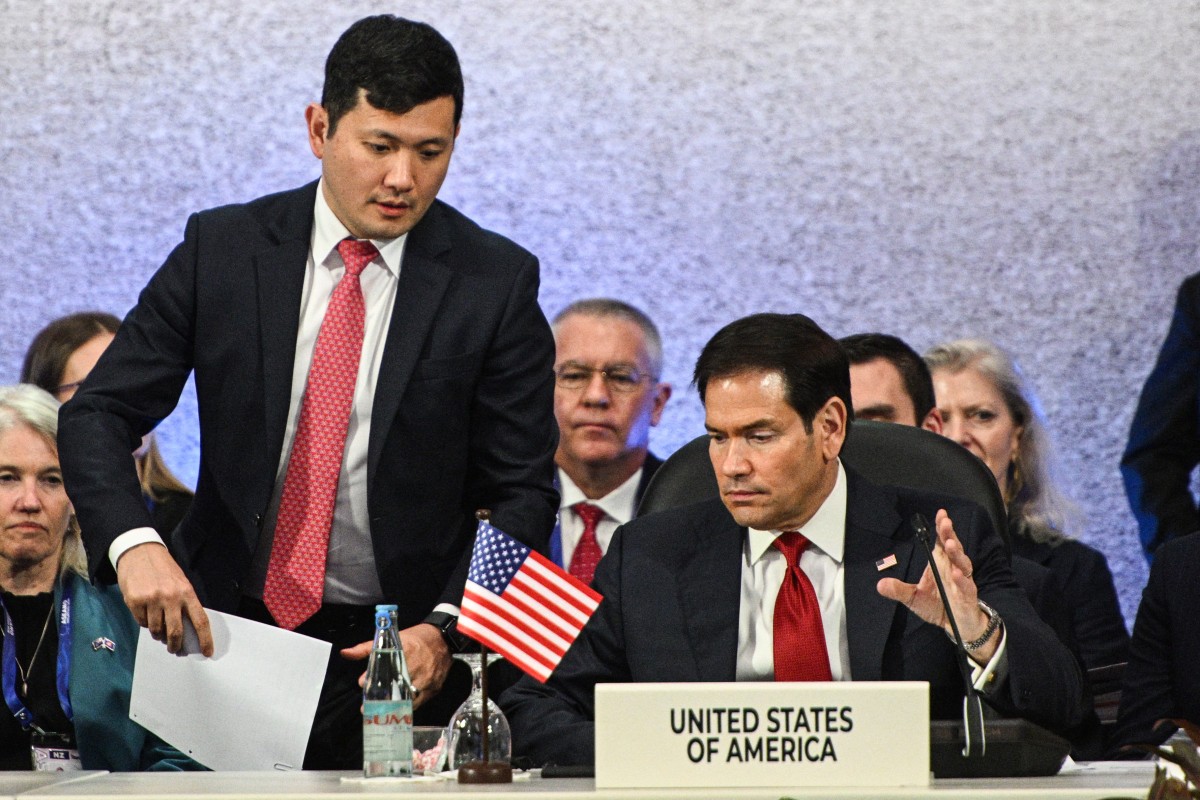
The United States Secretary of State Marco Rubio stated on Thursday (July 23) that the behavior of the Chinese Communist Party (CCP) in the South China Sea is “alarming” and reiterated the United States’ defense commitments to the Philippines. The Philippines witnessed a series of maritime conflicts with the CCP in the South China Sea this week.
Before Rubio made these remarks, the Philippines accused a CCP coast guard ship of firing water cannons at a Philippine fishing vessel near Scarborough Shoal on Thursday. The Philippine vessel was distributing fuel subsidies and food packages to Filipino fishermen to cope with the rising fuel prices at that time. The Philippine Coast Guard publicly released a video of the conflict as evidence.
“The whole world has seen it, and it is unsettling,” Rubio told reporters during breaks at the ASEAN meeting in Manila. “We will not abandon our allies. We have made it clear.”
“This is why we continue to reaffirm our commitments to treaty partners and to the principles of freedom of navigation and respect for territorial rights in the region,” Rubio said.
The CCP released a statement earlier on Thursday, claiming that Philippine vessels illegally intruded into China’s jurisdictional waters near Huangyan Island. Chinese coast guard took necessary measures such as tracking, blocking, and controlling to repel the Philippine vessels.
The incident near Huangyan Island on Thursday was the latest in a series of maritime conflicts between China and the Philippines this week. The Philippine military stated that on Monday (July 20) in the vicinity of Second Thomas Shoal, Chinese coast guard personnel forcibly approached Philippine vessels, cruelly beat two navy sailors with sticks on their heads, causing injuries, and damaged a rubber boat. The Philippine Department of Foreign Affairs condemned such violent acts as “unacceptable.”
The Chinese coast guard refuted the accusations, claiming that the Philippine rubber boat intentionally collided with the Chinese patrol boat and initiated a “malicious attack” first using oars and long sticks. The Chinese coast guard stated that they were safeguarding their rights according to the law and emphasized that they allowed the transfer of wounded personnel from the Philippines out of humanitarian consideration.
The U.S. State Department described China’s behavior as “dangerous and provocative.”
China claims sovereignty over almost the entire South China Sea using the “nine-dash line,” but some areas overlap with the exclusive economic zones of countries like the Philippines and Vietnam, leading to disputes. On July 12, 2016, the International Tribunal in The Hague ruled that China’s “nine-dash line” sovereignty claim in the South China Sea had no legal basis. Beijing, however, stated that it does not recognize the ruling and has increased the deployment of coast guard ships and militia forces in the South China Sea.