
On the 250th anniversary of American independence celebrated today, let’s take a look at the iconic city of New York and explore the historical buildings with roots in the independence war.
These ancient structures include grand mansions from centuries past, as well as modest farmhouses scattered throughout different corners of New York City. They not only showcase the architectural features of different eras of the city but also hold the history of hundreds of years of America.
According to the New York City Parks Department, historical museums, and media outlets like the New York Post, here are 10 buildings within the city that have intriguing historical tales to tell.
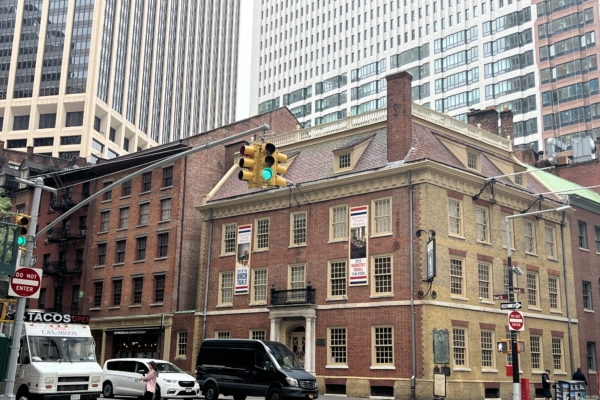
One of the most prominent is Fraunces Tavern, which served as the hub of patriotic activities during the American Revolutionary War and has since been engraved in history books. Today, it still serves chilled beer.
Originally built in 1719 as a private residence by the De Lancey family, the building was later transformed into a tavern by Samuel Fraunces in 1762.
During the British occupation of New York, this bar on Pearl Street became a popular meeting place for rebel spies, founding fathers, and members of the Sons of Liberty. George Washington himself held a farewell dinner with his generals here after the victory of the Revolutionary War.
Despite undergoing several renovations, the building’s original structure remains intact, with thousands of historical artifacts related to its past still preserved inside. Fraunces Tavern now houses a museum but continues to operate as a bar and restaurant.
Van Cortlandt House, located at the core of the eponymous 1,000-acre park, was once the centerpiece of the Van Cortlandt family’s plantation.
Jacobus Van Cortlandt, a wealthy merchant born in New Amsterdam, served as the Mayor of New York twice and purchased the vast property in 1694. However, it was not until 1748, as recorded by the museum of the same name, that his son Frederick built the current house.
During the Revolutionary War, the house was in a disputed zone, serving as a residence for both British forces and rebels. It ruled over the then-unnamed administrative district – with General Washington residing here in 1776 and 1783.
Descendants of the Van Cortlandt family lived in the house until 1886 when they sold the entire estate to the city of New York for the creation of Van Cortlandt Park.
Located on Clarendon Road in Brooklyn, the Wyckoff House, built around 1652, witnessed the Battle of Long Island during the Revolutionary War. This farmhouse was constructed by Pieter Claesen Wyckoff, who initially worked as a contract laborer for the Van Rensselaer family before becoming a successful farmer and magistrate.
Until 1901, generations of the Wyckoff family continued to expand and renovate the mansion and worked the land. In 1965, the building became the first landmarked structure in New York City.
According to the city’s Parks Department overseeing the property, “Its history reflects the diversity of Brooklyn’s colonial farms, where Dutch-American landowners, enslaved and freed Africans, and later European immigrants labored on the richest soil in America.”
The Bowne House on Bowne Street in Queens played a crucial role in the establishment of religious tolerance in the United States. Built in 1661 by John Bowne, an immigrant from England during the Dutch rule of New York, this modest residence hosted Quaker meetings, leading to Bowne’s arrest by Governor Peter Stuyvesant for defying the Dutch Reformed Church’s mandate.
Successfully appealing to the Dutch West India Company, the farmer set a precedent for the constitutional rights of religious freedom, free speech, and assembly.
The Bowne family resided in this English-Dutch colonial-style wooden saltbox house until 1945 when they donated it to the Bowne House Historical Society.
Located at 209 Broadway Street and built in 1766, St. Paul’s Chapel is Manhattan’s oldest continuously used public building and church. It is renowned for being where George Washington prayed post-inauguration. In September 1776, shortly after British troops occupied Manhattan, a massive fire swept through the island’s southern tip, destroying up to 25% of structures. Remarkably, St. Paul’s Chapel miraculously survived.
Other notable ancient buildings include the Morris-Jumel Mansion in Washington Heights, which served as Washington’s headquarters in 1776; the Conference House on Staten Island, where peace talks were held in 1776; the Dyckman Farmhouse Museum in northern Manhattan, the oldest surviving Dutch colonial farmhouse in Manhattan; the Old Quaker Meeting House built in 1694, an important building in the development of religious freedom in the United States; and the Kreuzer-Pelton House on Staten Island, once the headquarters of loyalist commander Colonel Cortlandt Skinner during the Revolutionary War.
During the Independence Day holiday, if you have the time, take the opportunity to visit these historic New York City buildings.