
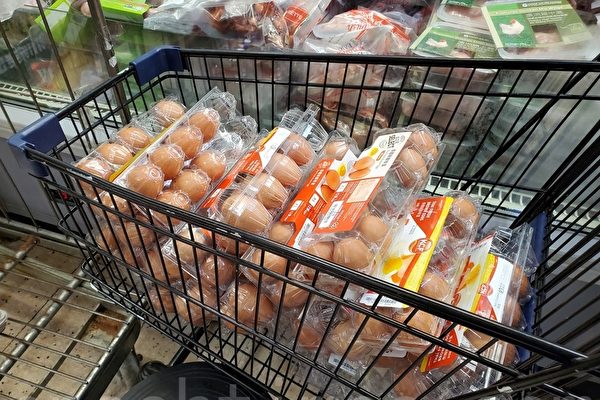
The skyrocketing price of eggs in the off-season has become a hot topic on Weibo on June 7. By early June, the retail price of eggs in many parts of China has exceeded 5 yuan per jin (Chinese currency, below), with some areas even approaching 6 yuan, an increase of nearly 80% compared to the same period last year. In what should have been the off-peak consumption season of May and June in previous years, egg prices have gone against the trend, leading to a rare phenomenon of “eggs more expensive than pork”, sparking discussions among the public.
Analysis within the industry points out that this round of egg price increases is not a short-term fluctuation in supply and demand, but rather a result of the long-term losses in the poultry industry in 2025 leading to a contraction in production capacity, combined with factors such as stockpiling for the Dragon Boat Festival and reduced egg production rates due to high temperatures.
Since May, egg prices have been on the rise during the traditional off-season for consumption. The average price of eggs in the main producing areas has increased from 3.87 yuan per jin at the beginning of the month to 4.88 yuan at the end of the month, a monthly increase of 26.1%, reaching a rare high for the same period in nearly a decade.
According to a report by “Sanlian Life Weekly”, traditionally, egg demand usually weakens after the weather gets hot in May and June, and prices tend to enter a downward cycle. However, this year, the market situation is completely abnormal, with rapid and significant price increases in many areas, leading to volatile price changes in markets and supermarkets almost daily.
Just over a month ago, the price of bulk eggs in many regions was around 3.8 yuan per jin, but now the retail price in most cities has stabilized above 5 yuan, with some supermarkets in Beijing even approaching 6 yuan. Previously, a tray of eggs (30 eggs) was sold for about 16 yuan, but now it has risen to around 24 yuan.
According to CCTV’s financial report, the wholesale price of eggs at the Beijing Xinfadi Agricultural Products Wholesale Market had reached 5.5 yuan per jin at the beginning of June, an increase of about 26% from early May, with a year-on-year increase of nearly 80%, setting a record high for the same period in nearly five years.
Market officials stated that the concentrated stockpiling before the Dragon Boat Festival boosted demand, while temporary tensions in the supply chain led to a rapid price surge.
A supermarket staff member in Jinan, Shandong, said, “Egg prices change every day; they were sold for 4.99 yuan yesterday and have already risen to 5.29 yuan today.”
The continuous soaring of egg prices has sparked discussions among netizens on the mainland.
A netizen from Guangdong said, “It used to be 16 yuan per tray, now it’s 22 yuan per tray.” A netizen from Shaanxi commented, “I bought them for 5.8 yuan per jin the day before yesterday, it’s now increased by 1.9 yuan.”
Many consumers expressed their dismay, saying, “Eggs are even more expensive than pork now,” highlighting a rare phenomenon of price inversion that hasn’t been seen in years.
A Weibo user named “Frost Falls in Autumn” commented, “Finally, the egg prices are being reported. I watched the price of a tray of eggs increase by one yuan every week, gradually reaching a point where I can’t afford it anymore. Last year it was tomatoes, now it’s eggs. When will a plate of cheap tomato and egg stir-fry be back on my table?”
Several reports from mainland media outlets indicate that the fundamental reason for the current surge in egg prices can be traced back to the comprehensive losses in the poultry industry in 2025.
Due to market oversupply, the egg chicken farming industry was in a long-term loss situation last year, with eggs being sold at a loss of over 0.4 yuan per jin in some periods, and an expected loss of 15 to 25 yuan per chicken. Around November 2025, losses per chicken reached around 23 yuan.
Under the prolonged pressure of losses, a large number of small and medium-sized poultry farmers prematurely eliminated their egg-laying hens. Hens that were originally supposed to be eliminated around 500 days were now taken out of production early, at around 420 to 450 days. Additionally, many farmers were hesitant to restock, leading to a over 30% decrease in chick sales compared to the previous year.
However, it usually takes 4 to 5 months from chick rearing to egg production. The reduction in restocking by farmers in the second half of last year directly resulted in a significant shortage of new egg-laying chickens in the second quarter of this year, creating a supply gap.
As of April this year, the national inventory of egg-laying chickens was approximately 1.297 billion, down by about 11 million from the previous month, with a high proportion of aging hens, leading to a decrease in effective production capacity.
In addition to the decrease in production capacity, the current egg market inventory is also at historically low levels.
Currently, the average inventory in the production process is only 0.6 days, and in the distribution process, it is around 0.73 to 0.87 days. Eggs are almost being sold on a “produce and sell on the same day” basis, with traders generally avoiding large-scale stockpiling. The entire industry chain is adopting a “purchase and sell quickly” mode, making the market more sensitive to supply changes.
At the same time, with the approach of the Dragon Boat Festival, food processing factories, pastry companies, and zongzi (sticky rice dumpling) manufacturers are stocking up, leading to a short-term increase in industrial egg demand. As schools and catering industries resume procurement, it further exacerbates the market supply-demand tension.
Moreover, as many parts of the country enter the hot summer season, the egg production rate of chickens decreases. Industry insiders point out that high temperatures affect the feeding and egg-laying abilities of chickens, further reducing the supply.
A Weibo user named “Exclusive Crystal” summarized, “Egg prices have risen from over 3 yuan to over 5 yuan mainly because of the scarcity of new chickens. Due to severe losses in chicken farming last year, many people have prematurely eliminated old hens and are hesitant to restock with new chicks. It takes four to five months for new chicks to start laying eggs, causing a market cut-off. In addition, the summer heat affecting production, stockpiling before the Dragon Boat Festival, and the resulting low supply are the factors leading to the continuous price hikes.”
Industry analysts suggest that since it will take several months for the new batch of egg-laying chickens to form effective production capacity, and the impact of high temperatures on egg-laying rates has not yet subsided, egg prices are expected to remain at high levels in the short term.
However, with the recovery of farming profits, the willingness to restock egg-laying chickens has significantly increased recently. If the subsequent increase in production capacity is gradually released and holiday demand decreases, egg prices in the second half of the year may gradually return to a rational range. Nevertheless, the possibility of a sharp decline in egg prices in the near future remains limited.