
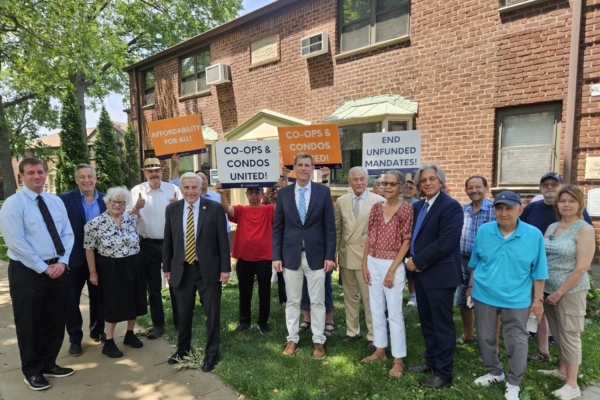
New York State Assemblyman Ed Braunstein, together with State Senator Toby Ann Stavisky, representatives from cooperative apartments and residents in Douglaston, Queens, jointly announced on June 11 that the state government has extended and expanded the J-51 property tax relief program in the new fiscal year budget, making more middle-class cooperative and condominium apartments eligible for application.
The J-51 program is a long-standing tax incentive program implemented by the City of New York to assist residential buildings with capital projects such as boiler replacements, heating system upgrades, electrical and water improvements, and energy efficiency renovations. Under the new regulations, the program will be extended for another 10 years, with the average qualifying threshold value raised from $45,000 to $60,000, and adjusted annually based on the Consumer Price Index (CPI).
In recent years, many cooperative apartments in New York City have been facing challenges due to aging infrastructure, rising maintenance costs, and the upgrade pressure brought by environmental regulations. Particularly, Local Law 97 requires large buildings to reduce greenhouse gas emissions, leading many cooperative apartments to invest substantial funds in upgrading heating, air conditioning, and energy systems. Supporters believe that expanding the J-51 program will help alleviate the burden on property owners and prevent them from passing on the full cost to residents.
Braunstein stated that cooperative apartments are an essential part of middle-class housing in Queens, and extending and expanding the J-51 program will help maintain affordable housing and assist owners in coping with the increasing maintenance and upgrade costs.
Stavisky pointed out that in the face of aging buildings and rising construction costs, the J-51 program can assist cooperative and condominium apartments in completing necessary repairs without passing all the costs onto residents. The reform has raised the eligibility threshold and reduced application costs, benefiting more communities.
Joint Chairman of the Cooperative and Condominium Council (PCCC) Bob Friedrich expressed that this is a significant move, which means that more middle-class and affordable cooperative apartments like Glen Oaks Village and Beech Hills will now qualify for tax exemptions. Additionally, the previously high application fees for the J-51 program have now been capped and can be included in the costs of capital improvement projects, with the fees to be refunded as tax relief over the coming years.
It is estimated that around 1,500 cooperative and condominium properties across the city will now qualify for the J-51 program for the first time due to the new regulations.