
Europe’s conservative leaders called on the European Union on Sunday to take a tougher stance on trade with China and warned that Beijing’s industrial capacity and low-price dumping policies are threatening Europe’s industrial base and job market.
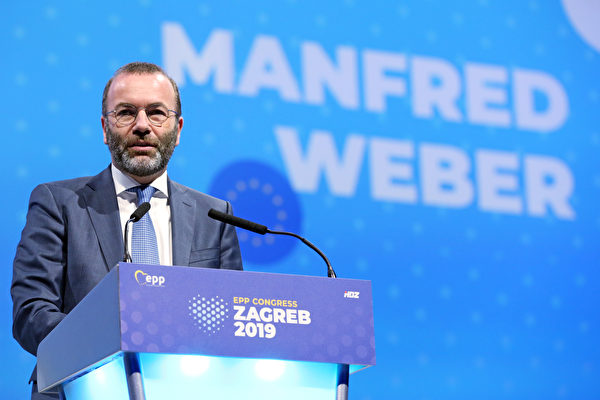
Manfred Weber, the chairman of the European People’s Party (EPP), the largest party group in the European Parliament, emphasized in a media interview that “the naive era is over! We must defend Europe’s interests more clearly, firmly, and consistently.”
Weber, a key figure in the Christian Social Union (CSU) of Bavaria, Germany, also noted that the EU’s trade deficit with China is approaching 1 billion euros per day, a situation he deemed “unsustainable.”
The EU summit, scheduled for June 18, is expected to see discussions among member state leaders on new trade protection measures proposed by the European Commission, including expanding tariffs and restricting market access.
Weber suggested that Brussels should use the EU’s single market access qualifications as a negotiating chip to compel Chinese companies to abide by European rules and fair competition standards.
He stated, “Either we fight back, or China will destroy parts of our industry.”
Weber further urged that overseas development aid projects funded by the EU should no longer be awarded to Chinese companies and proposed excluding China from Europe’s 6G technology development. He cited the EU’s previous imposition of tariffs on electric vehicles manufactured in China as an example, indicating that the EU should be prepared to further expand the scope of such measures.
In recent years, the EU’s trade policy towards China has been growing increasingly stringent. Ursula von der Leyen, President of the European Commission, had warned as early as 2023 that Europe must reduce its dependence on Beijing.
On May 29, the European Commission issued a statement stating that the current EU-China trade and investment relationship is “unsustainable.”
EU Trade Commissioner Maroš Šefčovič, after meeting with Chinese trade representative Li Chenggang in Paris, also mentioned that both sides will engage in deeper negotiations on the expanding trade deficit.
However, concerns have been raised that if the EU further tightens its policies towards China, Beijing may retaliate by restricting exports of critical raw materials such as rare earths. This could further impact European manufacturing, especially in sectors like German automotive and high-end industries.
Nevertheless, Weber believes that Europe still holds significant leverage in negotiations because China heavily relies on the European market. He stated, “It is China that needs us,” emphasizing that the EU should use this to safeguard its own economic interests.
A recent case involving EU aid funds has sparked controversy. In a natural gas bus procurement project in Senegal funded by the EU, a Chinese company ultimately won the bid at a lower price, defeating European competitors.
Weber stated that European taxpayers’ funds should not benefit Chinese companies.