
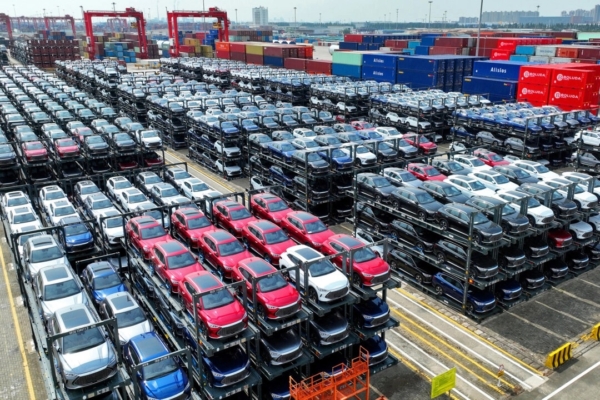
In May this year, the inventory alert index of Chinese auto dealers rose to 57.9%, an increase of 5.2 percentage points compared to the same period last year, exceeding the 50% boom-bust line, forcing dealers to lower prices for sales. However, the market’s response to the price reductions has been lackluster, with customers still adopting a wait-and-see attitude.
According to a report by “Huaxia Times” on June 10th, in May, the inventory alert index of Chinese auto dealers climbed to 57.9%. As we entered June, the inventory levels in several auto sales outlets in Beijing were at a high level in terms of age and quantity. Dealers hold a large number of inventory vehicles (commonly referring to vehicles produced domestically that have not been sold for over 90 days). These inventory vehicles may experience accelerated aging of components like paint, rubber parts, and fluids due to extended storage periods. The longer these vehicles sit in the dealership, the more capital is tied up for the dealers. Some brands have significantly slashed prices on their inventory vehicles.
In the Beijing area, many brands such as SAIC’s Feifan, Dongfeng’s Lantu, Changan’s Shenlan, and Dongfeng’s Yipai are all offering discounts and promotions. Some models have discounts exceeding 80,000 yuan. For example, a Feifan R7 long-endurance model that was originally priced at around 249,000 yuan is now being sold for approximately 169,000 yuan, offering a discount of over 80,000 yuan.
However, overall, consumers’ wait-and-see attitude remains unchanged. According to the data from the China Passenger Car Association’s “National Passenger Car Market Analysis Report for May 2026” released on June 8th, in the period from May 1st to 31st, 1.51 million passenger cars were retailed in China, a 22.1% year-on-year decrease. Cumulatively for this year, 7.099 million passenger cars have been retailed, representing a 19.5% year-on-year decline.