
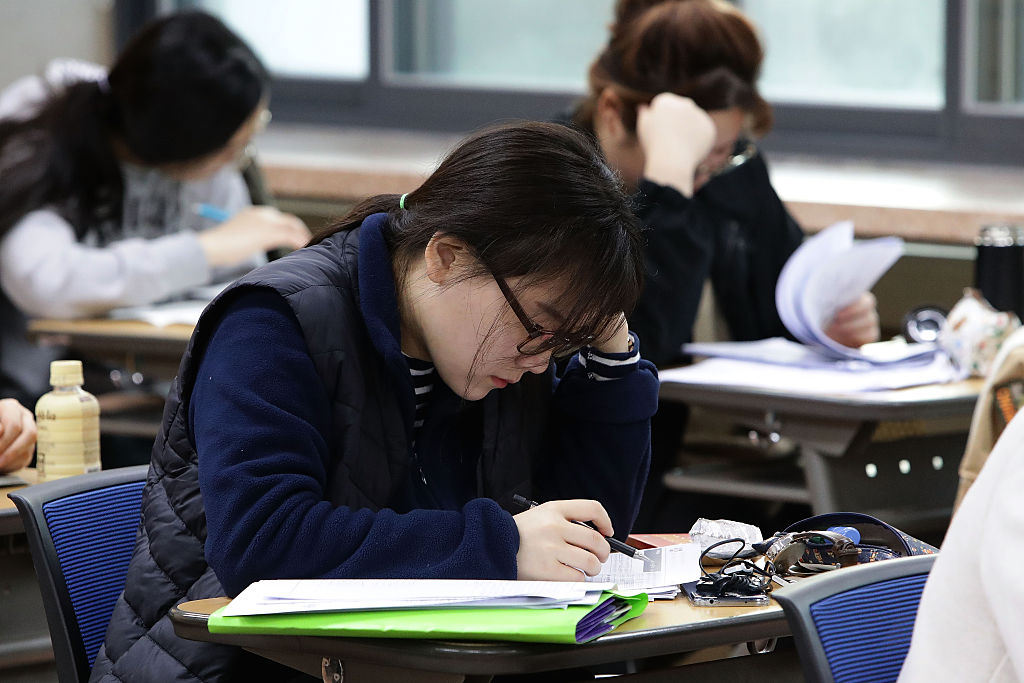
Recently, the South Korean police have busted a cheating ring for the Test of Proficiency in Korean (TOPIK) based in China. This ring recruited customers through Xiaohongshu (Little Red Book), arranging for stand-ins to take the test or using mini earpieces to transmit answers. The police have initiated investigations into 113 individuals while around 200 clients remain undiscovered due to residing overseas.
According to reports from South Korean media, on July 21st, the Seoul Metropolitan Police International Crime Investigation Team revealed that the cheating ring had been organizing test fraud from October 2021 to November 2025.
Among the 113 individuals under investigation by the police are a 28-year-old Chinese intermediary in South Korea, 11 stand-ins, and 101 clients. The clients are all Chinese nationals, while the stand-ins consist of both Chinese and South Korean individuals. The police are also tracking down the mastermind in China and two individuals responsible for transporting cheating devices.
The ring advertised “Guaranteed High Scores in TOPIK” on platforms like Xiaohongshu. The fee for electronic cheating was approximately 2 million Korean won per person (about 1,000 yuan), while the stand-in fee was around 8 million Korean won; stand-ins could earn about 800,000 Korean won per test. The police estimate that the ring illegally profited around 700 million Korean won.
TOPIK, organized by the Korean National Institute for International Education, is used for university admissions, applying for scholarships, job applications, and handling visas for staying or extending stays in South Korea.
The investigation revealed that the ring would find stand-ins resembling the clients, then create fake documents by synthesizing the stand-ins’ photos with the clients’ identification details. Stand-ins would enter the test centers with forged documents and test permits to take the exams on behalf of the clients.
The intermediary in charge of operations in South Korea also created a program to automatically register in the exam system, secure test slots, and make bulk payments.
Test takers using electronic cheating devices would submit one phone as required and hide another, attach a receiver at the back of their neck, insert a mini earpiece, and receive answers sent from outside through group call software during the test.
The case was exposed when exam supervisors noticed a device flashing behind a candidate’s neck. Subsequently, the police discovered data of around 300 potential clients in the intermediary’s computer; currently, 101 have been identified and under investigation, while the remaining 200 are yet to be traced due to residing overseas.
The police investigation found that some clients had used cheating to gain entry into South Korean universities, complete their studies, or receive scholarships, involving both current students and graduates from universities in Seoul.
The South Korean Ministry of Education and the National Institute for International Education stated that based on current TOPIK regulations, scores obtained through stand-ins or impersonation would be invalidated, and individuals involved would be banned from taking the test for four years. Educational authorities will also notify the relevant universities of the penalties, leading to degree revocations and scholarship repayments.
The Chinese intermediary responsible for coordinating cheating in South Korea was sentenced to three years in prison in June this year. According to Korean media reports, some stand-ins have received sentences of six months imprisonment and two years of probation.
The police recommend that exam institutions introduce biometric identity verification and install metal detectors in the test centers. The South Korean Ministry of Education has begun implementing wireless radio detectors capable of detecting mini earpieces, AI glasses, and other Bluetooth devices.
In April this year, another TOPIK test in South Korea faced alleged leakage of answers. A Chinese candidate was found checking suspected answer data purchased through Chinese social media in the test center.
The South Korean Ministry of Education noted that exams held in Europe and America occur earlier than in the Asian region, with some test questions across different regions being similar, potentially enabling cheaters to gain early access to test questions and answers. Subsequently, the education department decided to reduce the similarity of content among test papers from different continents starting from the July test.
The South Korean police and education department have not yet indicated whether the April answer leakage incident is related to the recent stand-in and electronic cheating ring.