
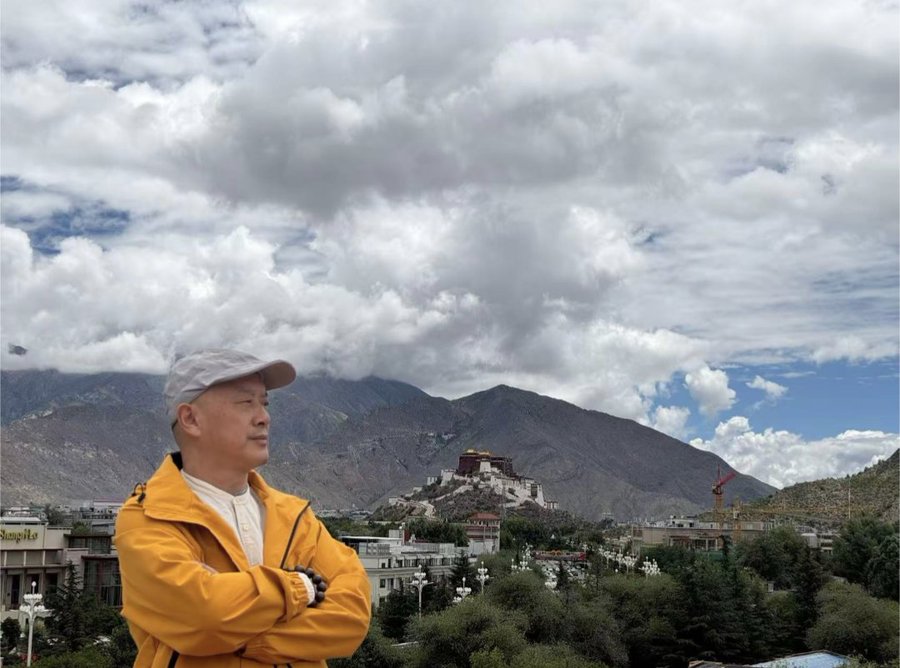
On July 1st, Wuhan activist Zhang Yi and his brother Zhang Xuan traveled to Tibet for sightseeing. During their visit, they showed photos of the Dalai Lama and Geshe Kelsang Gyatso to Tibetan locals, which led to their detention by Tibetan authorities. This incident occurred as the Chinese government officially implemented the “Law on Ethnic Unity and Progress,” drawing attention from the international community.
According to an informant named Wang Jia, at the time of the incident, the Zhang brothers were participating in prayers at the Sera Monastery in Lhasa and borrowed a mat from a Tibetan local. Due to a language barrier, they used their smartphones to show the photos of the Dalai Lama and Geshe Kelsang Gyatso.
Around 5:30 pm, the two were taken by plainclothes police to the Lhasa Public Security Bureau. Zhang Xuan was released after giving a statement, with national security police informally informing him that Zhang Yi was detained for 15 days for “incitement” without providing any legal documents.
On the morning of July 18, Zhang Xuan received a call from Tibetan national security confirming that Zhang Yi had been transferred to criminal detention for “incitement.” The exact location where Zhang Yi is being held remains unclear.
In June of this year, Zhang Yi had previously traveled to Tibet and Xinjiang but was denied a border pass by the immigration department. Despite negotiations with relevant authorities before departure, including promises from the local police station and comprehensive management office for a delayed electronic border pass, he was eventually rejected.
Wang Jia revealed that on his second trip to Tibet, Zhang Yi noticed being followed and monitored, with their movements being secretly recorded. She questioned why his border pass was denied initially but granted on the second attempt, suspecting that the authorities intentionally targeted him.
As a so-called sensitive individual, Zhang Yi is constantly under surveillance by the Chinese Communist Party. During sensitive periods, police are stationed near his home, and he is sometimes taken away for “travel.” “Wherever he goes, there are police monitoring him,” said Wang Jia.
The enforcement of the Law on Ethnic Unity and Progress by the Chinese government on July 1st raised concerns about Zhang Yi potentially facing targeted suppression.
Zhang Yi previously participated in the 1989 Tiananmen Square protests and was later sentenced to two years in prison for “disrupting traffic order by gathering crowds.” Since his release, he is regularly placed under soft detention or taken on “travel” during the anniversary of the Tiananmen Square event.
At the beginning of 2020, as the COVID-19 outbreak in Wuhan sparked a global pandemic due to the Chinese government’s misinformation, Zhang Yi volunteered with the Wuhan Mutual Aid Group to assist families of the afflicted. Despite numerous warnings and threats from the police in response to his interviews with foreign media, the authorities attempted to gather information to frame him for financial fraud to silence him.
Zhang Yi also actively advocated for the release of Fang Bin and expressed solidarity with Zhang Hai, a rights defender who was arrested. Fang Bin was secretly sentenced to three years for filming videos of the death toll at hospitals in Wuhan during the pandemic crisis.
During the pandemic, Zhang Yi’s son, Zhang Hongyuan, faced the risk of arrest for his involvement in media interviews with his father and filming protests against the lockdown. In April 2023, he left China alone to seek political asylum in the Netherlands.