
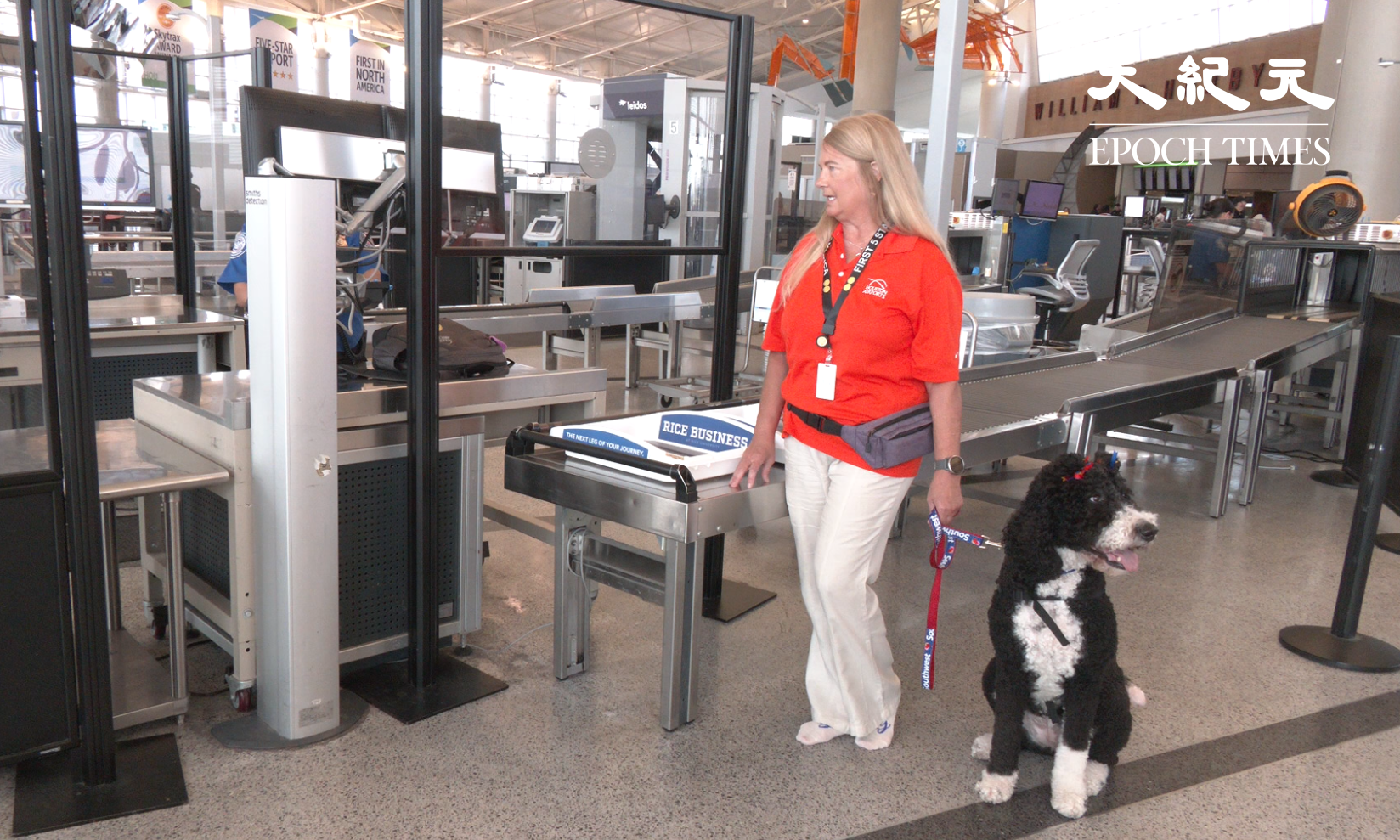
The Transportation Security Administration (TSA) in the United States is currently undergoing an upgrade of its security screening equipment, with computer tomography (CT) technology being introduced at security checkpoints in nearly 300 airports.
These new scanners utilizing CT technology can generate 3D images of each scanned luggage, allowing TSA officials to rotate the X-ray images for a clearer view of items in passengers’ carry-on bags.
According to TSA, these scanners are also integrated with “sophisticated algorithms” that can automatically flag suspicious items such as explosives or other “dangerous items.” Peter Duffy, TSA’s Federal Security Director, stated in a press release earlier this week that “CT technology significantly enhances our officers’ ability to detect threats at the checkpoint.”
TSA states that passengers in these lanes do not need to remove laptops, other electronic devices, or liquids (liquids still need to comply with the 3-1-1 rule), which can “enhance the passenger screening experience.”
The “3-1-1 rule” specifies that liquids, gels, and aerosols carried by passengers must be in containers not exceeding 3.4 ounces (100 milliliters) each, all containers must be placed in a single, clear, quart-sized zip-top plastic bag, and each passenger is limited to one bag.
However, TSA acknowledges that some carry-on items that could pass through old-style X-ray machines may not fit through the smaller opening of CT scanners. TSA wrote in a recent press release, “The entry portals for CT screening machines are slightly smaller, and not all larger carry-on items can fit through.” TSA therefore advises passengers to hand over large carry-on items for airline check-in.
A TSA spokesperson stated in a release, “Some of the new CT screening equipment features a smaller opening design to accommodate more powerful X-ray hardware.” He added, “This design aims to complement advanced imaging technology and ensure the equipment performs optimally. Screening personnel will assist passengers with large items or special needs to ensure a smooth screening process.”
The spokesperson did not specify how screening personnel would “assist” passengers carrying larger carry-on items, nor did he mention whether some passengers may be asked to return to the airline check-in counter to change their luggage for checked baggage.
Furthermore, a TSA spokesperson confirmed in a statement that undeveloped film, including undeveloped film rolls loaded in cameras (such as Polaroid cameras), may be damaged if passed through the new scanning equipment.
The statement read, “Advanced imaging technology may expose film to higher doses of X-rays, potentially causing fogging or damage to the film. TSA recommends passengers carrying undeveloped film rolls or film cameras to request a manual inspection during screening, rather than going through the scanner.”
Professional photographers may be familiar with this guidance as even the previous X-ray technology could affect the quality of undeveloped film. For nearly a decade, TSA has advised photographers to voluntarily submit film for manual inspection.
As of early July, TSA has deployed a total of 1,162 new CT scanners at 296 airports across the United States, but not every security lane and checkpoint at major air hubs are equipped with CT scanners. A TSA representative mentioned, “The plan is to gradually replace existing X-ray equipment with CT devices in the coming years based on funding availability.”
(A portion of this article was referenced from reports by “The Hill”)