
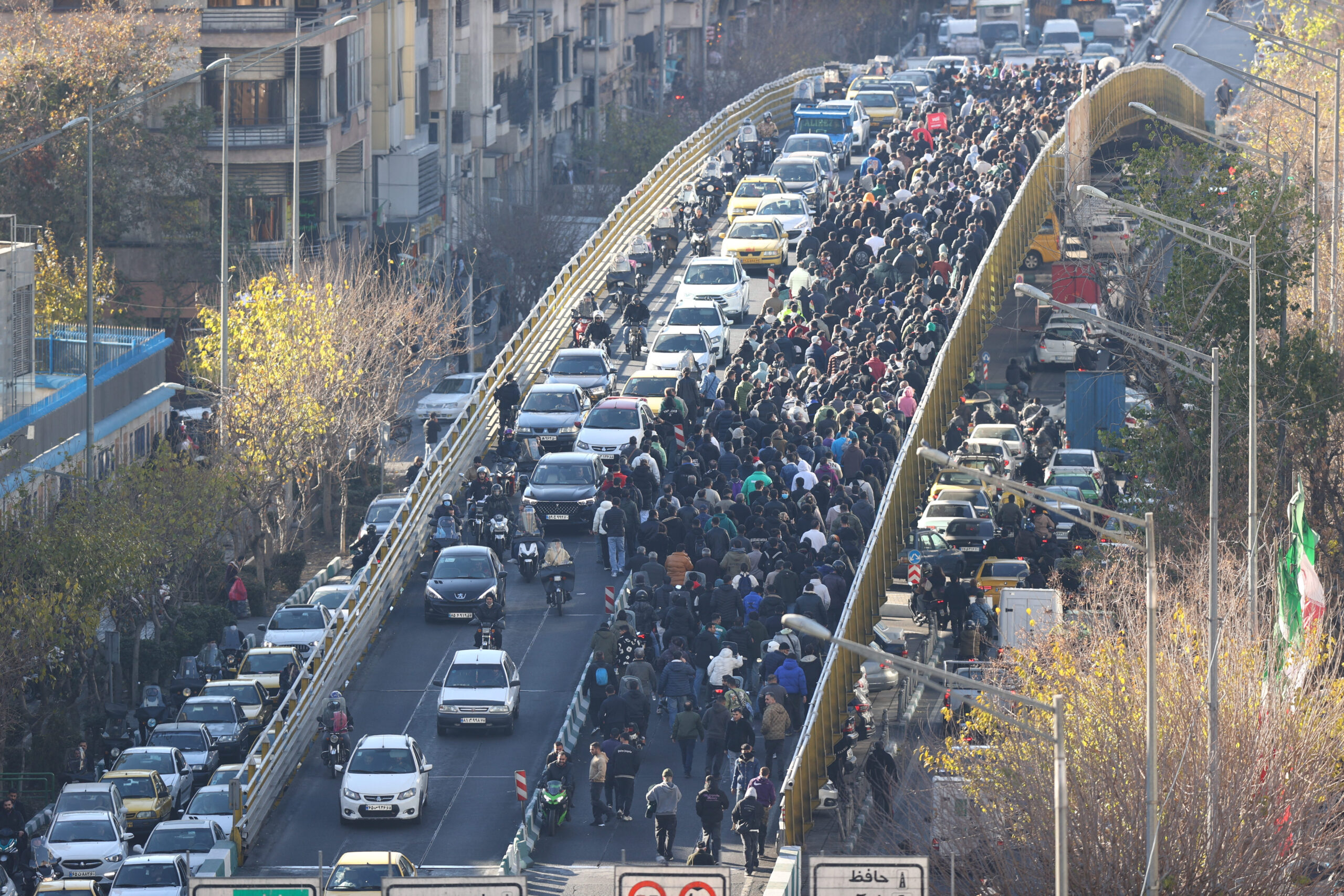
A confidential report prepared for the Iranian presidency reveals that the anger of the Iranian people towards the government has reached an unprecedented level. However, experts analyze that the resistance of the public against Islamic religious rule may still be severely underestimated.
The report indicates that over 80% of the Iranian population faces basic food shortages, with over 75% struggling to access necessary medical care. The vast majority of people feel anger, anxiety, and hopelessness. Not only are they increasingly impoverished, but their trust in the ruling elite has also plummeted sharply.
According to a report from the Iranian citizen news website “Iran Wire” on July 13, only 9% of Iranians support maintaining the status quo; 53% demand fundamental structural reforms; and over 19% call for a complete change of regime.
This report, authored by Ali Rabiei, advisor to Iranian President Pezeshkian, was based on a public opinion survey conducted by the “Ara” polling center in May and circulated in various Iranian government institutions in June.
The survey shows that compared to the previous statistical report released by Iranian authorities in December last year, public anger and resentment have increased by 12%. 64% of Iranians continue to feel “anger and resentment”; 50% feel “hopeless”; 48% feel “depressed”; and 45% experience “fear and anxiety”.
According to a report by Fox News, Miad Maleki, a senior researcher at the Foundation for Defense of Democracies, believes that this confidential report should prompt a reevaluation of the potential for political turmoil in Iran.
“If one must say, this study may even underestimate the level of anger among the Iranian people,” Maleki said. “What is remarkable is that even a survey prepared by the regime’s own polling agency for the president records over 63% of anger – far exceeding the highest values ever recorded by Gallup anywhere in the world. In addition, 81% say it is difficult to make ends meet, and most express feelings of despair.”
Maleki warns that surveys conducted under authoritarian rule may not be considered precise because respondents may fear consequences for expressing dissenting opinions.
“In a police state, expressing ‘incorrect’ views may lead to losing your job, losing your freedom, or even losing your life. Respondents engage in self-censorship, meaning these survey results are best viewed as minimum values rather than maximum values,” he said.
The report also reveals a crisis of trust of the Iranian people in the current regime. About 60% of respondents do not trust major government institutions, while 61.2% have a negative evaluation of officials’ ability to address Iran’s issues. Mistrust in the government, parliament, judiciary, and state television is all above 50%.
Furthermore, more respondents attribute the current difficulties to worsening government governance rather than international sanctions. 46.9% believe the root cause of Iran’s economic problems is inefficiency in governance; 26.3% point to government corruption; only 20.7% attribute it to foreign sanctions.
However, the recommendations of the report mainly focus on managing dissatisfaction rather than addressing the public’s demands for systemic change.
The report urges Iranian state institutions to better explain the impact of sanctions on the country, for officials and religious platforms to use moderate language, and to present a more inclusive image through state television, while avoiding policies that directly antagonize the government and society.
Subsequent analysis by Iran Wire points out that these recommendations primarily focus on resolving the governing crisis in Iran through communication and changing public perception, with little mention of institutional accountability, political freedom, or fundamental economic reforms.
Maleki states that the results of this survey align with the escalating scale of protests in Iran. He cites data showing that demonstrations have spread from over 80 cities in 2017 to more than 200 cities covering all 31 provinces of the country this year, and the number of strikes has tripled.
“This discontent will translate into a new round of protests. The real issue is not whether protests will erupt again, but when they will erupt and whether there will be people willing to stand with the Iranian people at that time,” he said.