
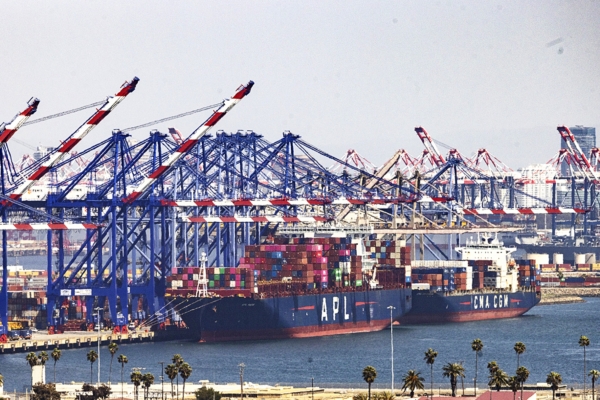
The rise in container shipping prices has been influenced by factors such as the crisis in the Middle East and market concerns about an energy crisis. According to data from the freight platform Xeneta, container shipping rates from Asia to the US West Coast have increased by 20% in the past week, while they have surged by 109% since the outbreak of the war in Iran.
Xeneta’s weekly “Ocean Freight Container Shipping Market Update” released on Friday, June 5, shows that in the week ending on June 5, the 40-foot container shipping rates from Asia to the US West Coast rose by 20% compared to the previous week, reaching $3,933. The rates for shipping containers from Asia to Northern Europe increased to $3,649, up by 27% from the previous week. Additionally, the container shipping rates from Asia to the US East Coast stand at $5,103, and to the Mediterranean at $5,041.
The data from Xeneta also reveals that since the outbreak of the US-Iran war on February 28, container shipping rates from Asia to the US West Coast have risen by 109%, while those to the US East Coast have increased by 92%, by 65% to Northern Europe, and by 51% to the Mediterranean. Carriers are imposing fuel surcharges, forcing importers to bear the costs related to the energy crisis.
According to Bloomberg, Xeneta’s data aligns with the latest comprehensive freight rate data for multiple long-haul routes released by the renowned maritime consultancy Drewry. Drewry’s data also shows a significant increase in short-term rates over the past week, reaching levels not seen in about a year.
In addition to the aforementioned additional charges, capacity is becoming tighter ahead of the peak season for restocking inventories in July and August. The disruption in the passage through the Hormuz Strait has led to shipping reroutes and congestion at key Southeast Asian ports, spreading the pressure of tight capacity to other trade routes far from the Persian Gulf.
Peter Sand, Chief Analyst at Xeneta, stated that amid ongoing conflicts in the Middle East and disruptions in Southeast Asian ports, coupled with market concerns about a potential energy crisis in the latter half of 2026, the wave of rising global container shipping rates is gaining momentum.
Sand mentioned that part of the freight increase is due to delays at major Southeast Asian ports as shipping companies adjust their route networks to deal with the issues arising from the blockade of the Hormuz Strait. Port disruptions are causing havoc in the supply chain, especially at those key global transit hub ports in Southeast Asia.
“Thus, even routes that do not pass through the Middle East, such as trans-Pacific routes, have seen significant market rate spikes,” Sand said, adding that the energy crisis triggered by the blockade of the Hormuz Strait and the continuous rise in oil prices may prompt shippers to import goods earlier as they anticipate higher manufacturing costs and freight later this year.
“If shippers do choose to concentrate imports ahead of time, carriers will further push up rates, meaning the global trade market may be far from reaching its peak,” he said.
The stock price of A.P. Moller-Maersk A/S, the world’s second-largest container shipping company, has risen by approximately 13% this week.