
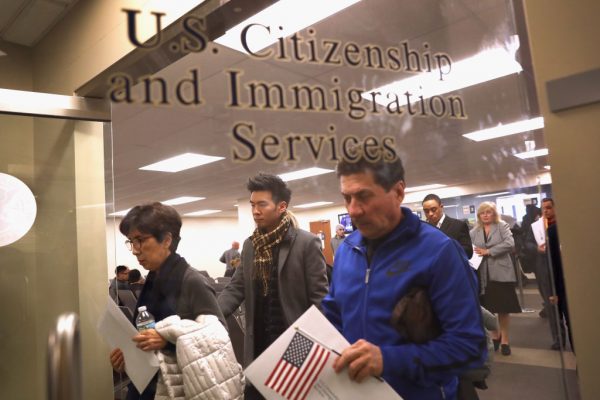
In the United States, the processing time for immigration applications varies significantly depending on the application category, the service center handling the case, and the individual case circumstances. Some cases may require waiting for several months to several years on average. As of the end of the fiscal year 2025, the backlog of cases at the U.S. Citizenship and Immigration Services (USCIS) has reached nearly 12 million, reaching a historic high and further exacerbating the wait times for some applicants.
Due to applications such as I-485 Adjustment of Status, I-130 Family Immigration, I-589 Asylum Application, and N-400 Naturalization not falling within the scope of Premium Processing, some applicants who have been waiting for a long time may consider filing a Writ of Mandamus with the federal court to request the government to make a decision on their cases in accordance with the law.
But what exactly is a Writ of Mandamus? Which cases are most suitable for it? When is it not advisable to seek it? How does the government respond upon receiving a Writ of Mandamus? These questions are answered by senior immigration lawyer Zhou Mei, who shares her practical experience based on years of handling federal Writ of Mandamus cases.
The “federal Writ of Mandamus” is a legal tool used against governmental inaction, allowing applicants to demand the government to act when it fails to fulfill its duties as required by law.
In general, any governmental inaction can be addressed through the federal Writ of Mandamus. As long as an applicant believes the government has exceeded a reasonable timeframe without completing its administrative duties, they can seek legal recourse under the Administrative Procedure Act.
In the field of immigration cases, the most common use of the federal Writ of Mandamus is when applicants want the government to make a decision on their cases, but the government delays action. For instance, a significant portion of Chinese applicants fall under asylum cases, with some asylum applicants waiting for years without being scheduled for an interview. In such situations, a federal Writ of Mandamus can be used to push the government to schedule interviews.
“In these cases, applicants can file a federal Writ of Mandamus lawsuit in the federal court in their state,” says Zhou Mei.
Considering the often lengthy waiting times for asylum cases, using the federal Writ of Mandamus to expedite the progress of cases proves to be an effective approach. Zhou Mei points out that this method does not have any adverse effects on the plaintiff or applicant’s immigration application and is currently the most common type of federal Writ of Mandamus application.
However, many cases may not be suitable for a federal Writ of Mandamus. For example, H visas, L visas, which already have Premium Processing mechanisms in place, and student-related applications have similar arrangements. “In such cases, we usually deem it unnecessary to file a federal Writ of Mandamus. By paying the expedited processing fee, the government will complete the review within the specified timeframe, such as 15 or 45 working days.”
Additionally, another common type of Writ of Mandamus case includes the I-730, which is a petition for family members of asylum seekers. When the primary asylum applicant obtains status, family members can apply for immigration through the I-730, but these cases often see no progress for a long period. “If not expedited, such cases may see no progress for two to five years. Therefore, we typically begin requesting expedited processing around a year after the application is submitted.”
Another common type of case is the I-485 Adjustment of Status, which involves expediting the green card application process.
Zhou Mei notes that, in general, for investor immigrants or employment-based immigrants applying for a green card, the process takes approximately a little over a year. However, the time for asylum applicants to obtain green cards has been extended in recent years due to stricter government reviews. “Asylum cases are currently a priority for this government, hence the processing speed has been slowing down.”
Reflecting on past experiences, Zhou recounts that around November last year, when assisting applicants with expedited processing, the waiting time for asylum green cards was around 15 months. By December, it had increased to 18-19 months, and by June-July of this year, 2026, the waiting time had extended to 30-31 months. This means applicants have to wait over two and a half years after submitting their applications to receive their green cards.
“Therefore, without utilizing the expedited processing, applicants are often very anxious, and the waiting time may continue to increase,” she says. “Generally, we start assisting applicants in filing for expedited processing of asylum green card I-485 applications about a year after submission.”
After filing a Writ of Mandamus, the government typically has around 60 days to respond. There are two potential responses: either meeting the applicant’s demands, such as scheduling an interview or issuing the green card, or presenting a lengthy pleading asserting that the government wasn’t unduly delaying and entering into formal litigation with the applicant.
“In all honesty, filing a Writ of Mandamus is not about engaging in a protracted legal battle with the government.”
Many times, the government is also aware that the case has been delayed excessively and isn’t appropriate, thus, within their discretion, they may schedule interviews or issue green cards. However, if the government persists in claiming no delays, the case will enter the court, and a judge will make a ruling.
As for whether judges have clear legal grounds to handle such cases, it varies. When there are no clear regulations, there is considerable uncertainty in how judges will decide. Furthermore, once a lengthy litigation process commences, the associated costs are usually not something that most individuals seeking to file for expedited processing are willing to bear.
Therefore, the decision of whether to file for expedited processing and when to do so requires an experienced lawyer to make an informed judgment based on the practical methods of the local federal court.
Taking San Francisco as an example, asylum cases generally can be expedited after waiting for about four years.
Zhou Mei provides an example, “We once attempted to file for expedited processing after waiting for three years. Since we had filed several expedited processing cases in San Francisco and were familiar with the court staff, I explained to the applicant, the plaintiff, that the court might not support our petition, so they should be mentally prepared if it fails, in which case, we would refile in the fourth year.”
“As a result, after submitting the case, the court staff in San Francisco expressed a desire for us to withdraw the case or they would submit a lengthy counter-response. Due to our long-term cooperation, I also understood their position, so we decided to withdraw the case.” She continues, “On the first day of the applicant’s fourth year, we refiled for expedited processing. Subsequently, the applicant was successfully scheduled for an interview and obtained asylum status last year.”
Therefore, lawyers must have a thorough understanding of the operational practices of the local immigration office or relevant governmental agencies to determine at what point the government typically considers cases eligible for litigation due to improper delays.
Zhou Mei offers another example, stating, “Previously, we filed asylum expedited processing cases in New Orleans, typically after waiting about two and a half years.” Later on, the local U.S. Attorney’s Office in New Orleans changed the prosecuting attorney.
“After the personnel change, the new prosecutor was more assertive. We followed our previous procedures and filed for expedited processing between two and a half to three years, and he directly stated that he did not believe the government was delaying and did not think that filing a lawsuit would achieve the applicant’s goals. In other words, they decided to enter into a formal litigation process with us.”
Different practices by federal courts in different regions and U.S. Attorney’s Offices can also change. Therefore, Zhou Mei believes that the decision to file for expedited processing and when to do so should not solely be based on waiting times but should also reflect familiarity with the practical operations of local federal courts and governmental agencies.
Zhou Mei concludes by emphasizing that the federal Writ of Mandamus is a vital legal tool but is not applicable to all cases.
For cases that are genuinely and significantly beyond reasonable processing times without other administrative remedies, filing at the right time can often effectively prompt the government to fulfill its obligations under the law. However, if the timing is not right, it may increase litigation costs, so applicants should carefully evaluate their cases and consider the practical circumstances of local courts before filing.
For asylum cases awaiting interviews, it is generally recommended to file for expedited processing after four years in San Francisco, approximately five years in Los Angeles, four years in New York, four years in federal courts near Washington, D.C., and about four years in New Orleans.
For real-time information on current wait times for immigration cases, you can refer to the official tool: “How Long to Wait for Immigration Applications? Official Tool Helps You Check Instantly.”