
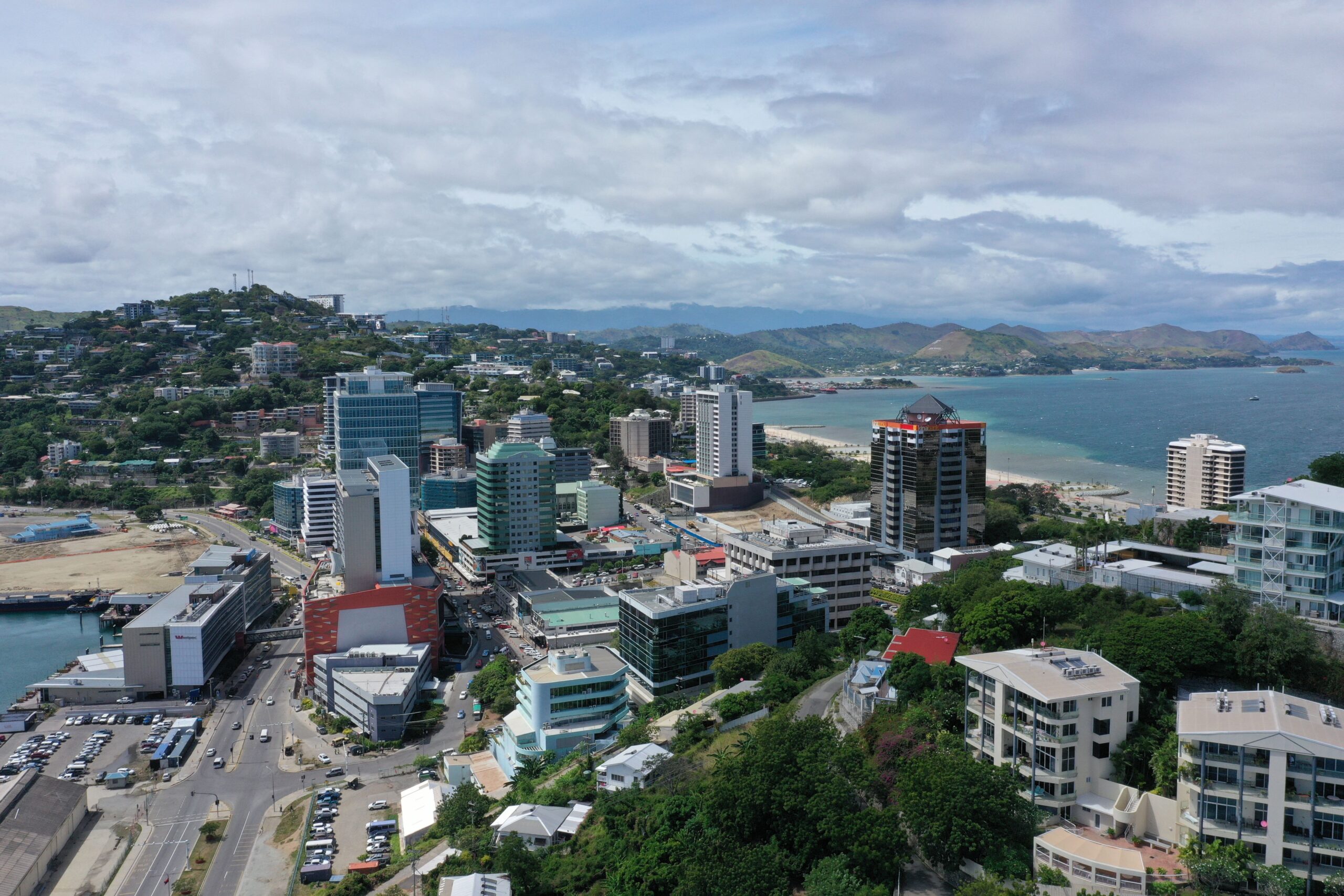
The government of Papua New Guinea (PNG) this week announced the closure of the Taiwan Trade Mission without prior consultation with Taiwan, sparking diplomatic tensions in the region.
On Friday, July 17, the US State Department expressed deep concern and stated that this move is another example of the Chinese Communist Party’s global intimidation of Taiwan and its supporters.
Despite PNG’s demand for an immediate closure of the Mission, the Ministry of Foreign Affairs of the Republic of China (Taiwan) firmly rejected this unilateral decision, emphasizing that the Mission continues to operate normally and is reassessing bilateral cooperation, economic and trade exchanges, and possible measures to be taken.
Regarding PNG’s request to close the Taipei Economic and Cultural Office in Port Moresby, a spokesperson for the US State Department stated in a release, “We are deeply concerned about reports that the government of Papua New Guinea unilaterally ordered the closure of the Taipei Economic Office in Port Moresby.”
The US emphasized that Taiwan is a reliable democratic partner and the relationships Taiwan has established with countries around the world can bring significant benefits to the people of those nations, including those of PNG.
The statement further noted, “This is yet another example of Beijing’s intimidation tactics against Taiwan and its supporters around the world. This practice undermines countries’ sovereign decisions to cooperate with Taiwan and threatens international peace and prosperity.”
Additionally, the Ministry of Foreign Affairs and Trade of New Zealand stated that they have taken note of PNG’s decision to close the Taiwan Trade Mission and will further understand this decision at an appropriate time.
PNG’s Foreign Minister Justin Tkatchenko announced on social media on Thursday that PNG will immediately close the Taiwan Mission based on the cabinet’s reiteration of the “One China” policy.
Tkatchenko stated, “Within PNG’s jurisdiction, we will no longer acknowledge the existence of ‘Chinese Taipei’ nor see the necessity for it.”
He said that this decision has been communicated to the Chinese Ambassador to PNG Yang Xiaoguang this week, describing this “administrative alignment” as an important step in enhancing bilateral relations.
The Chinese Ministry of Foreign Affairs highly appreciated PNG’s decision. The Chinese Embassy in PNG stated that the closure of the Taiwan Mission is the correct decision and will further consolidate the political foundation for the development of China-PNG relations.
Taiwan’s Ministry of Foreign Affairs spokesperson Joanne Ou stated that the PNG government did not consult with Taiwan beforehand. Taiwan has expressed strong protest against this and stated that it does not accept PNG’s unilateral decision.
The Ministry of Foreign Affairs stated, “Our Trade Mission in Papua New Guinea will continue to operate normally and safeguard our country’s interests according to relevant regulations, providing necessary services to our citizens.”
The Ministry of Foreign Affairs has also reached out to like-minded countries to seek international attention and support, and has convened emergency response meetings with relevant agencies to reassess Taiwan’s bilateral cooperation and trade relations with PNG and discuss measures to safeguard Taiwan’s interests.
Vice President of Taiwan, Hsiao Bi-khim, stated on Friday in Taipei during a briefing for foreign media that the Chinese Communist Party’s pressure on Taiwan worldwide has put Taiwan in an extremely challenging diplomatic situation.
Taiwan and PNG established Trade Missions in 1990 and briefly established diplomatic relations in 1999. However, under pressure from Beijing in 2018, PNG demanded the renaming of the Taiwan Trade Mission, and in 2023, PNG closed its Trade Office in Taiwan.
Apart from diplomatic repercussions, the incident also affects Taiwan’s energy security. An analysis by the geopolitics magazine The Diplomat focusing on the Indo-Pacific strategy points out that PNG is an important supplier of liquefied natural gas (LNG) to Taiwan, accounting for around 6% of Taiwan’s LNG imports in 2025.
LNG vessels departing from ports near Port Moresby usually sail northeast, through the Coral Sea, West Pacific, and Philippine Sea towards Taiwan.
Compared to energy supplies from the Middle East, the PNG route allows Taiwan to bypass the Strait of Hormuz and major maritime chokepoints like the Strait of Malacca or the South China Sea, thus serving as a more resilient energy conduit for Taiwan.
The analysis noted that the closure of the Taiwan Mission is unlikely to immediately disrupt existing LNG contracts or invalidate commercial obligations. However, it may weaken Taiwan’s ability to maintain government contacts, support business relationships, and protect its interests in emergency situations.
Moreover, there are projects with Chinese investment covering PNG’s ports, airports, government data centers, telecommunications networks, submarine cables, and power facilities. These projects may lead to long-term technological dependencies for PNG and gradually transform into leverage and bargaining chips for the Chinese authorities in regional crises.
Currently, Taiwan maintains formal diplomatic relations with only 12 countries, including Pacific allies such as Palau, Tuvalu, and the Marshall Islands.