
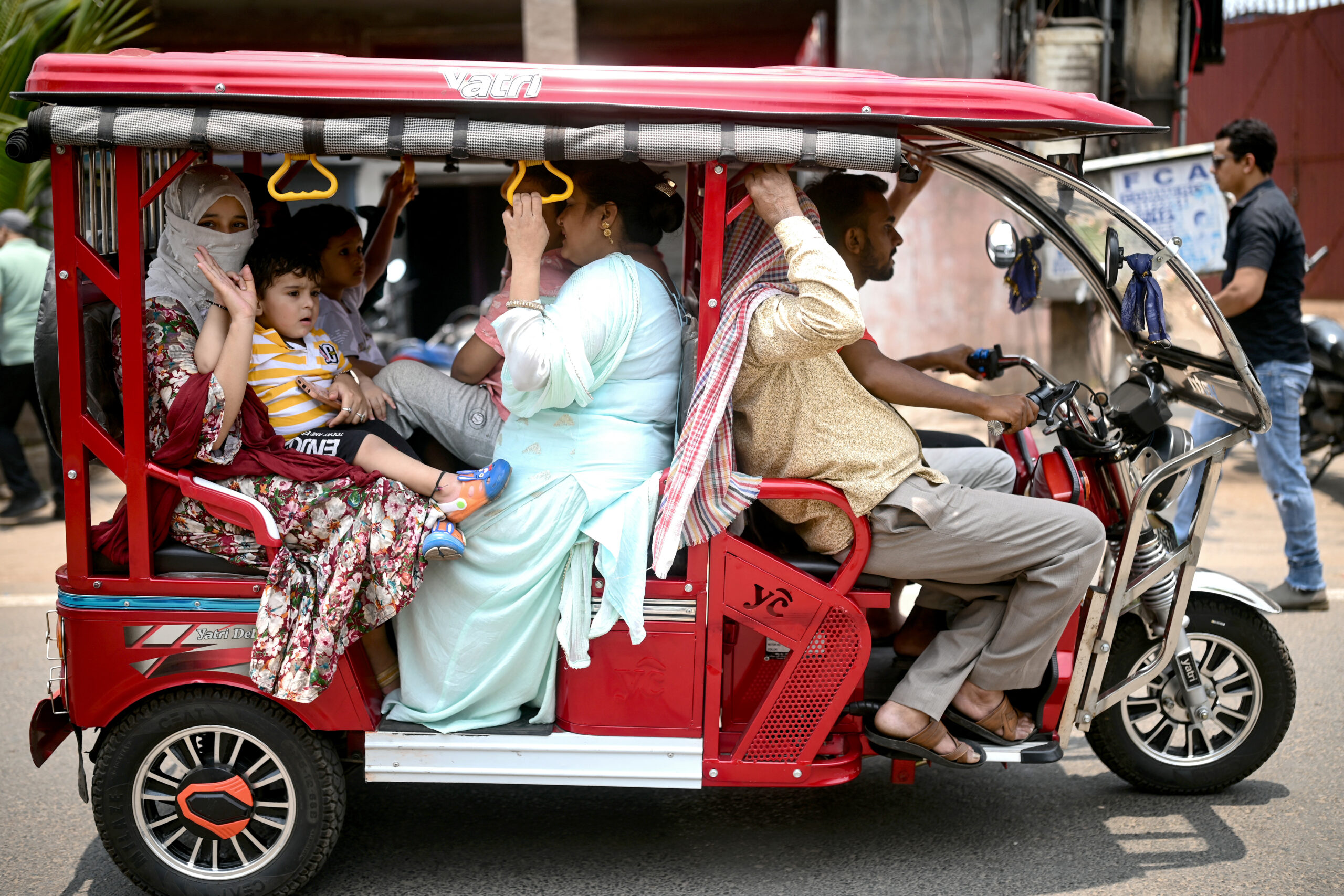
In recent weeks, multiple incidents of electric tricycles stalling suddenly while in operation have been reported in the Indian capital of New Delhi. Upon investigation, it was found that these incidents were related to several Chinese battery management applications capable of remote control. What initially appeared to be local transportation issues quickly escalated into a national cybersecurity controversy, introducing new uncertainties into the already delicate relationship between China and India.
Experts suggest that this series of events may accelerate India’s scrutiny of Chinese technology and highlight concerns about the potential weaponization of connected devices.
At the beginning of this month, numerous electric tricycles in New Delhi came to a sudden halt while in motion, leaving drivers stranded on the roadside and passengers scrambling to find alternative transportation.
Videos of these incidents spread rapidly on social media platforms, transforming what seemed like localized transportation malfunctions into a nationwide talking point. Reports indicated that the cause of these incidents was not mechanical failure but rather software-related, with leads pointing to China.
According to the South China Morning Post, Chinese battery management applications such as BAT-BMS, Epoch Li-ion, and Lossigy are suspected of being used to remotely shut down vehicles, raising concerns about the safety of connected electric vehicles and risks associated with Bluetooth remote control.
Shri S. Krishnan, Secretary of the Indian Ministry of Electronics and Information Technology, confirmed that the government has launched an investigation and has requested app stores to remove at least three Chinese battery management applications. Some reports suggest that the number of apps removed could be as high as seven.
As reported by the Hindustan Times, the Indian government has instructed the removal of multiple mobile applications that are believed to enable remote shutdown of electric tricycles and other battery-operated vehicles on roads.
These applications operate similarly to Bluetooth devices, allowing connection without password or identity authentication. In some systems, anyone within Bluetooth communication range can download the relevant app to connect to nearby vehicles and disable them with a single click.
One of the applications in question, Lossigy, can locate nearby electric vehicles and shut them down with a simple tap. A Hindustan Times reporter, with the driver’s consent, downloaded the app and successfully used it to immobilize an electric tricycle.
Several drivers have noted that such security vulnerabilities have existed for some time. However, the circulation of videos demonstrating remote shutdown of electric tricycles on social media has led to a significant increase in similar incidents.
BAT-BMS, Lossigy, and other applications were initially developed for monitoring the health status of lithium batteries in electric vehicles. Yet, due to a lack of password authentication during connections, serious security vulnerabilities have been exposed.
This flaw effectively turns smartphones into “kill switches” for electric vehicles, posing risks not just to drivers but also to the passengers onboard in terms of personal safety.
A senior official from the Delhi government mentioned that many electric tricycles use Chinese-manufactured battery management systems that have limited security measures. These applications are being maliciously exploited by individuals.
Dr. Shen Mingshi, a researcher from the Taiwan Institute for National Defense and Security Studies, highlighted that India had previously implemented trade sanctions against China to prevent excessive imports of Chinese products. However, relaxing some restrictions on Chinese goods in recent years due to improved relations may be impacted by the current electric tricycle incident.
He emphasized that this event could serve as a catalyst for India to further scrutinize and potentially control Chinese products in the future, citing national security concerns as a primary justification for such actions.
Economic analyst David Huang believes that this incident could prompt India to accelerate the “de-risking” of its technology and trade sectors. It offers the Modi government a perfect political excuse to enhance scrutiny of Chinese electronic components, software, and network equipment, and tighten market access regulations.
Following the deadly border conflict between China and India in 2020, tensions between the two countries have remained high. India subsequently banned several Chinese applications such as WeChat and TikTok. However, both sides are cautiously working toward improving diplomatic relations and economic cooperation, despite limited strategic trust.
Amit Kumar, a researcher at the Takshashila Institution, an independent public policy think tank in India, pointed out the sensitive nature of the current India-China relationship. Events like the electric tricycle incident will only exacerbate the situation further.
He stressed that recent occurrences highlight the potential weaponization of technology and applications, posing real security threats. Such incidents reflect long-standing Indian concerns and could disrupt the progress of bilateral relations.
David Huang suggests that this incident sends a strong signal warranting vigilance from global powers about China’s cybersecurity risks. It confirms the prolonged worries of Western and some Asian countries regarding the safety of Chinese connected devices.
He warns that during wartime or geopolitical conflicts, any Chinese networked software or hardware, like vehicles, could be remotely disabled with a single click by Beijing, posing lethal threats to essential infrastructure, transportation, and national security.
Despite various products being labeled as “Made in India,” the core control systems often originate from China. Many countries have relocated product assembly domestically, yet the underlying control systems, cloud apps, core software, and critical components remain under the control of Chinese enterprises.
Huang anticipates a deeper phase of risk mitigation in future supply chains, where international focus will shift beyond product origins to emphasize control over underlying technologies and the autonomy of supply chains.