
According to a report by CNBC on Friday (July 17th), a new type of digital retail crime controlled by organized crime groups in China is quietly spreading throughout the United States. Instead of clearing out shelves of large chain supermarkets as they did in the past, criminals are now targeting less protected retail apps and banks’ security verification systems.
Law enforcement experts point out that these criminal groups use consumers’ personal information purchased through channels such as the dark web to break through the identity verification defenses of issuing banks like Synchrony Bank, directly linking stolen credit cards to mobile digital wallets (such as Apple Pay or Google Pay). They then move through stores under Lowe’s, Walmart, and TJX Companies, making widespread purchases ranging from $95 to $500 in value through tap-to-pay at self-checkout machines.
This chain of card skimming targeting American banks and merchants brings in profits of up to $1 billion annually for criminal groups.
This contactless payment scam usually starts with a seemingly routine phishing text message, such as a warning about unpaid tolls or expired vehicle registration, designed to intimidate consumers into providing credit card and sensitive personal information. The identities of these unwitting consumers are then openly priced and sold on platforms like Telegram.
While the “carders” at the bottom may come from different ethnic backgrounds, multiple litigation files revealed by the U.S. Department of Justice (DOJ) have fully exposed the true face of the transnational Chinese criminal organizations behind the scenes:
– Million-dollar gift card smuggling case:
According to a judgment announcement from the U.S. Attorney’s Office in New Hampshire on April 22, 2025, multiple Chinese nationals were sentenced to federal imprisonment for participating in a transnational gift card fraud conspiracy involving more than $100 million.
They used stolen funds within the U.S. to purchase a large quantity of high-value Apple products like iPhones with cloned credit cards, which were then consolidated in warehouses, smuggled back to China and Southeast Asia for resale to bypass the strict anti-money laundering (AML) regulations between the U.S. and China.
– Florida serial tampering case:
According to an announcement from the Southern District Attorney’s Office in Florida on August 18, 2025, Chinese nationals Cao Yuan Liu and Linghan Chen were formally indicted for their involvement in an organized gift card fraud network spanning multiple counties in Florida.
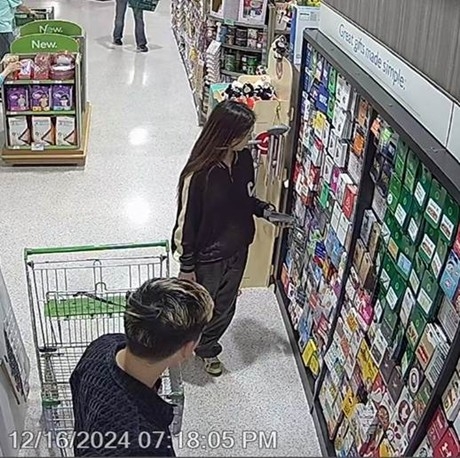
The gang roamed major supermarkets, secretly duplicating and tampering with unsold physical gift card barcodes, which were then returned to the shelves. After unsuspecting customers purchased and reloaded them, the funds were directly skimmed online.
During a raid on their residence, the two even attempted to flush a large number of incriminating gift cards down the toilet to destroy evidence.
Currently, the U.S. Homeland Security Investigations (HSI) has launched the national-level project “Red Hook,” specifically targeting Chinese organized crime groups that exploit vulnerabilities in digital wallets and retail apps to transfer assets overseas. Law enforcement agencies and the retail industry are also working together to urge Congress to swiftly pass the “Organized Retail Crime Enforcement Act” to break down information barriers from all sides and curb this multi-billion dollar financial and retail hemorrhage.