
On Thursday, July 16, the Philippine government strongly condemned the Chinese state media China Daily for releasing an AI-generated video depicting Filipinos as monkeys. The Philippines criticized the video for being racially discriminatory, offensive, and unacceptable, and demanded its immediate removal. The Philippine side stated that such dehumanizing propaganda has crossed a line and could further escalate tensions between the two countries.
According to Reuters, the video was posted on China Daily’s Facebook account on July 10, coinciding with the 10th anniversary of the Philippines’ commemoration of the arbitral tribunal ruling on the South China Sea. In the video, a monkey dressed in Philippine attire is shown singing under the control of arms symbolizing the United States and Japan. The monkey is then insulted as “stupid,” pulls out a lyric paper with the words “South China Sea Arbitration Ruling,” and is ultimately thrown into the sea and sprayed with high-pressure water cannons by a ship.
On the evening of July 16, the Philippine Department of Foreign Affairs released a statement strongly condemning the video’s portrayal of Filipinos as monkeys, calling such content “extremely insulting, distressing, and totally unacceptable,” and demanding that China immediately delete the video. The Philippines emphasized that any propaganda that dehumanizes the Filipino people is unacceptable and has crossed a red line for them.
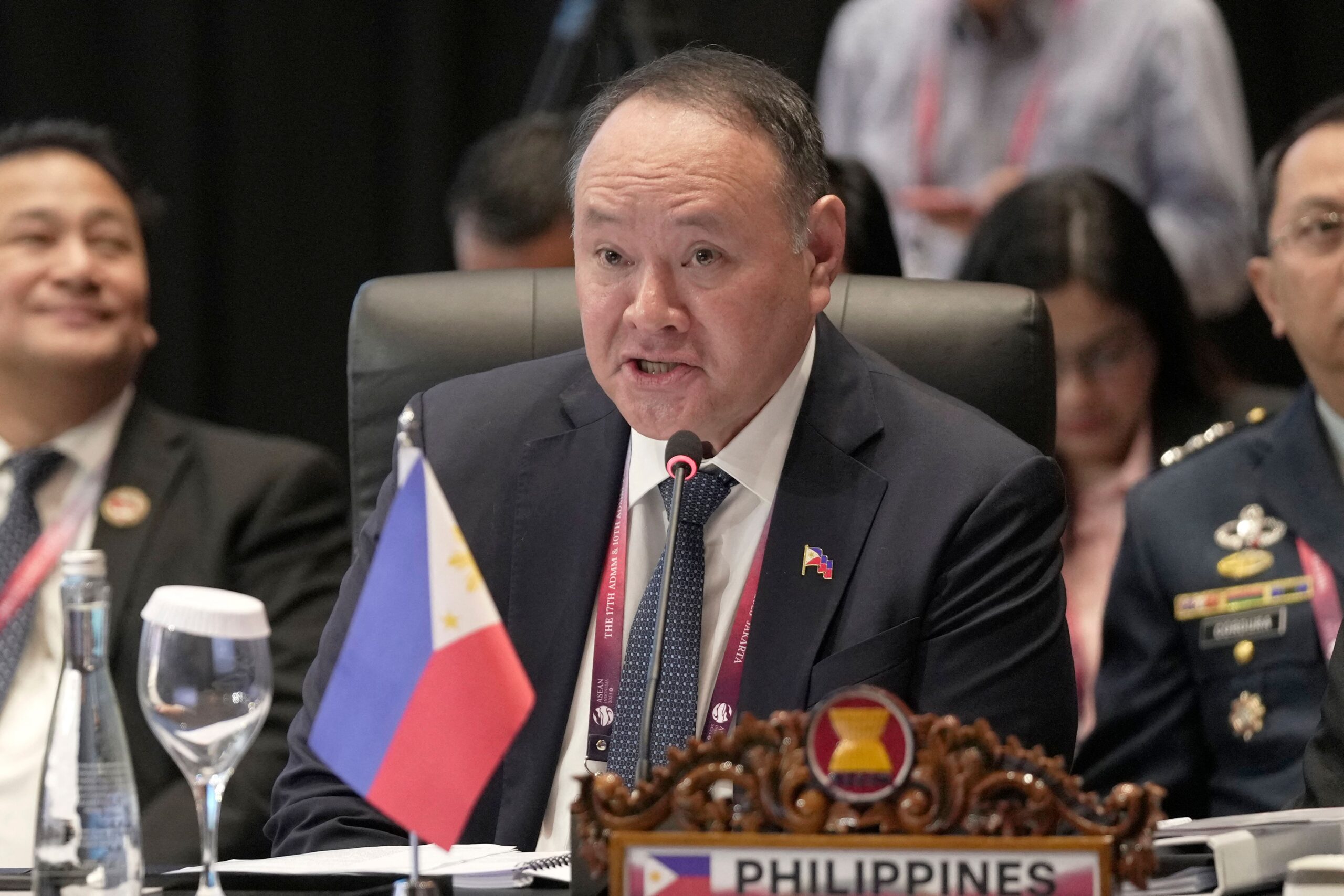
Philippine Defense Secretary Gilberto Teodoro Jr. criticized the video as “vile propaganda” and behavior that “any country claiming to be a responsible regional leader should feel ashamed of.” He stated that China resorts to racial discrimination, threats, and inciting hatred because they cannot support their claims in the South China Sea with reason, evidence, and international law.
Teodoro further pointed out that the video not only mocks the legally binding 2016 South China Sea Arbitration ruling but also glorifies violence against the Filipino people and military, exposing the bankruptcy of the Chinese Communist propaganda machine in terms of morality and ideology. He also criticized China for a series of recent actions that indicate a lack of security and trustworthiness as a neighbor, with this attempt to dehumanize the Filipino people reinforcing this point.
As of now, the Chinese Embassy in Manila has not responded to the incident.
The controversy comes amidst ongoing disputes between China and the Philippines over sovereignty in the South China Sea. In recent years, both sides have had maritime standoffs in areas like the Ren’ai Reef and the Scarborough Shoal, with Chinese coast guard ships frequently using high-pressure water cannons and conducting dangerous maneuvers to drive away Philippine vessels. Beijing had previously announced sanctions against Teodoro and recently placed floating barriers at the entrance to Scarborough Shoal, prompting protests from the Philippines; these facilities were eventually removed.
On July 12, 2016, the Permanent Court of Arbitration in The Hague, Netherlands, ruled on the basis of the United Nations Convention on the Law of the Sea that China’s “nine-dash line” claim lacked legal basis and that Beijing did not have historical rights to most of the South China Sea. However, China has consistently refused to acknowledge or implement the ruling, while the Philippines continues to view it as an important legal basis for upholding its rights in the South China Sea.