
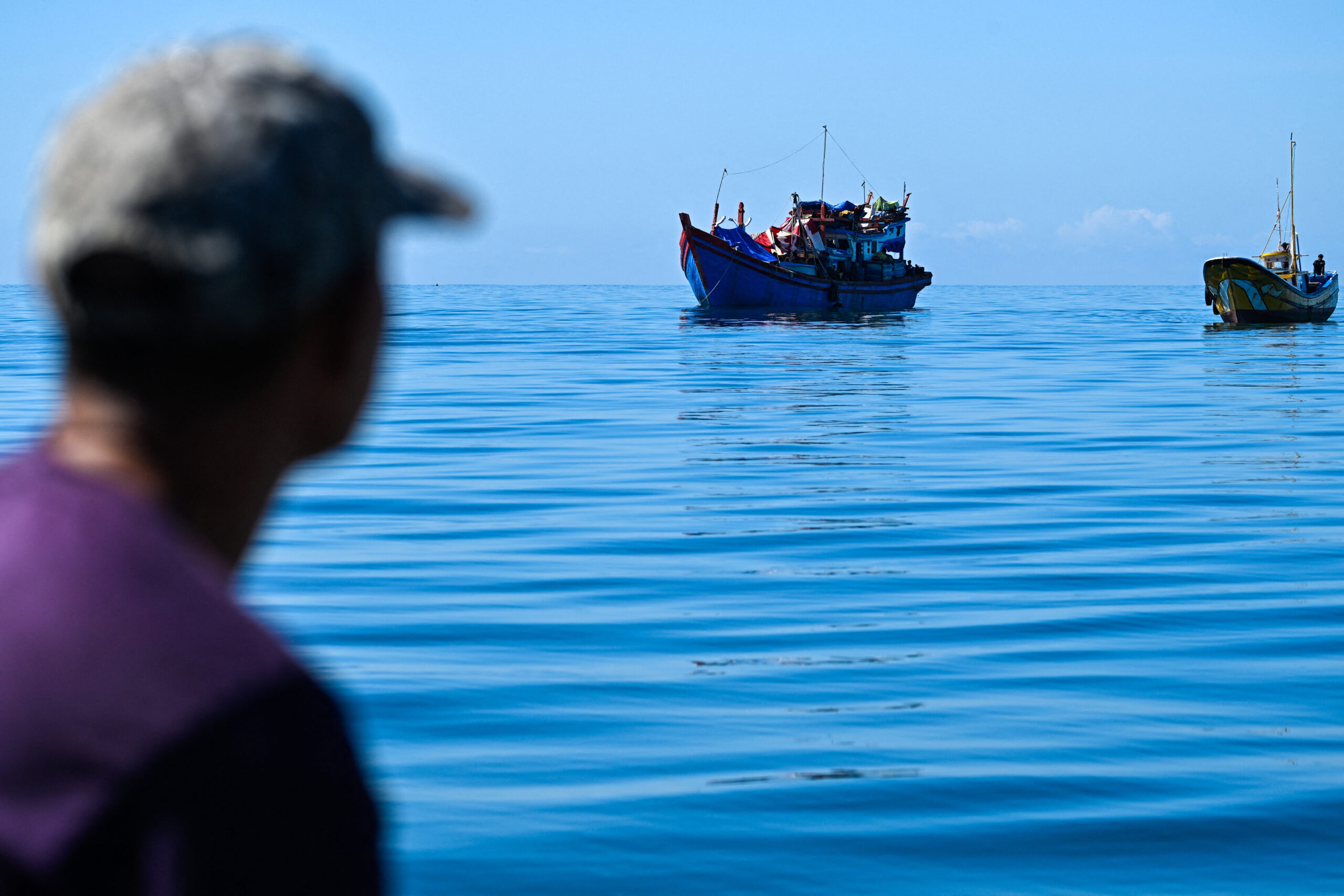
The United Nations agencies issued a statement on Thursday (July 16) saying that two boats carrying Rohingya refugees from Myanmar reportedly capsized in the Bay of Bengal, with over 500 people feared dead.
According to preliminary information released by the International Organization for Migration (IOM) and the United Nations Refugee Agency (UNHCR), these two boats departed from Rakhine State in Myanmar at the end of June, with most passengers being Rohingya people. Some of them were reported to have come from Cox’s Bazar, a refugee camp in Bangladesh on the other side of the border.
The first boat is believed to have carried about 250 people and lost contact shortly after departure; the second boat reportedly had around 280 people and is believed to have sunk off the coast of Rakhine State in Myanmar on July 8.
The two agencies stated in a joint declaration, “While the details of the incident and casualty figures have not been officially confirmed, the UN Refugee Agency and the International Organization for Migration are deeply concerned about the potentially heavy loss of life.”
Currently, it is the season of frequent monsoons and exceptionally dangerous maritime conditions. Rohingya people typically avoid traveling by boat during this time. The recent widespread rainfall and flooding in the region have escalated the risks of such sea journeys.
The United Nations agencies stated, “These journeys occurred outside of the regular sailing season, when maritime conditions are typically more perilous.”
In recent years, thousands of Rohingya people have fled the harsh and overcrowded refugee camps in Myanmar and Bangladesh, seeking safety and opportunities in countries like Malaysia, Indonesia, or Thailand.
Currently, approximately 1.2 million stateless Rohingya, predominantly Muslims, remain trapped in overcrowded refugee camps in Bangladesh after fleeing repeated violent actions by the security forces in Myanmar. Those who stayed in Myanmar face strict controls, with many being confined to detention camps.
As international aid has significantly decreased, food distributions in Bangladeshi refugee camps have been reduced. Meanwhile, the Myanmar military and a ethnic armed group in Rakhine State continue to vie for control of the region.
The escalating tensions have driven more Rohingya people to embark on makeshift wooden boats in an attempt to cross the sea to Southeast Asian countries. Thousands have perished en route, including infants, children, and pregnant women.
The International Organization for Migration and the United Nations Refugee Agency emphasized that this potential maritime tragedy underscores the continued lack of sustainable solutions for the Rohingya people and called on the international community to support those stranded in Bangladeshi refugee camps.
Statistics show that as of 2026, nearly 300 people, including Rohingya refugees and Bangladeshi citizens, have been reported dead or missing in the Andaman Sea and Bay of Bengal.
In 2025, over 6,500 Rohingya people fled by boat, with nearly 900 deaths or disappearances, marking it as the deadliest year for Rohingya boat departures. The UN Refugee Agency stated that the mortality rate on this route is the highest among major refugee and migrant maritime routes globally.
The two agencies expressed, “Stronger regional and international actions are needed to prevent further loss of lives on one of the world’s deadliest maritime routes, including enhancing search and rescue efforts, providing pathways to seek asylum and protection, and taking action against smuggling and trafficking networks.”