
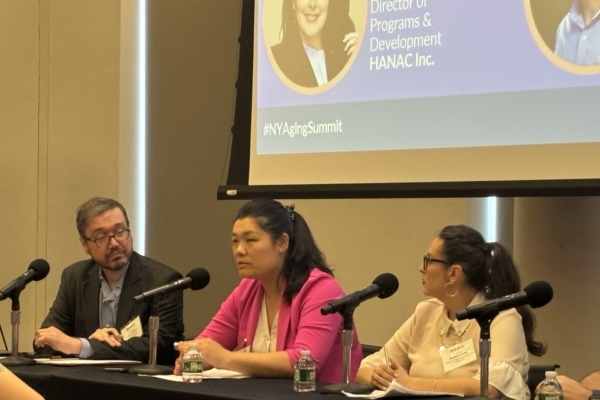
New York City has over 200,000 seniors waiting for affordable housing, with an average wait time of 7 to 10 years. Facing a continuous increase in the elderly population, possible federal budget cuts, and rising living costs, several city officials, non-profit organizations, and housing service representatives expressed at the New York Aging Summit on July 15th. They emphasized the necessity for New York to not only increase the supply of affordable housing for seniors but also to simultaneously improve transportation, healthcare, food supply, and community care support to assist seniors in truly aging in place.
Chairwoman of the New York City Council’s Aging Committee, Susan Zhuang, stated that currently around 20% of New York City’s population are seniors aged 65 and above, a number that continues to grow. This year, New York State expanded the Senior Citizen Rent Increase Exemption (SCRIE) program to benefit more seniors and individuals with disabilities, yet only about one-third of eligible individuals have applied, with many seniors unaware of this benefit. The City Council plans to hold a public hearing in September to review the implementation of the legislation in New York City and enhance outreach and application assistance.
Zhuang pointed out that while federal support through HUD’s Section 202 Elderly Housing program and Section 8 Voucher program exists, the supply remains insufficient in the long term. Coupled with rising rents, property taxes, and living costs, many low-income seniors are forced to leave New York. She disclosed that some seniors have told her that selling their homes and moving to Long Island was better than becoming homeless, a sentiment that deeply affected her.
Ryan A. Murray, Deputy Commissioner and Chief Program Officer of the New York City Department for the Aging (DFTA), stated that housing is not the only challenge seniors face. DFTA surveys show that approximately 30% of interviewed seniors cannot access affordable healthy food; issues like food insecurity, financial fraud, elder abuse, and extreme heat directly impact seniors’ ability to live safely in their communities. Therefore, grassroots services such as senior centers, meal delivery services, and case management remain essential.
Andrea Jerves, Project and Development Director of the Hellenic American Neighborhood Action Committee (HANAC), emphasized that assisting seniors in moving into affordable housing is just the first step; it is more crucial to help them integrate into the community. She noted that some seniors, due to long-term lack of care, may not even know how to use a microwave or remain accustomed to sleeping on the floor after moving to a new home, requiring prolonged support from social workers. However, currently, frontline social work manpower and service funding are insufficient, affecting the quality of care. She hopes that along with increasing housing supply, the government will also incorporate non-profit organizations into planning and resource allocation, enabling seniors to not just move into new homes but also live with dignity.
Donald Manning, Chief Real Estate Officer of the Jewish Association Serving the Aging (JASA), stated that stable housing is a vital part of healthcare for seniors. He highlighted that a senior housing complex JASA developed in Bushwick, Brooklyn received over 28,000 applications for 200 units, reflecting a high demand for affordable senior housing in New York that far exceeds supply; continued support from social workers and life assistance after seniors move in is essential for true aging in place.