
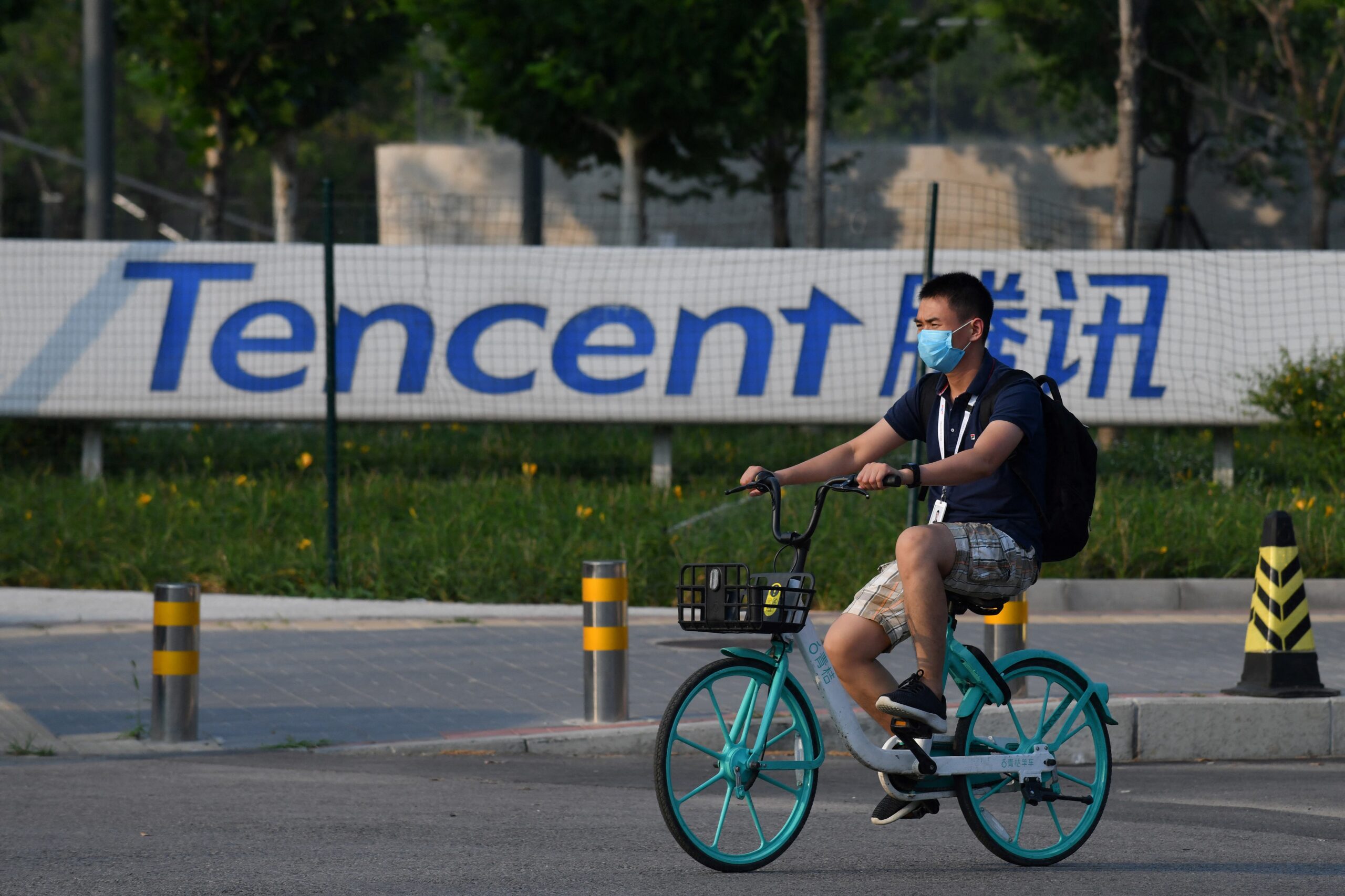
In the past 16 months, the Chinese AI startup Manus has been deeply embroiled in a storm of power struggles involving Meta, Tencent, and the Chinese Communist Party’s regulations. During this period, the founder Xiao Hong and chief technology expert Ji Yichao were recalled by the CCP and restricted from leaving the country. Now, Tencent’s proposed buyback agreement may temporarily bring an end to the commercial competition in the AI field between the United States and China.
According to a report by the Financial Times on July 10, early investors in Manus such as Tencent, ZhenFund, and Sequoia China are discussing a buyback at the valuation of $2 billion based on Meta’s acquisition terms. After the transaction is completed, Tencent will become the largest shareholder without controlling stake, while Manus will continue to operate independently in Singapore.
The relocation of Manus headquarters to Singapore after gaining popularity raised concerns about whether falling back under Chinese control would bring fortune or disaster. Experts point out that this buyback deal carries strong political implications; under the backdrop of geopolitical tensions, Manus, once a global leader, may now find itself constrained within a narrower development trajectory.
In March 2025, Manus emerged as the “world’s first universal AI entity”. It could autonomously browse websites through cloud virtual machines, carry out tasks like booking tickets, analyzing stocks, and in-depth research. Its launch caused a sensation online, with invitation codes in high demand.
In April of the same year, Silicon Valley venture capital Benchmark pledged an investment of $75 million. By June, founder Xiao Hong moved the headquarters and core team to Singapore, significantly reducing the mainland team and halting operations in China. In December, Meta acquired Manus for $2 billion, and founder Xiao Hong was appointed as Vice President of Meta.
In March 2026, Xiao Hong and Ji Yichao were summoned back to Beijing by the Chinese authorities from Singapore and informed that they were not allowed to leave during the review period, leading to a sudden downturn in their fortunes.
On April 27, the Chinese National Development and Reform Commission suspended the acquisition deal, marking the first official intervention in foreign mergers and acquisitions in the AI field using the “Foreign Investment Security Review Measures”. Subsequently, Tencent, as the leading buyer, intervened in an attempt to bring Manus back under Chinese capital control through the buyback.
In this dramatic power play, the Chinese authorities accused Manus of “bathing overseas” and essentially detained the two key figures. Industry analysts point out that their previous “overseas self-rescue” was essentially a helpless choice under the geopolitical confrontation between the United States and China.
The first challenge Manus faced was domestic financing difficulties. Popular comments on Zhihu note that domestic RMB funds have short investment cycles often accompanied by quasi-usurious unlimited joint liability gambling terms; whereas USD funds have longer cycles and shared risks. This left Manus, in urgent need of research and development funds, with no choice but to “break out”.
Secondly, there were legal compliance constraints. Due to the restrictions of the U.S. “reverse CFIUS” (foreign investment review mechanism), U.S. capital investments in the Chinese AI sector were strictly prohibited. As long as Manus maintained its Chinese identity, it was impossible to receive investment from Benchmark or be acquired by Meta.
Additionally, relocation also considered access to high-end chips. Professor Sun Guoxiang from Taiwan Nanhua University pointed out that Manus’ technology positioning differs from OpenAI or DeepSeek, though its direct demand for top-tier GPUs was not as massive as foundational large-model giants; but under Chinese backing, its long-term computing power ceiling would still be significantly lowered.
Sun Guoxiang frankly stated that Manus moving to Singapore was mainly to remove the restrictions brought by its Chinese identity, thereby gaining access to “American capital, advanced chips, global cloud services, computing power, and overseas markets”.
Despite Chinese public opinion claiming that “Meta’s acquisition backfired”, industry analysts broadly agree that Meta is the real winner of this transaction.
In fact, Meta efficiently utilized the acquisition window to complete technical integration. Within 7 weeks after the acquisition, Meta integrated Manus’ Agent capabilities into its AdsManager, WhatsApp, and Instagram, enabling over 10 million advertisers to perform competitive analysis and generate automated reports using natural language, leading to Manus’ annual recurring revenue (ARR) soaring from $100 million to nearly $450 million.
In June of this year, Meta launched its self-developed “MetaBusinessAgent”. Analysts indicate that its implementation closely ties to and absorbs Manus’ technology, yet Meta’s official press release made no mention of Manus.
Sun Guoxiang analyzed that Meta accomplished in-depth technical and business model validations during the acquisition. This core experiential knowledge gained through integration cannot be reverse-repossessed simply by canceling the equity.
In other words, Meta “borrowed an egg to hatch a chicken”, leaving behind technological achievements and taking back the $2 billion acquisition funds. While Meta may have incurred a small financial loss, strategically it gained significantly, almost akin to “paying a hefty tuition fee to acquire practical experience without leaving behind the laboratory and team.”
According to a report by 36Kr, Tencent’s plan to acquire Manus strategically complements its AI landscape, positioning itself at the forefront of the Agent race. Manus may fill the gaps in Tencent’s product offerings in video generation and universal Agent. Although Tencent does not hold a controlling stake, as the largest shareholder, it may still have access to the highest level of product interaction rights.
Nevertheless, concerns arise about Manus’s inability to sustain its high-speed growth after losing the global distribution advantage under Meta. In fact, following the news of Tencent leading the redemption of Manus, Tencent’s Hong Kong stocks dropped by 2.21%, reflecting capital market doubts about the transaction’s prospects.
The analysis by 36Kr suggests that under Meta’s umbrella, Manus gained access to advertising placements, corporate customer networks, and infrastructure computing support. Its ARR skyrocketed from $100 million to $450 million within six months, highly dependent on Meta’s “industry accelerator” empowerment.
Since the forced termination of the acquisition by the Chinese NDRC in April, this “accelerator” has been abruptly removed, requiring Manus to rebuild overseas channels and infrastructure. This means the team must thoroughly separate data, systems, customers, and team roles, essentially reverting to the initial state. This is not a simple “return”, but a highly challenging “business surgery”.
Sun Guoxiang stated that although there is no direct evidence of the Chinese authorities commanding this buyback, the political implications are profound. It is essentially an asset reflow triggered by security reviews, demonstrating the “China-style technology security governance model”.
Regarding the future prospects of Manus post-buyback, Sun Guoxiang pointed out that the constraints faced by Manus due to geopolitical games have extended beyond chips to models, capital, markets, and trust. Ultimately, Manus will inevitably transition from a global front-runner to being locked into a narrower track of survival and development space.