
Recently, at the immigration court corridor of 26 Federal Plaza in Manhattan, New York, a case of an undocumented immigrant being apprehended by federal law enforcement officers occurred. Alexander, a native of Honduras and an undocumented immigrant, was arrested by officers from the U.S. Immigration and Customs Enforcement (ICE) as he finished court proceedings. With urgent intervention from various parties on the same day, he was quickly released. This swift series of events gave rise to the rapid passage of a sanctuary state bill by the New York State Assembly.
Federal Judge P. Kevin Castel had just signed an injunction on the evening of May 18th, restricting civil arrests by ICE in three major immigration courts in New York City and their surrounding areas. Just a few hours after the injunction was issued on the morning of the 19th, ICE agents apprehended Alexander in the court corridor.
Following the arrest, the New York Legal Assistance Group (NYLAG) and the legal team from New York University (NYU) promptly intervened. On the afternoon of the 19th, they urgently filed a petition for a restraining order with the court, questioning the legality of the arrest. Under the pressure of legal action, the Department of Homeland Security (DHS) made the decision to release Alexander, which was formally carried out on the evening of his arrest.
In response, the Department of Homeland Security (DHS) issued a statement clarifying that the undocumented immigrant in question was an active member of a specific gang and had previously faced multiple criminal charges. DHS emphasized that no court order can prevent law enforcement officers from apprehending illegal immigrant gang members suspected of crimes anywhere.
This arrest incident sparked protests from several elected officials, including the borough president of Brooklyn, and catalyzed legislative processes in the state assembly.
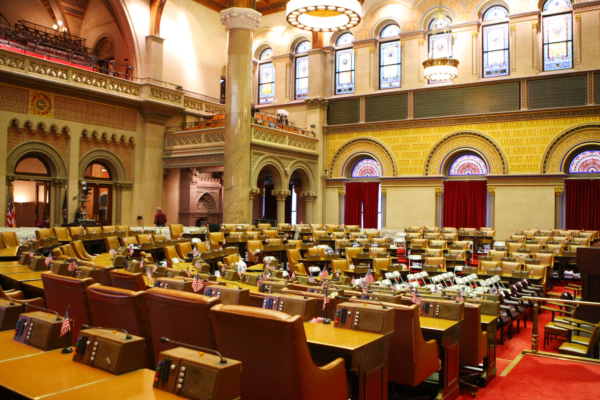
On May 21st, the New York State Senate and Assembly passed a legislative proposal to incorporate New York’s status as a “sanctuary state” into state law. It is expected that Governor Hochul will sign the bill, which will comprehensively prohibit local law enforcement departments from cooperating with ICE.