
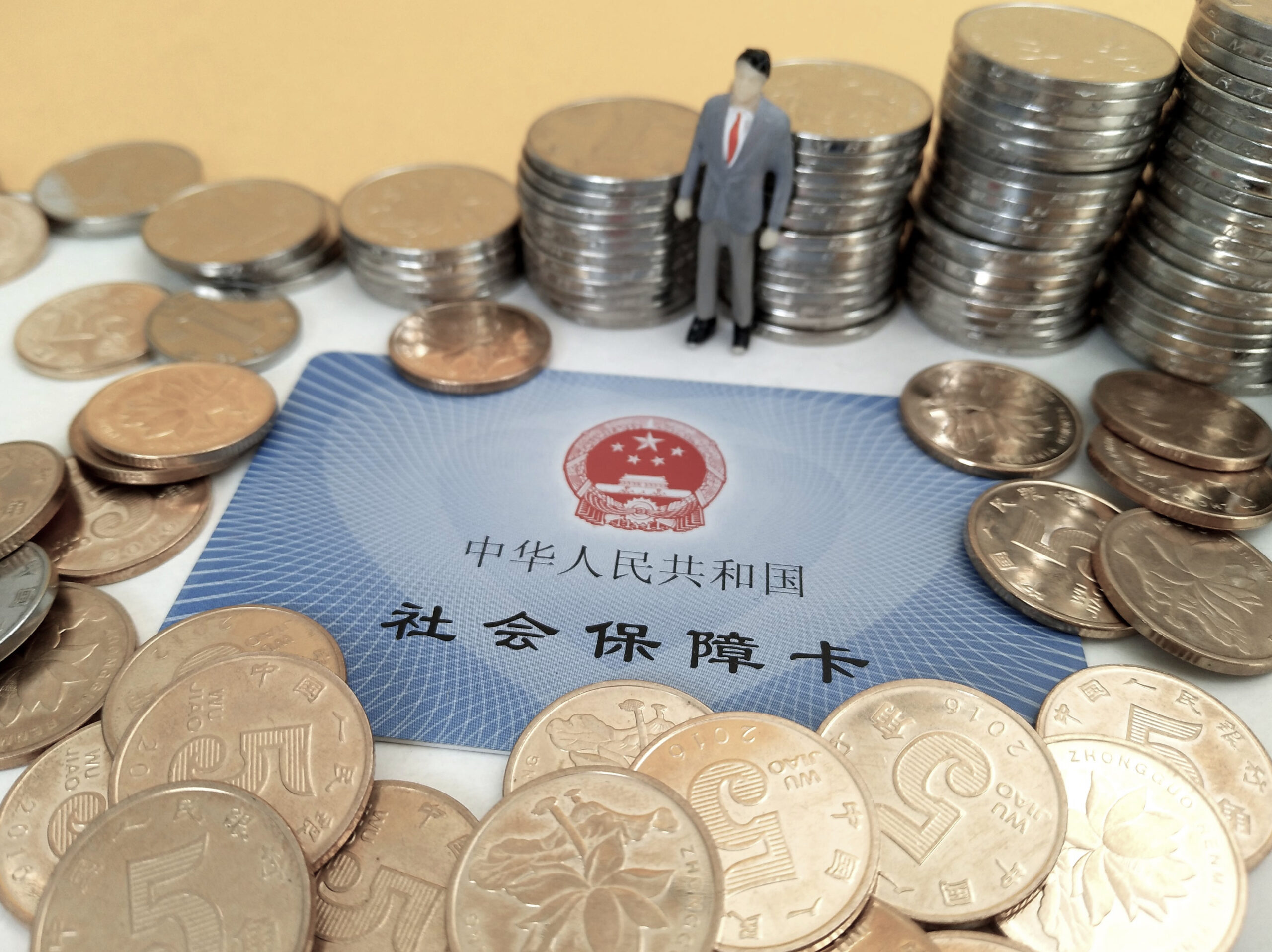
The Chinese Communist Party is facing an increasingly serious crisis in its social security fund deficit, prompting the Ministry of Human Resources and Social Security to recently release a five-year plan advocating for a “steady increase in payment levels.” Analysts believe that the CCP is attempting to forcefully raise fees to plug the gap in the social security fund.
The plan outlined by the Ministry of Human Resources and Social Security aims to enhance the incentive and restraint mechanisms for social security payment, gradually increasing the payment levels. The targets set in the plan include maintaining a basic endowment insurance participation rate of over 95% during the “15th Five-Year Plan” period, with unemployment insurance and work-related injury insurance (including occupational injury protection) covering 255 million and 345 million participants respectively. The target for the enterprise (occupational) annuity fund size is set to exceed 9 trillion yuan.
Recent reports from financial and human resources personnel in many enterprises indicate that they have received notifications from the tax authorities stating that their unit’s social security payment base does not match individual income tax wages, posing a risk of under-reporting and underpayment of social security contributions. They are urged to “promptly self-audit, adjust declarations, and solidify social security payment bases.”
A financial officer at a wholesale and retail company in Shandong mentioned that the company has been summoned by the local tax bureau regarding the social security payment base issue, with a requirement for the company to reach 65% of the previous year’s wages in social security contributions by 2026 and achieve 100% within 5 years. If fully compliant, the company is estimated to incur an additional annual social security cost of around 1 million yuan.
Political analyst Xia Yan expressed concerns that if companies are forced to fully comply with social security contributions based on actual employee wages rather than 60% of the average local wage, both enterprises and individuals will struggle under the financial burden. According to data released by the CCP’s Ministry of Finance, the total revenue of the social security fund in 2025 amounted to 12.603368 trillion yuan, with a fiscal subsidy of 2.911523 trillion yuan. The total expenditure of the fund was 11.4141 trillion yuan. This indicates that without fiscal support, the social security fund would be unsustainable. With China’s current financial strain, increasing fees are seen as a necessary measure to fill the deficit.
Chinese issues expert Wang He told Dajiyuan that one of the core problems of China’s social security system is the immense pressure on funding, with unparalleled sustainability challenges.
Assistant Professor Quan Yingyue from Peking University Guanghua School of Management and others published an article in the Journal of Economic Management in March this year, stating that if companies are mandated to fully comply with social security contributions for all full-time employees, their average net profit margin would drastically drop from 8.6% to 2.9%.
According to the “China Enterprise Social Security White Paper 2025” released by Zhongheyun’s “51 Social Security,” compliant enterprises with fully aligned social security contributions account for 34.1%.
In addition to the escalating crisis of the social security fund deficit, the issue of “who is draining the medical insurance” has also garnered widespread attention. Online discussions among Chinese citizens revolve around the current implementation of the Diagnosis Related Groups (DRG) payment system for healthcare. This method categorizes and implements healthcare payment based on patient diagnoses, severity of illness, treatment methods, and resource consumption.
Many netizens lament that under the DRG billing model, hospitals are compelled to follow official regulations that may not necessarily offer the best treatment, leading to premature discharge demands even before patients have fully recovered. Simultaneously, hospitals opt to reduce clinical services and refrain from purchasing imported drugs to cut costs.
On another front, government officials, especially high-ranking ones, enjoy exceedingly high medical insurance benefits. A social commentary in the mainland’s Xinkuai reported that the hospitalization expenditure of a retired provincial official may reach a staggering 3 million yuan per stay. The luxurious conditions of executive hospital wards at Jilin University First Hospital have left the public shocked.
An article circulating online titled “Spending 3 million for one hospital stay, who pays for officials’ medical privileges?” points out that a significant portion of medical insurance fees and resources are monopolized by those at the top of the pyramid, leaving very little for the common people.
The author of the article mentioned experiences from their small town, where some officials have long occupied high-ranking hospital wards, even when unoccupied, charging for bed fees. The families of these officials, including relatives such as aunts, uncles, and grandparents spanning three generations, enjoy privileges where IV drips, medication, and single-room stays are free, all at the expense of the common people.