
On Wednesday, July 15, the U.S. military struck a super oil tanker in the deep waters of the Persian Gulf near Iran’s major oil export terminal. This marked the first attack on a vessel since the U.S. reimposed shipping sanctions on Iran.
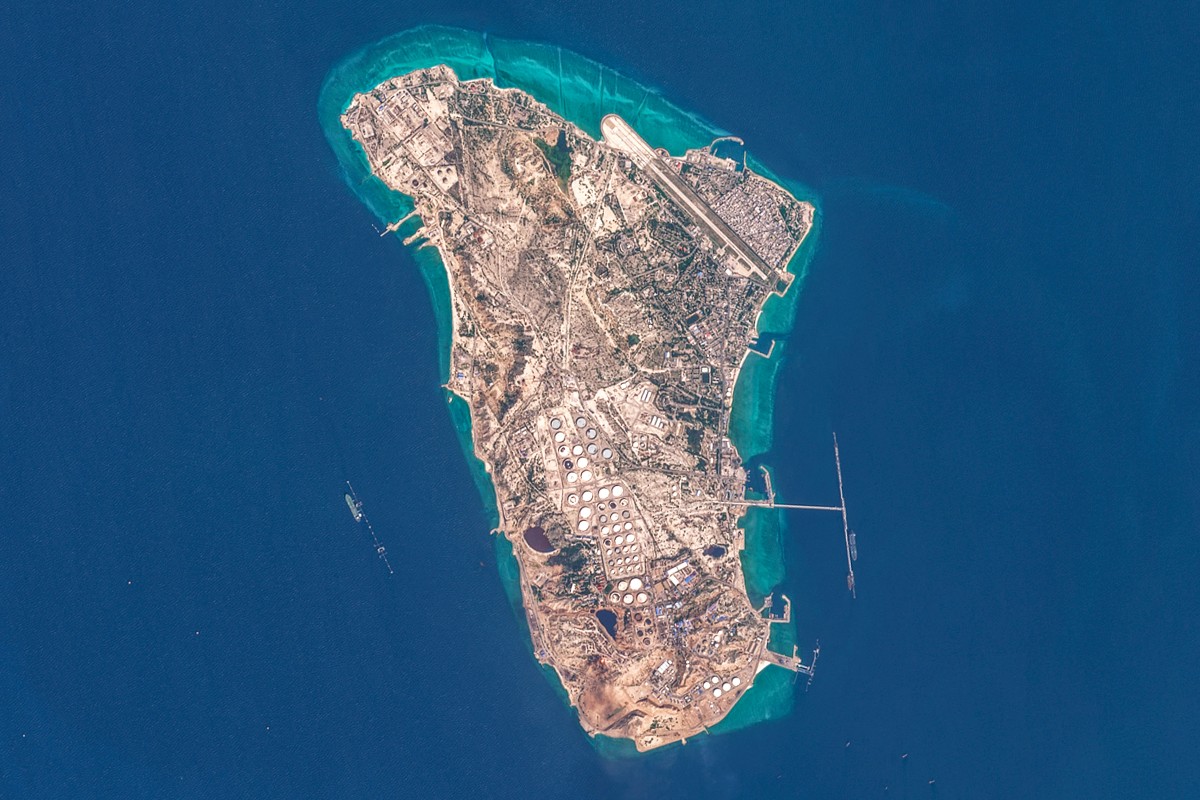
According to the U.S. Central Command, the U.S. military tracked the oil tanker named M/T Belma flying the flag of Curaçao. Despite multiple warnings, the tanker continued through international waters with the intention of heading to Kharg Island in Iran.
In a statement, the Central Command said, “The commercial vessel attempted to violate the U.S. sanctions and ignored multiple warnings.”
The Command reported that a U.S. military aircraft “fired a ‘Hellfire’ missile at the ship’s funnel, causing it to lose its ability to navigate,” preventing it from continuing toward Iran.
This operation occurred within the initial 24 hours of the U.S. resuming maritime sanctions on Iran. During this period, the U.S. military redirected two compliant vessels in accordance with the sanctions while disabling a non-compliant vessel.
“The U.S. military will remain vigilant and prepared to ensure that all parties fully comply with the relevant regulations,” the Central Command statement said.
Bloomberg reported that the U.S. military’s action took place deep in the Persian Gulf, far from the Strait of Hormuz, indicating a potential expansion of the blockade by the U.S. Previously, the blockade operations focused on intercepting vessels attempting to cross the blockade line outside the waters of the Gulf of Oman.
Jennifer Parker, an adjunct professor at the University of Western Australia’s Defense and Security Research Institute, told Bloomberg, “While the implementation of this operation within the Persian Gulf is a new development, it is consistent with the U.S. stance of blockading all Iranian ports and coastal regions.”
On Thursday, there continued to be sparse visible traffic in the Strait of Hormuz. A sanctioned Liquefied Petroleum Gas (LPG) tanker sailed out of the area after activating its transponder, while another cargo ship carrying soybean meal and bound for Iran entered the Persian Gulf.
The U.S. Navy stated that after reviewing the passage applications of vessels, ships carrying bulk food, medical supplies, and other essential goods for Iranian civilians will be allowed to pass through the blockade zone.
Kharg Island is a critical hub for Iran’s oil export revenue. According to the non-profit organization “United Against Nuclear Iran,” at least 11 shipments of oil and petrochemical products have been exported from the island since the signing of the interim peace agreement in mid-June. On Wednesday, a super oil tanker was observed loading crude oil at Kharg Island.
On Wednesday, the U.S. military conducted two waves of airstrikes against Iran.
The U.S. Central Command announced on Wednesday evening that a round of nighttime strikes targeting Iran had been completed. The targets included Iranian command centers, air defense positions, missile and drone capabilities, and coastal surveillance facilities, aimed at further weakening Iran’s ability to threaten the safety of merchant ship crews.
The Central Command stated that in the strikes, the U.S. military used “precision-guided weapons to target objectives including locations such as Bandar Abbas.”
On Wednesday morning, the Command posted on X platform, “Earlier today, the U.S. military conducted a 90-minute strike operation on Greater Tunb Island, destroying coastal defenses and cruise missile sites there.”
The post added, “The U.S. military is following the instructions of the joint command to hold Iran accountable for its actions.”