
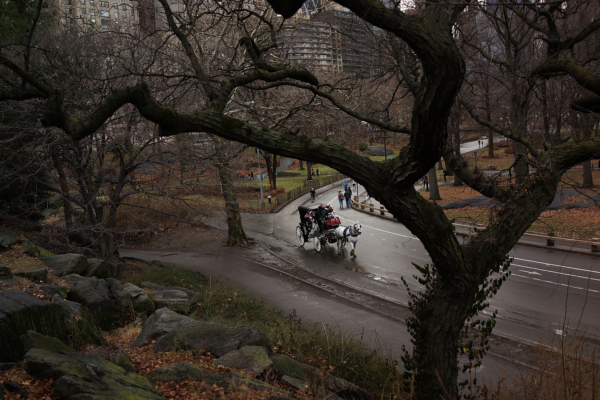
New York City Council held a public hearing on July 15th regarding the proposed “Romanch Act” (Int. 943), which aims to gradually phase out the carriage horse industry in Central Park. Supporters and opponents alike attended the hearing to give their opinions, including the family of Romanch Mahajan, an 18-year-old Indian youth who tragically lost his life in a carriage horse accident in Central Park last month, as well as animal rights activists and representatives from the carriage drivers’ union. The heated discussions revolved around public safety, animal welfare, and the livelihood of hundreds of industry workers.
On June 17th this year, Romanch, an 18-year-old youth from India, was ejected from a carriage in Central Park when the horse suddenly went out of control and ran uncontrollably, resulting in his death. This incident reignited calls in New York City to ban the carriage horse industry. In response, the City Council introduced the “Romanch Act,” named after him, with a plan to gradually phase out carriage operations in the city.
During the hearing, the emotional plea of the deceased’s family members resonated with the council members. Romanch’s father said, “Our son was just visiting New York, and he will never come back home. I implore you not to let any other family endure the pain we are going through today.” His family expressed that if the city had already put an end to this industry, the tragedy could have been avoided, and they hope the City Council will legislate to prevent similar incidents in the future.
Curtis Sliwa, the founder of the “Guardian Angels” who has long advocated for abolishing the carriage industry, also testified.
“Carriage rides are a barbaric practice where horses are forced to work in the heat of asphalt roads and chaotic traffic just for tourists to take a few pictures. All of this must stop immediately,” he said. “How many more people need to be injured? How many more horses must collapse and die on the streets?”
Sliwa cited a recent poll indicating that approximately 68% to 70% of New Yorkers support banning carriage rides, showing a clear shift in public attitude.
On the opposing side, representatives of the carriage drivers’ union and industry vehemently opposed the ban. They argued that Central Park carriage rides have a history of over 150 years, serving as an important cultural symbol of New York and a livelihood for hundreds of families.
“We are not animal abusers; we care for the horses as our own family members,” a union representative speaking on behalf of the drivers said during the hearing. “Without these horses, we would be out of work. We live with them every day, and their well-being is our livelihood.”
The union also stated that existing regulations strictly govern horse work hours, weather conditions, health checks, and veterinary care, and that a blanket ban is not the solution.
The public hearing lasted for several hours with scores of supporters and opponents taking turns to speak, with applause and jeers echoing through the room.
Currently, the “Romanch Act” has garnered support from more than 21 city council members, just a step away from the necessary 26 votes for passing. City Council Speaker Jumaning and Mayor Mamdani have publicly expressed their support for the direction of the bill, propelling this long-standing debate over the fate of carriage horses into its crucial stage.