
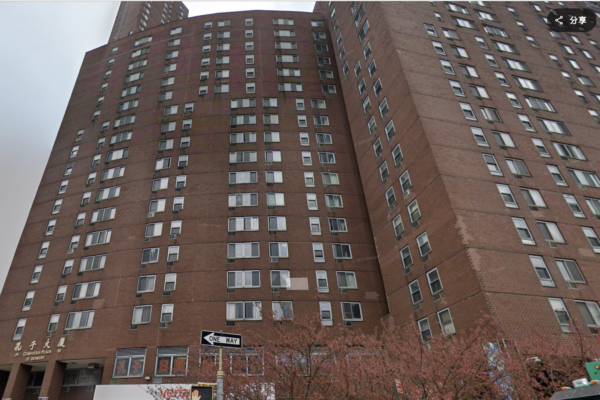
Located in Manhattan’s Chinatown, the Confucius Plaza is also part of the Mitchell-Lama affordable housing system. Vice chairman Yu Jinshan stated in an interview with Epoch Times that Confucius Plaza is currently one of the relatively stable Mitchell-Lama housing buildings in the city, but it is facing four major crises, including aging facilities, escalating operating and maintenance costs, tax burdens, and other challenges.
Confucius Plaza currently charges only $900 per month for a two-bedroom, one living room unit, including water, electricity, and gas fees. Given the current market conditions, apartments with similar features would demand at least $5,000 on the market. Therefore, the rent at Confucius Plaza can be considered quite affordable, providing many residents with a quality and stable living environment for many years.
However, this building has a history of over half a century and will face major renovation projects such as external wall and plumbing updates within the next 3 to 5 years. For example, the estimated cost for exterior wall repairs alone is projected to be between $7 to $8 million. Without early financial planning, it will eventually face the bankruptcy and disrepair challenges seen in other Mitchell-Lama buildings.
Yu Jinshan pointed out that Mitchell-Lama is currently facing a systemic financial crisis. Following the pandemic, union wages, minimum wages, security fees, electricity costs, water fees, natural gas, building materials, and insurance fees have all skyrocketed. For instance, insurance costs for high-rise buildings have surged from $300,000 to $1 million, building material prices have doubled, and electricity costs have increased by 10% to 15% annually, far exceeding the adjustments in management fees. However, many buildings, like Confucius Plaza, still use a “central single electric meter” instead of individual meters for each household, leading to the inability to implement individual energy conservation, and electricity costs can only be shared among all residents.
On the other hand, although the building is a non-profit affordable housing, it still has to bear nearly 10% in sales tax for building materials and, after lobbying efforts, the housing property tax has been reduced from 10% to 5%. Failure to pay taxes will affect loan eligibility, creating a vicious cycle of “unable to get loans, unable to repair, building deterioration, tenant loss, worsening finances.”
Fortunately, Confucius Plaza is currently able to make ends meet by supplementing residential operations through leasing retail spaces and parking lots, and voluntary residents take care of garden maintenance, saving a significant amount of management expenses. Therefore, the building’s finances are temporarily balanced, not on the brink of bankruptcy, and have not been included in HPD’s “blacklist,” making it one of the “well-behaved” Mitchell-Lama buildings. However, he also admitted that without proactive measures, Confucius Plaza is expected to face a fate similar to other buildings that have already experienced crises within 3 to 5 years.
He emphasized that the Department of Housing Preservation and Development (HPD) must find a balance between significant rent increases and maintaining affordable housing. Confucius Plaza hopes to negotiate with HPD to gradually adjust the increase in management fees over several years rather than a sudden large increase. At the same time, they are calling on the government to reduce the remaining 5% property tax burden and sales tax.
He also suggested using some of the vacant lands in Mitchell-Lama communities. For example, actively consider developing the large vacant garbage dump in front of Confucius Plaza, cooperate with the government to build affordable housing buildings on the land, lease the lower floors to shops, and build underground parking lots to create new long-term income streams.