
In a recent report by the Foreign Correspondents’ Club of China (FCCC), it was highlighted that the media environment for foreign journalists in China has continued to tighten over the past year. They have faced obstacles in conducting interviews, pressure on news sources, internet monitoring, and uncertainty in visa approvals. The report stated that restrictions have moved beyond isolated incidents to become the “norm” for foreign media working in China. As China’s economy continues to slow down, issues such as unemployment, population concerns, economic conditions, and the real estate crisis have also become sensitive topics.
The FCCC released the “Media Freedoms Report 2025: ‘The New Abnormal'” on July 13th. The report pointed out that foreign journalists working in China are still facing strict limitations, pressures, intimidation, and uncertainty. The survey involved 89 FCCC members from various media outlets across Asia, Europe, Latin America, and North America. Due to fears of reprisal, most interviewed journalists chose to remain anonymous.
According to the report, 94% of the interviewed journalists believe that the current reporting conditions in China either “rarely meet” or “almost never meet” international standards. Of these, 38% of journalists stated that China’s reporting environment “almost never” meets international standards, while 56% said it “rarely meets.” Notably, none of the respondents believed that China’s news reporting environment “usually” or “almost always” meets international standards.
The report highlighted that traditional politically sensitive issues remain the main constraints on foreign journalists’ reporting, including Taiwan, Tibet, Xinjiang, and criticism of China’s top leadership (CCP). In comparison to the past, journalists have observed the expansion of sensitive topics into economic and technological fields.
The survey revealed that 47% of journalists reported encountering new sensitive issues over the past year. These included population concerns, overall economic conditions, youth unemployment, real estate crises, US-China trade conflicts, rare earth materials, and emerging technologies.
As China’s economic growth slows down, reporting on market confidence, real estate, and employment has become increasingly challenging. One foreign correspondent expressed, “I feel that everything could now be sensitive, or seen as potentially sensitive, and therefore blocked.”
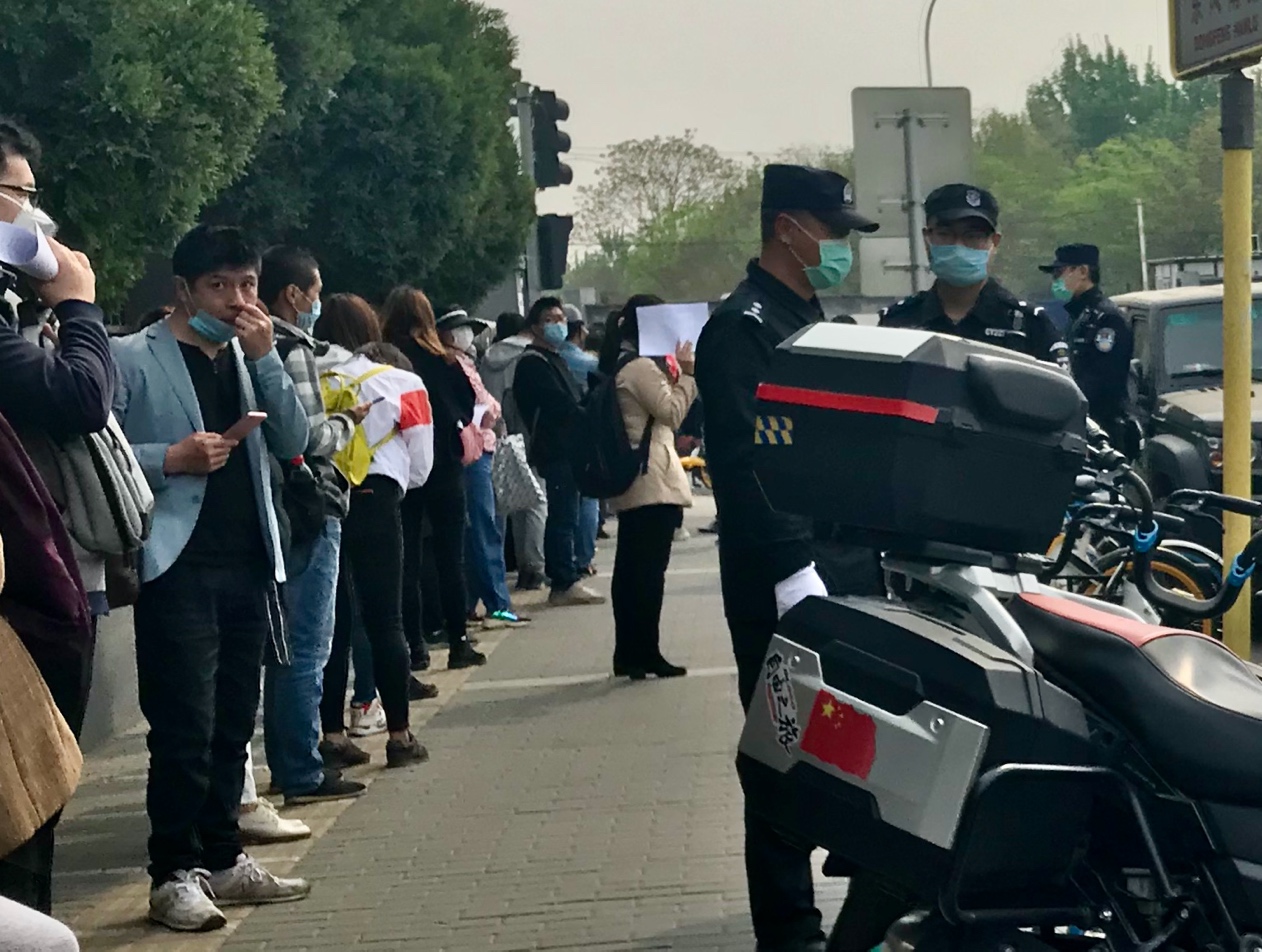
Regarding on-the-ground reporting, 64% of respondents stated they had been obstructed by police or other officials at least once, 40% had been hindered by unidentified individuals, and 8% had encountered pushing or the use of physical force.
The report cited several incidents, such as journalists being taken in for questioning by police while interviewing temporary workers in Guangdong, being followed by plainclothes officers while investigating factories in Zhengzhou, and having their interview footage deleted after being taken to a police station.
FCCC noted that such interventions are no longer limited to traditionally sensitive areas like Xinjiang and Tibet. Some journalists mentioned that even ordinary social news, such as local development, corporate operations, or livelihood issues, could potentially face obstacles.
Simultaneously, interviewees themselves are facing increasing pressure. The report revealed that 77% of journalists had sources refuse or cancel interviews, citing reasons like not being allowed to speak to foreign media. 32% of journalists indicated that their sources had faced questioning, threats, or other negative consequences for engaging with foreign media.
A journalist noted that business owners, scholars, economic analysts, and even agricultural experts might refuse interviews due to concerns about potential repercussions. The report also highlighted that visas remain a significant way to restrict foreign media.
In recent years, some international media outlets have struggled to obtain long-term journalist visas for China, with some applications being rejected or left unresolved for extended periods. Among those who received journalist visas in 2025, 29% waited for over a year, with 23% waiting between 12 to 24 months, and 6% waiting for over two years. Some journalists mentioned that Chinese authorities hinted at visa delays being linked to past reporting.
Aside from administrative restrictions, internet monitoring is also a major concern for foreign journalists. The survey indicated that 79% of respondents believed that the government might or does monitor their WeChat communications, 63% were concerned about surveillance on their mobile or landline phones. Additionally, 47% of journalists thought their offices or residences might be under audio surveillance, while 38% considered the possibility of personnel entering to observe.
Given the irreplaceable role of WeChat in Chinese society and the lack of usage of more secure communication tools by many interview subjects, journalists are particularly concerned about WeChat’s security issues.
FCCC specifically noted that foreign journalists working in China heavily rely on Chinese researchers, producers, and assistants who often face greater pressure. The survey showed that 89% of journalists’ institutions employed Chinese staff, with 40% stating that their Chinese colleagues had experienced pressure, harassment, or intimidation from government entities.
Some Chinese staff members were requested to attend “tea sessions” with the police or national security departments, where they were asked to disclose information about foreign journalists’ reporting content and work arrangements. A European news journalist reported, “My news assistant is frequently invited to tea and questioned about my reports.”
In conclusion, the report summarized that foreign journalists in China continue to work in an environment of surveillance, administrative pressure, interview obstacles, and increasingly cautious news sources. FCCC believes that the current situation in China has exceeded individual incidents to form a continuous system of restrictions.
The report stated, “Formal reporting rights still exist on paper, but in practice, they are becoming increasingly challenging to exercise.”