
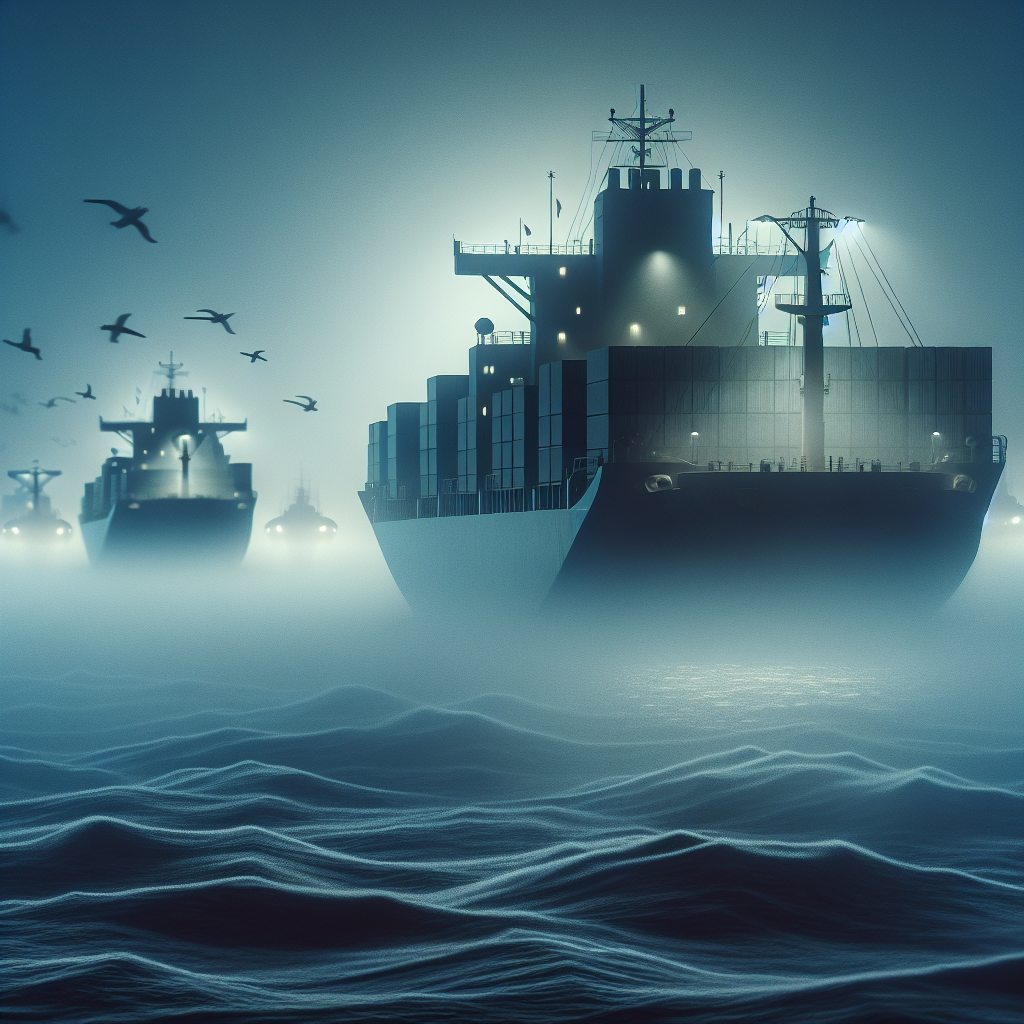
For years, Iran and China have been conducting oil transactions through shadow fleets to evade US sanctions, thereby avoiding scrutiny and legal accountability. However, the recent US naval blockade against Iran has dealt a heavy blow to this clandestine oil trade.
On Tuesday (April 21st), the US Department of Defense announced that US military intercepted and boarded the sanctioned vessel “M/T Tifani” in the Indo-Pacific region during the night.
The sanctioned oil tanker, which frequently shuttles between China and Iran, was intercepted by the US military while sailing in the waters between Sri Lanka and Indonesia. The Department of Defense stated that US forces will continue to conduct maritime law enforcement operations globally.
According to The Wall Street Journal, “M/T Tifani” is just part of a shadow fleet supporting Iran’s oil trade with its biggest customer, China. The advocacy organization based in the US known as the United Against Nuclear Iran (UANI) mentioned that this shadow fleet consists of over 500 vessels serving Iran.
This elaborate evasion system includes a significant amount of Iranian oil already at sea, far away from the Middle East. If the US continues to disrupt this maritime oil supply, it could weaken a crucial revenue source for the Iranian regime. Without these funds, Iran will find it even harder to sustain conflicts and delay negotiations aimed at ending those conflicts.
The interception of “M/T Tifani” and the US blockade of Iranian ports are part of the US’s firm actions against Iran, aimed at stopping long-standing covert oil trading.
Data from ship tracking company Vortexa reveals that over 160 million barrels of Iranian crude oil and condensate are currently stored on floating oil tankers awaiting delivery. Emma Li, Chief China Oil Market Analyst at Vortexa, mentioned that at least 140 million barrels are located outside the blocked zones.
On April 16th, the US military announced an expansion of its maritime blockade against Iran, not only in the Persian Gulf but also in other global waters. General Mark Kane, Chairman of the Joint Chiefs of Staff, stated that US forces will actively pursue assistance to intercept vessels from Iran’s shadow fleet, including conducting interception operations in the Pacific Ocean and other regions.
UANI stated that the oil tanker “M/T Tifani,” boarded and searched by the US military, is 1080 feet long. It loaded oil from Kharg Island in Iran on April 6th and got intercepted while sailing eastward. According to SeaLight’s tracking data, the tanker has visited Chinese ports at least 10 times since late 2022.
For Iran, Chinese buyers are a crucial lifeline to sustain its sanctioned economy. Most of the crude oil imported by China is disguised as originating from Malaysia and Indonesia. Customs data shows that in the past three months, China imported 93 million barrels of oil from Malaysia and 77 million barrels from Indonesia, surpassing the oil production of both countries.
This clandestine rerouting explains why official Chinese customs data show no Iranian crude oil imported since 2022. However, analysts estimate that China imports around 1.4 million barrels of crude oil daily from Iran, accounting for about 12% of its total oil imports.
One of Trump’s most significant allies in Congress, Senator Lindsey Graham, commended the administration for maintaining the blockade against Iran while extending the US-Iran ceasefire. He emphasized that the blockade scope may expand further.
Graham posted on the social media platform X on Wednesday, stating, “I had a very good conversation this morning with President Trump and Defense Secretary Pete Hegseth regarding the future of the conflict with Iran.”
“I think the President’s decision to maintain the blockade is very wise. This measure is having a strong impact on Iran’s continued ability to be the ‘world’s foremost state sponsor of terrorism’ – and they seem determined to keep doing so,” he said.
The senior senator further expressed his expectation that the blockade will continue until Iran shows willingness to change its behavior. He also foresaw a continuous expansion of the US blockade, possibly escalating into a global blockade soon.
“For those who are helping or considering helping the Iranian regime distribute oil, thereby providing funding for terrorism, you do so at your own risk,” he stated. “President Trump and his team are doing a great job. This is the best opportunity to change the behavior of the Iranian regime since 1979, and I hope to achieve this goal through diplomatic means.”