
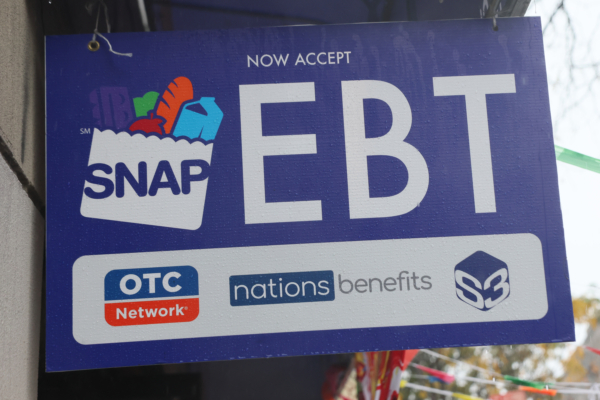
New York City’s Department of Social Services (DSS) and Human Resources Administration (HRA) recently launched an uncommon publicity campaign. They dispatched a large number of staff and social workers to conduct a grassroots reminder service in all five boroughs of the city. The aim is to inform low-income families about the latest federal and New York State amendments to the Supplemental Nutrition Assistance Program (SNAP) work requirements. Residents who fail to respond to notifications by June 1, report their work hours, or demonstrate eligibility for exemptions may face the imminent risk of having their food stamp benefits suspended or reduced.
This significant policy tightening primarily targets the group legally defined as Able-Bodied Adults Without Dependents (ABAWD). Under the newly implemented regulations, the scope of supervision and severity of penalties for this group have been significantly increased.
One major overhaul is the expansion of the age range affected by the work requirements. Previously targeting individuals aged 18 to 49, the new policy has raised the upper age limit to 54. This means that a significant number of middle-aged individuals, aged between 50 and 54, who were previously eligible for benefits without conditions, are now officially included in the government’s employment oversight network.
In addition to the age expansion, ABAWD recipients are now required to meet a minimum of 80 hours of work per month while receiving food stamps, equivalent to an average of 20 hours per week. The city government emphasizes that participation in government-approved vocational training, unpaid internships, or community service such as volunteering can count towards the work hours requirement.
The policy introduces a strict provision that imposes severe consequences. Individuals meeting the conditions who fail to meet the 80-hour work threshold for three months within a 36-month (3-year) period and do not report timely to the HRA will see their food stamp benefits immediately terminated.
Acknowledging the unique circumstances of vulnerable groups, the city government has outlined clear exemption criteria. Residents meeting the following conditions are exempt from the 20-hour weekly work requirement but must proactively submit proof to HRA for record clearance:
1. Individuals unable to work due to physical or mental disabilities or chronic illnesses (must provide a doctor’s medical certification).
2. Pregnant women.
3. Parents caring for children under 18 or family members under the same welfare case.
4. Specific groups newly added, including foster youth under 24 years old, homeless individuals, and recently discharged US veterans.
Community Guide: How to Secure Benefits in an Emergency?
Following the June 1 deadline for the initial review, many immigrant families may be on the verge of having their benefits frozen due to reasons such as moving, unread English letters, or failure to check their mailboxes promptly. Experts strongly recommend that affected residents take the following steps for emergency remediation:
Step 1: Immediately log into the official New York City benefits website, Access HRA, or download its mobile app. Check the E-Notices section to confirm receipt of official warnings regarding “ABAWD Work Requirements.”
Step 2: If currently employed (including jobs in the food industry, delivery services, retail, etc., reported under W2 or 1099 filings), promptly photograph and upload recent pay stubs or employer-issued proof of work hours to the system.
Step 3: If genuinely unable to work due to health reasons, contact your family doctor promptly to complete HRA’s Medical Assessment form and upload it through the app without delay. It is crucial not to wait until your benefits card is frozen to take action.