
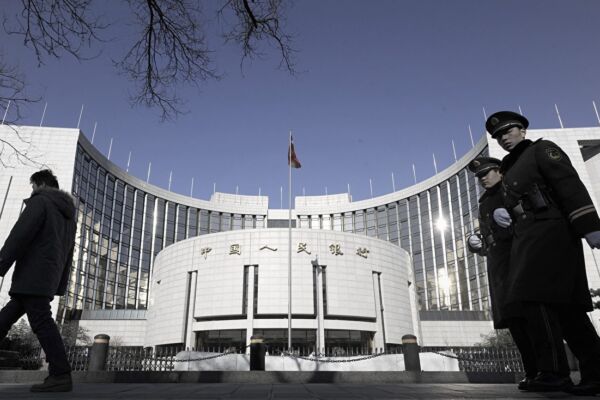
On June 1, 2026, the Chinese Communist Party (CCP) introduced new regulations on foreign investment, expanding restrictions on foreign trade and technology transfer, raising concerns among global investors about compliance risks in sensitive areas such as artificial intelligence. Analysts believe that the CCP’s new regulations are intensifying global scrutiny and isolating itself through strict control measures.
According to a report by the CCP’s official Xinhua News Agency on June 1, CCP Premier Li Keqiang signed a State Council order announcing the “Regulations on Foreign Investment,” set to take effect on July 1, 2026. The regulations consist of 34 articles, including Article 13 which prohibits investors from exporting or using goods, technology, services, or related data prohibited for export by China, or transferring restricted goods, technology, services, or data without permission.
Furthermore, investors engaging in foreign investment activities are restricted from cross-border deployment of technical personnel, organizing personnel to work in other countries, cross-border provision of technical guidance, arranging cross-border training for personnel, and transferring prohibited or restricted goods, technology, services, or data without permission to other countries.
Article 14 outlines that any foreign investment involving fund remittances, import and export of goods and technologies, cross-border trade services, cross-border data flows, management of personnel entering and exiting the country, scrutiny of operators, export controls, network security supervision, tax collection management, state asset supervision, etc., must comply with related laws, administrative regulations, and Chinese national regulations.
Article 15 mandates that the CCP State Council investment regulatory department, commerce regulatory department, and other relevant departments jointly conduct security reviews for overseas investments that “affect or may affect national security” and related assets and interests transfers or disposals.
The regulations do not clearly specify which types of transactions or asset transfers may be prohibited due to national security considerations and apply to investments in Hong Kong, Macau, and Taiwan. In recent years, amid geopolitical competition with the United States, many Chinese technology companies have chosen to list in Hong Kong.
According to reports by Reuters, the new framework provides a comprehensive and formal legal basis for the CCP to force the cancellation of completed overseas transactions, intensifying compliance risks for global investors in sensitive areas such as Chinese technology and artificial intelligence.
Analysts believe that these measures impede Chinese domestic companies from transferring shares to foreign investors without approval from the CCP government. The CCP views artificial intelligence as a crucial area for national security and has been committed to controlling the outflow of technology, intellectual property, and talent.
Lin Hansheng, China Director of the consulting firm Asia Group, stated that the new regulations are mainly aimed at preventing Chinese companies from selling strategic assets to foreign firms. The real challenge lies in how these regulations will standardize a comprehensive set of retaliatory tools to combat American entities participating in reviewing Chinese overseas investments.
The new framework explicitly prohibits cross-border talent transfers in sensitive industries without approval. It targets practices like the “Singapore whitewashing” seen when Manus transferred employees and operations to Singapore before its acquisition by Meta. This framework may affect Chinese enterprises looking to transfer capital and operations overseas to attract more liquid foreign capital market investment and evade domestic competition.
Gao Shuchao, a lifelong professor at the Singapore Management University School of Law, analyzed on X social media platform that the new regulations mark a significant step by the CCP in strengthening control over cross-border capital flows, technology transfers, and overseas economic activities.
He mentioned that Chinese investors are increasingly finding it difficult to conduct overseas investments without CCP supervision. This move indicates Beijing’s growing concerns about capital outflows and foreign exchange reserve pressures.
Gao further noted that most of the measures in the new regulations are not entirely new, but the novelty lies in the specific application of these rules to foreign investments. As a result, Chinese enterprises and individuals are increasingly being drawn into a broader geopolitical economic confrontation between Beijing and Washington, often struggling to maintain commercial neutrality.
Recently, the CCP has been implementing multiple stringent control measures at the national level, tightening regulations on the flow of capital, technology, talent, and information systematically.
At the end of April 2026, the CCP’s National Development and Reform Commission blocked Meta’s (Facebook’s parent company) $2 billion acquisition of Manus for violating foreign trade rules. Manus, an AI startup founded in China, relocated its headquarters, core team, and operations to Singapore in 2025, yet it continued product development in China.
On May 22, 2026, the China Securities Regulatory Commission, in conjunction with multiple departments, imposed heavy penalties on platforms such as Futu, Tiger Securities, and Changqiao for cross-border violations. Futu faces a potential fine of around 1.85 billion RMB, while entities related to Tiger face a combined penalty of approximately 411 million RMB, totaling over 2.2 billion RMB. They were instructed to gradually liquidate the non-compliant accounts within two years.
Almost simultaneously with the penalties imposed on the three brokerage firms mentioned, the Hong Kong Monetary Authority (HKMA) recently issued regulatory letters to registered banks in Hong Kong, urging enhanced control over investment accounts of mainland residents, including stringent reviews for new accounts and a retrospective check for existing accounts since January 2023.
On May 26, Bloomberg reported, citing sources, that Beijing had expanded its restrictions on top AI professionals traveling abroad to include employees of private companies such as Alibaba and DeepSeek. The individuals subject to these restrictions include founders, senior researchers, and executives engaged in advanced AI research. They are now required to obtain approval from authorities before traveling abroad, with some having their passports centrally managed by their organizations.
In April 2026, the CCP significantly escalated information control measures. Internet service providers and data centers across the country were notified to launch a special rectification campaign for “illegal cross-border visits” from April 1. Illegal VPN servers were required to shut down, unauthorized IPs were immediately blocked, and some enterprises were instructed to inspect overseas traffic. Documents from Jiangsu, Shaanxi, and other regions indicate a complete ban on carrying out circumventing services, with violators facing port disconnection or service termination.
Recently, commentator Gu Cheng analyzed in an article for overseas “People’s Daily” that the CCP’s intensive control measures stem from extreme insecurity and leftist thinking. The CCP fears economic destabilization from capital outflows, the revelation of institutional flaws through top talent heading abroad, and foreign information leakage awakening public awareness, triggering a political crisis. Ultimately, the CCP opts to continue turning a blind eye and building up barriers to confine millions of Chinese people in an information black box, creating an economic island.
Analyzing the situation, experts argue that Xi Jinping’s leadership, by isolationist policies, is accelerating China’s detachment from the modern civilized world. History has repeatedly shown that isolationism is not a path to strength but a destructive policy for nations and their people. From the Ming Dynasty’s maritime ban to the Soviet Union’s Iron Curtain, every instance of isolationism has led to self-imprisonment and dynasty collapse. Xi Jinping’s ambition to turn China into a super North Korea, with such retrogressive measures, will only hasten internal breakdown and the downfall of the tyranny.